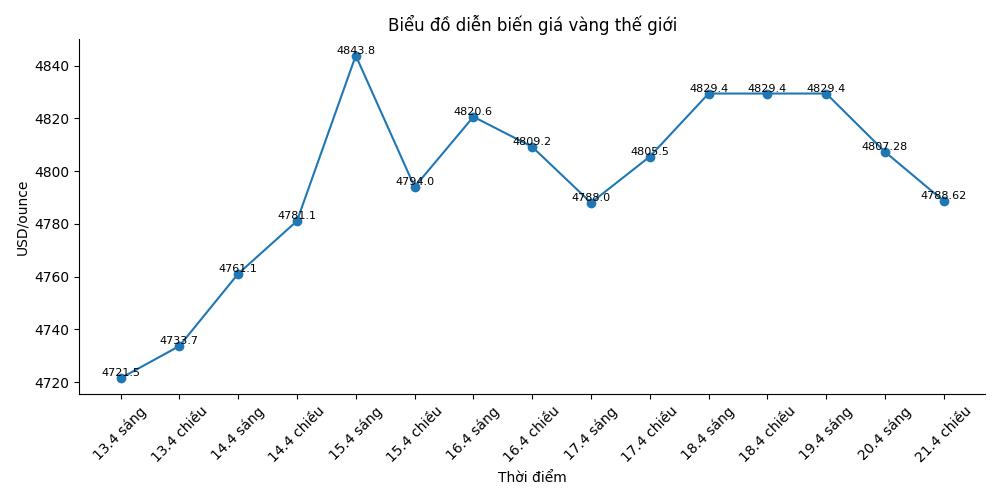
Gold prices fell as investors assessed the prospect of reaching a diplomatic agreement to end the conflict in Iran - a factor that disrupted global energy supplies and increased inflation risks.
The precious metal at one point fell 0.6% to below the 4,800 USD/ounce mark, after losing 0.2% in the previous session. US Vice President JD Vance is on his way to Pakistan to participate in the next round of negotiations, while Iran also sent a delegation after previously expressing hesitation about participating, according to sources familiar with the plan. US President Donald Trump said that the two-week ceasefire is expected to expire on "Wednesday evening Washington time" and is unlikely to be extended.
The market remains tense before the question of whether new peace talks will take place before the ceasefire expires this week, as opposing signals from both sides continue to increase volatility," said Manav Modi - a commodity analyst at Motilal Oswal Financial Services. "In the context of prolonged geopolitical and policy outlook uncertainties, gold prices continue to be under pressure.
Oil prices fell on Tuesday, while global stock markets resumed their upward momentum after a short period of stagnation. Entering its eighth week, the conflict in the Middle East has caused an unprecedented energy supply shock, increasing inflationary pressure and causing central banks to tend to maintain high or even higher interest rates - a disadvantage to gold, which is a non-performing asset. Since the conflict broke out at the end of February, gold prices have fallen by about 9%.
However, the decline of gold in wartime does not change the "fundamental argument" of the precious metal, according to Mr. Marc Loeffert - Trader at Heraeus Precious Metals.
Restructuring the portfolio and reducing leverage during the multi-asset volatility period is predictable" - he said. "This volatility may continue, but in the long term, gold still maintains its role as a tool to preserve purchasing power.
Investors will also be watching the candidate nominated by Mr. Trump as Chairman of the US Federal Reserve (Fed) - Mr. Kevin Warsh - when he presents his plan to the Senate Banking Committee on Tuesday. If signs of support for monetary policy easing appear this year, gold prices may be supported. Conversely, cautious views on inflation and unwillingness to cut interest rates will put pressure on the precious metal.
According to the prepared content, Mr. Warsh will commit to protecting the independence of the central bank, reflecting concerns surrounding the policy orientation of the Fed in the coming time.
Spot gold prices fell 0.5% to 4,788.62 USD/ounce at 12:22 Singapore time. Silver prices fell 1% to 78.95 USD/ounce, while platinum and palladium also went down. The Bloomberg Dollar Spot Index - a measure of the strength of the USD - rose slightly after falling 0.1% in the previous session.