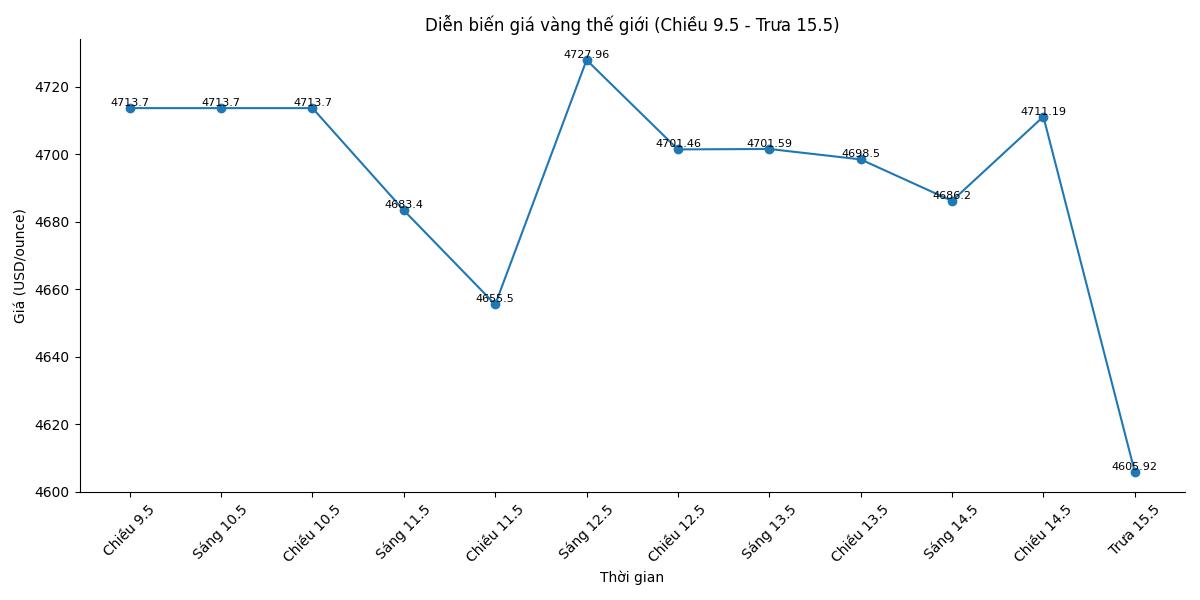
Gold prices are heading for a slight week of decline as inflation in the US rises sharply under the impact of the Iranian conflict, thereby strengthening expectations that interest rates will remain at a higher level for longer.
In Friday's trading session, gold prices at one point fell by 0.8% to nearly 4.615 USD/ounce and have now decreased by about 2% compared to the end of last week.
Newly released data shows that wholesale inflation in the US in April increased the most since 2022, while the consumer price index (CPI) recorded the highest increase since 2023.
In that context, the USD continues to strengthen while the yield on 10-year US Treasury bonds increases sharply – factors that often put pressure on gold because this precious metal is not profitable and is valued in USD.
Meanwhile, the Hormuz Strait - the world's important energy transportation route - is still almost paralyzed as efforts to end the Iranian conflict have not made clear progress. This continues to raise concerns about the energy crisis and inflationary pressure.
Oil prices also headed for a week of price increases as WTI oil approached the 102 USD/barrel mark in the last session of the week.
The gold market is currently continuing to fluctuate in a narrow range since the sharp decline in the early stages of the Middle East conflict. Investors are considering the risk of prolonged inflation causing interest rates to remain high and the possibility of slowing economic growth that may force central banks to ease monetary policy in the future.
Since the war began, gold prices have now fallen by more than 12%.
Although recent developments are not really positive, some experts believe that gold may still continue to attract investment capital in the near future.
Mr. Ryan McKay – Senior Commodity Strategist at TD Securities said that trend trading (CTA) funds may increase their positions in gold in the coming sessions.
Current price scenarios still show the possibility that CTA cash flow continues to accumulate buying positions for gold," he said.
Meanwhile, silver prices have still increased by about 11% since the beginning of May thanks to speculation returning to the industrial metal group.
The recent gold/silver ratio continues to decline – a signal that some traders see as a sign that silver is becoming relatively more attractive than gold.
In India, the government continues to tighten gold import regulations to support the Rupee, just days after raising import taxes on precious metals. This move is adding pressure on demand sentiment in the world's second largest gold consuming market.
As of 12 noon Vietnam time, spot gold price decreased 0.6% to 4,605.92 USD/ounce. Silver prices fell 1.3% to 82.47 USD/ounce, while platinum and palladium also fell.
The Bloomberg Dollar Spot Index rose 0.1% for the session and is now up about 0.9% for the week.