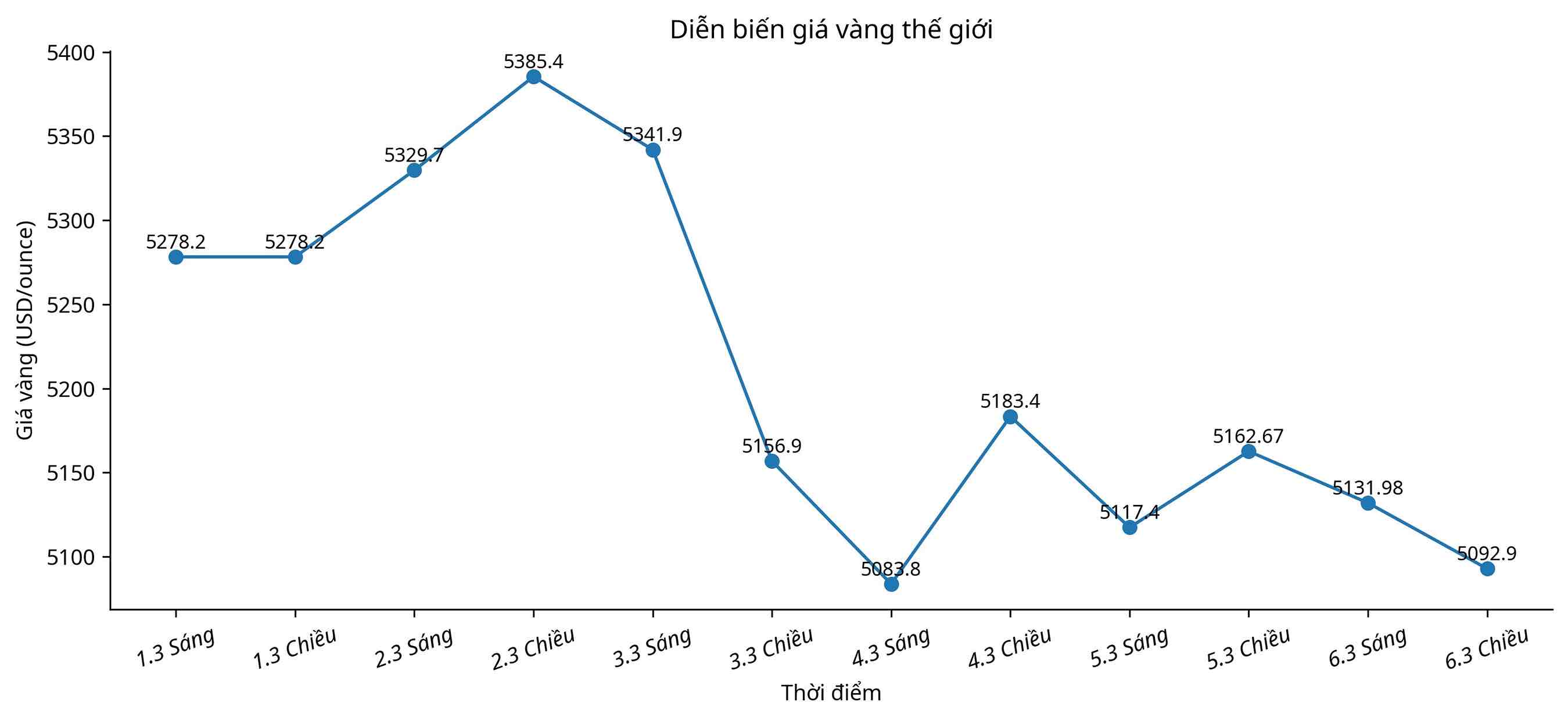
Gold prices fell as the USD strengthened and the prospect of monetary policy easing weakened, as the war in the Middle East entered its sixth day without signs of cooling down.
The precious metal at one point fell by 1.7% in the US trading session as concerns about rising inflation due to rising energy prices pushed the greenback and US Treasury bond yields up. High inflation could force the US Federal Reserve (Fed) to keep interest rates high or even raise them further to curb price pressure. The swap market currently only values about 35 basis points of interest rate cuts by the end of the year, a sharp decrease compared to the forecast of about 60 basis points last weekend. This is detrimental to gold because the precious metal does not bring yields.
Some investors also sold gold to get cash to compensate for losses in the US stock market.
Ms. Ewa Manthey - commodity strategist at ING Bank - said that part of the weakening of gold prices seems to stem from the upward momentum of the stock market, especially in the US trading session, when investors used gold as a source of liquidity instead of doubting the fundamentals of the precious metal.
According to Ms. Manthey, this pressure usually decreases when the upward momentum of the stock market weakens, thereby helping to maintain long-term supporting factors for gold.
Since the beginning of the year, gold prices have increased by about 17%, supported by increased geopolitical and trade tensions, as well as concerns related to the Fed's independence. This precious metal once reached a record high of over 5,595 USD/ounce at the end of January.
In this afternoon's trading session, spot gold prices fell 1% to 5.092 USD/ounce. Silver prices rose to 82.363 USD/ounce, while platinum and palladium also went down.