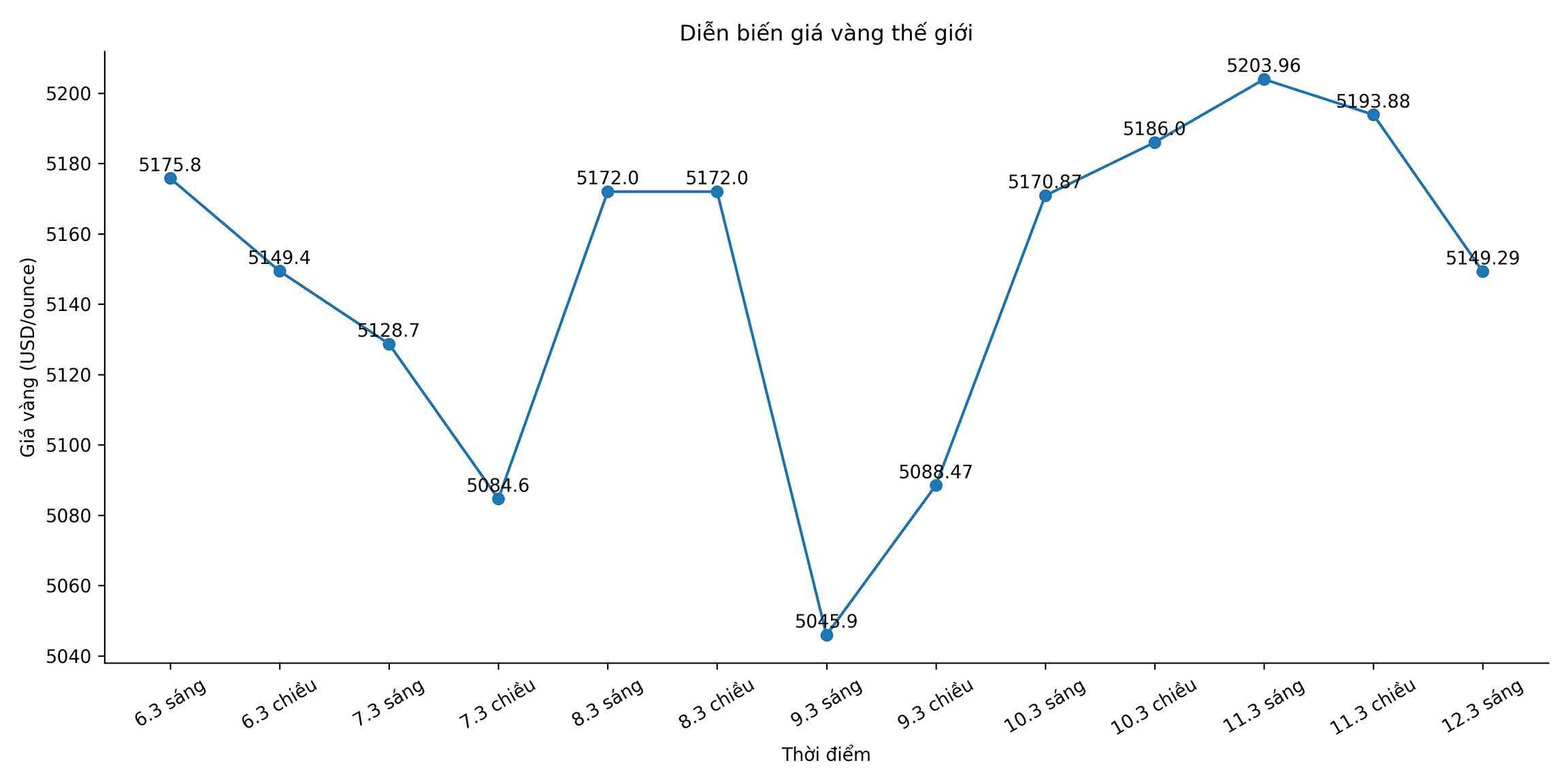
Gold prices fell for the second consecutive session after US inflation data weakened interest rate cut prospects, while war in the Middle East pushed oil prices up.
The precious metal once fell by 1% in the first trading session of the day, after losing 0.3% in the previous session. Although the US core inflation at the beginning of the year was quite moderate, before the conflict broke out, future inflation concerns reduced the possibility of the US Federal Reserve (Fed) cutting borrowing costs. An index measuring the strength of the USD increased by 0.3%, while the European Union warned that the region's inflation could exceed 3% this year.
According to Ms. Hebe Chen - an analyst at Vantage Markets in Melbourne, the current gold decline is "like a pause rather than a surrender". She believes that the expectation of price pressure returning has supported the USD and put aside the possibility of the Fed's early temporary policy easing, thereby weakening demand for gold in the short term, in a context where the market usually only prioritizes a safe-haven asset at one point.
Entering the 13th day, the war between the US and Israel with Iran continues to disrupt oil exploitation and refining activities across the Middle East. Oil prices continue to rise as concerns about prolonged conflict overwhelm information about the largest emergency oil stockpile discharge ever of wealthy countries. Within the framework of this plan, President Donald Trump's administration is expected to release 172 million barrels of oil from the US Strategic Oil Reserve.
In addition to facing the prospect of higher borrowing costs, a factor often disadvantageous to gold because the precious metal does not generate profits, gold is also used by investors as a source of liquidity to support other parts of the portfolio when necessary. Since the outbreak of war, gold holdings by ETFs have decreased, although capital has returned on Tuesday after holdings last week fell the most in more than two years.
However, gold prices have still increased by nearly half a year since the beginning of the year, partly supported by the role of safe-haven assets in the context of geopolitical instability, although trading in the market is quite volatile and the price increase momentum has stalled since the war began on February 28. According to Ms. Chen, the trend of seeking safe-haven assets has not ended but is only temporarily suspended.
Spot gold prices fell 0.9% to $5.149.29/ounce at 8:05 am in Singapore. Silver prices fell 1.5% to $84.44/ounce. Platinum prices fell 1%, while palladium lost 0.8%. The Bloomberg Dollar Spot Index rose 0.2%.