
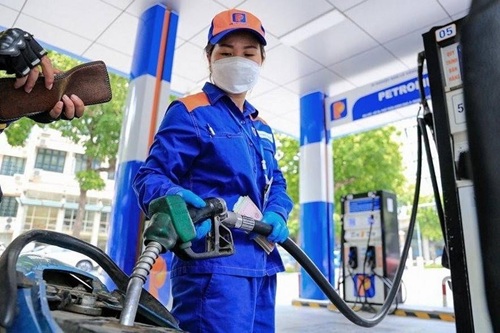
The recent increase in gasoline and oil prices is posing many challenges for the transportation industry. However, businesses and drivers are proactively adjusting operations, and at the same time expecting appropriate support policies to reduce cost pressure.
In the operating period on March 7, gasoline and oil prices were adjusted to increase from 3,777 - 8,500 VND/liter, kg depending on the item. This is the second increase in a week. As an important input material for many economic sectors, the fluctuation of gasoline and oil prices directly affects production and business activities, especially the transportation sector.
Talking to a reporter from Lao Dong Newspaper, Mr. Nguyen Anh Duong - a technology driver in Hanoi, said that when fuel prices increase, drivers have to calculate more carefully during operation. However, many people still maintain their jobs by optimizing the distance, choosing the appropriate operating time to save fuel.
Similarly, Mr. Dao Hoai Son (GrabCar driver operating since 2018) said that although fuel costs have increased, people's travel demand is still quite stable, especially on weekends. This helps drivers have more opportunities to maintain their income.
According to Mr. Son, currently the fare is about 12,000 VND/km during peak hours and about 8,000 VND/km during normal hours. In the context of rising gasoline prices, many drivers expect technology platforms to make reasonable adjustments to discounts or support policies to share difficulties.
From a business perspective, Mr. Le An - CEO of Hoan Kiem taxi company, said that taxi companies are closely monitoring the developments of the fuel market. In the short term, businesses focus on optimizing operations, saving costs and improving service quality to maintain competitiveness.
If fuel prices continue to remain high for a long time, businesses will consider appropriate adjustment options, ensuring harmony of interests between businesses and customers," Mr. An said.

According to Mr. Nguyen Cong Hung - Vice Chairman of the Vietnam Automobile Transport Association, fuel costs currently account for about 35 - 40% of the total operating costs of transport vehicles. Therefore, each fluctuation in gasoline and oil prices significantly affects exploitation activities.
However, this is also an opportunity for transport businesses to review operating procedures, improve cost management efficiency and promote the application of technology in vehicle operation.
Not only road transport, other transport sectors such as aviation, waterways or sea transport are also proactively developing adaptation plans to minimize the impact of fuel price fluctuations.
Assoc. Prof. Dr. Nguyen Thuong Lang (Senior Lecturer at the Institute of International Trade and Economics, National Economics University) said that the fluctuation of gasoline and oil prices is an objective factor of the global energy market. In that context, businesses need to proactively build response scenarios, increase energy saving and optimize production costs.
Besides the efforts of businesses, experts believe that the flexible management policy of the State will play an important role in stabilizing the market. In which, reasonable adjustments to tax and fee policies for gasoline and oil can contribute to reducing cost pressure for businesses and people.
In addition, the effective use of the Gasoline and Oil Price Stabilization Fund is also considered one of the tools to help limit strong fluctuations in fuel prices in the short term. According to data as of September 30, 2025, the Gasoline and Oil Price Stabilization Fund is still about 5.617 billion VND. Representatives of the Vietnam Petroleum Association believe that diversifying gasoline and oil supply sources through expanding imports from many areas with trade agreements with Vietnam will help increase market flexibility, thereby contributing to stabilizing supply.
Experts also recommend that businesses need to strengthen monitoring of energy market developments, promote fuel saving and efficiency, and proactively negotiate with service providers to share costs in the context that gasoline and oil prices are still volatile.


