
Article 64: Removing worries about responsibility but not creating resources for reinvestment
In the oil and gas sector, failure in search and exploration is an inevitable risk. In the world, the rate of drilled wells without commercial detection is always high, especially in deep-water, offshore or geologically complex areas.
According to Lawyer Truong Anh Tu - Chairman of TAT Law Firm, before the 2022 Oil and Gas Law was promulgated, the psychology of fear of responsibility when search and exploration activities did not achieve results was one of the major barriers to oil and gas investment. Businesses not only suffer financial losses but also decision-makers are under pressure to prove the correctness of investment decisions.
Article 64 of the 2022 Oil and Gas Law has created an important shift in recognizing geological risks as an objective factor of oil and gas activities, while distinguishing between investment risks and acts of causing loss of state capital.
According to him, this regulation creates a legal corridor for managers to decide on investment based on expertise, in accordance with procedures, and authority. When businesses comply with regulations, unsuccessful search and exploration costs will be handled according to the law. From a legal perspective, Article 64 both removes bottlenecks in responsibility and maintains the necessary control mechanism for state-owned enterprises.
However, Article 64 only partially solves the problem. The main regulations are to handle costs after search and exploration activities are unsuccessful, but have not created financial resources for businesses to continue investing.
The specific nature of the oil and gas industry requires continuous surveys and exploration drilling with a low success rate. Therefore, the problem is not only to handle the lost investment but also to ensure that businesses have sufficient resources to continue to accept risks. "If only solving the accounting story without creating cash flow for a new investment cycle, businesses will still face difficulties in maintaining exploration and drilling activities," Lawyer Truong Anh Tu said.
Improving institutions to increase reserves and ensure energy security
According to Lawyer Truong Anh Tu, the completion of the mechanism for search and exploration activities needs to be placed in the goal of increasing reserves and ensuring national energy security.
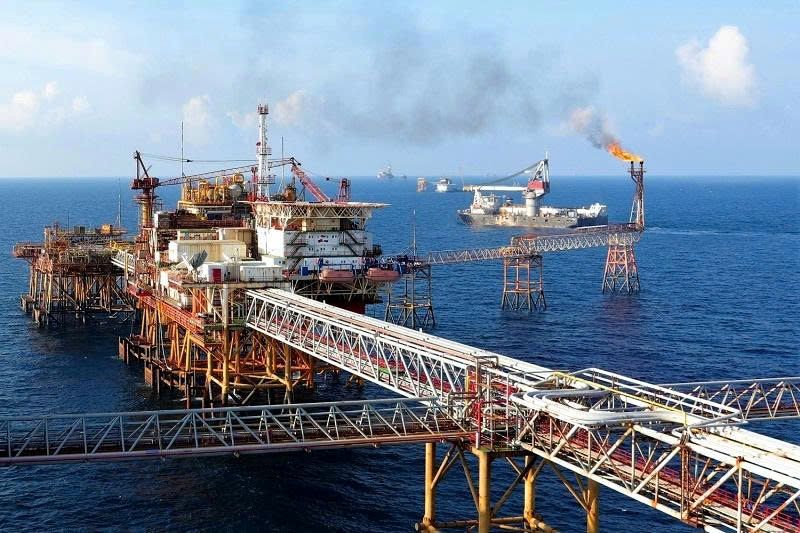
Many key oil and gas fields of Vietnam are declining naturally, while new discoveries are mainly located in deep water, offshore areas with complex geological conditions, high investment costs and high risks. This requires Petrovietnam to maintain exploration and exploration activities to supplement new resources, creating a foundation for future exploitation output.
According to him, increasing reserves is not only a production and business goal of Petrovietnam but also associated with energy self-sufficiency, maintaining the oil and gas industry ecosystem and ensuring resources for the energy transition process.
In that context, the proposal to study the restoration of the Oil and Gas Exploration and Production Fund (TKTD Fund) should be seen as a financial tool to supplement resources for strategic investment activities.
Lawyer Truong Anh Tu believes that the opinion that Credit Funds may overlap with Article 64 does not accurately reflect the nature of the two mechanisms. "Article 64 is the post-investment risk handling mechanism, while Credit Funds is the pre-investment resource creation mechanism. One mechanism protects decision-makers, one mechanism helps businesses have resources to continue investing and accept risks. These two mechanisms do not replace but complement each other if designed appropriately," he analyzed.
In order for the Credit Savings Fund to operate effectively, according to him, it is necessary to synchronize the legal system, first of all, to clarify the relationship between the Fund and the cost handling mechanism according to Article 64 to avoid overlap. At the same time, it is necessary to study and amend regulations on management, investment and use of state capital in enterprises, as well as the profit distribution mechanism, in order to create a legal basis for the formation of reinvestment resources.
According to Lawyer Truong Anh Tu, this is a requirement to innovate the mindset of building institutions for the oil and gas industry. If Article 64 has shifted from the mindset of "responsibility" to "acceptance of risks", then the next step is to shift from "risk management" to "risk sharing". The State cannot completely eliminate risks in oil and gas activities, but can build a reasonable allocation mechanism to help businesses have enough capacity to perform strategic tasks.
He also emphasized that perfecting the mechanism for search and exploration activities should not be seen as a separate preferential policy for Petrovietnam but as building institutions suitable to the specific characteristics of the oil and gas industry - a field with high risk but playing an important role in energy security and economic development.
A good institution is not an institution that completely eliminates risks, but an institution that knows how to allocate and share risks reasonably for businesses to perform strategic tasks for national interests. Investing in Petrovietnam is not only investing in a business but also investing in energy self-reliance capacity, increasing reserves and the sustainable development of the country," Lawyer Truong Anh Tu emphasized.


