
National Assembly considers reducing 30% income tax for revenue under 10 billion VND
The National Assembly on August 21 approved the addition of 3 important contents to the program of the First Extraordinary Session, including the draft Resolution on reducing PIT and CIT.
According to the proposal, business individuals and businesses with annual revenue of no more than 10 billion VND are entitled to a 30% reduction in tax payable in the tax periods of 2026 and 2027.
The Government proposed a resolution that takes effect immediately in 2026, expected to reduce budget revenue by about VND 3.191 billion in 2026 and VND 3.51 billion in 2027.
The policy is expected to support households, individual businesses and businesses to stabilize production and business, thereby creating revenue for the budget in the long term.
The thẩm tra agency basically agreed but proposed that the Government have solutions to prevent the situation of dividing, separating, and transferring revenue to enjoy incentives. Many opinions also expressed concern about fairness when businesses with revenue just exceeding 10 billion VND will lose all incentives, so it is proposed to study a reasonable transition mechanism instead of rigidly applying according to revenue thresholds. See more...
Bamboo Airways cancels flight, Ministry of Industry and Trade advises on customer rights
The National Competition Authority said it has received consumer feedback on refunds for canceled Bamboo Airways flights.
After working with the airline, Bamboo Airways is committed to strengthening information provision, passenger guidance and prioritizing resources to receive and process refund requests.
When requesting a refund, passengers need to provide a full booking code (PNR), full name, route, flight date and time and related payment information. Consumers are also advised to keep booking confirmations, cancellation notices, refund requests and exchange history with airlines or agents as a basis for comparison and settlement of disputes if arising.
If the rights have not been resolved, consumers can send negotiation requests directly to Bamboo Airways or ticket agents. See more...
Expanding "Responsibility Green Stick" to school kitchens in Ho Chi Minh City
Green responsibility tick" is being researched to be expanded into the management of school meals in Ho Chi Minh City, in order to control food from the input stage to processing, and at the same time improve traceability when incidents occur.
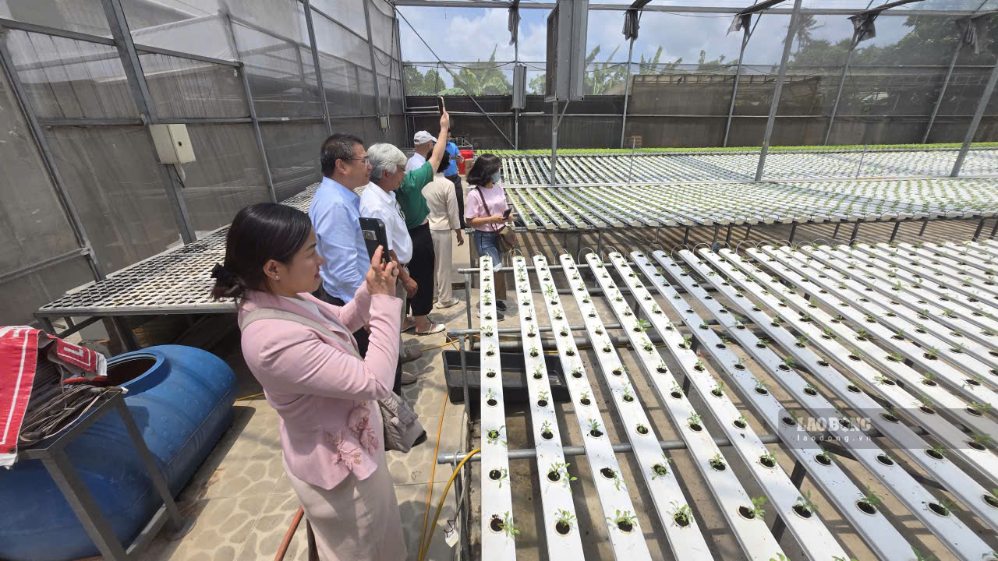
According to the Ho Chi Minh City Department of Industry and Trade, the city has 2,525 school kitchens and thousands of establishments providing meals and food service businesses, so control by inspection and penalties faces many difficulties.
The new model aims to increase the responsibility of businesses, publicize processes, standards and quality commitments, and create pressure from the market for suppliers to maintain quality.
In Lai Thieu ward, the program is expected to be implemented in schools, collective kitchens and canteens, focusing on establishments providing meals for preschool children. See more...
Benefits from using rooftop solar power in Dong Nai
Many households in Dong Nai city are investing in rooftop solar power (DMTMN) to self-produce and self-consume to reduce electricity costs and be proactive in power sources. Some households combine storage batteries, use solar power during the day, store excess for use in the evening and automatically switch to grid electricity when the reserve is not enough.
Reality shows that the savings efficiency is quite clear. Mr. Nguyen Ba Cong's family has 7 rented rooms, previously paying about 3.5 million VND in electricity bills per month, now reduced to 1-1.2 million VND after installing the solar power system. Meanwhile, Ms. Nguyen Thi Thanh Nhan's family reduced electricity costs from 2.5-3 million VND to about 60,000-100,000 VND/month thanks to a system of 20 solar panels and a 30 kWh storage system.
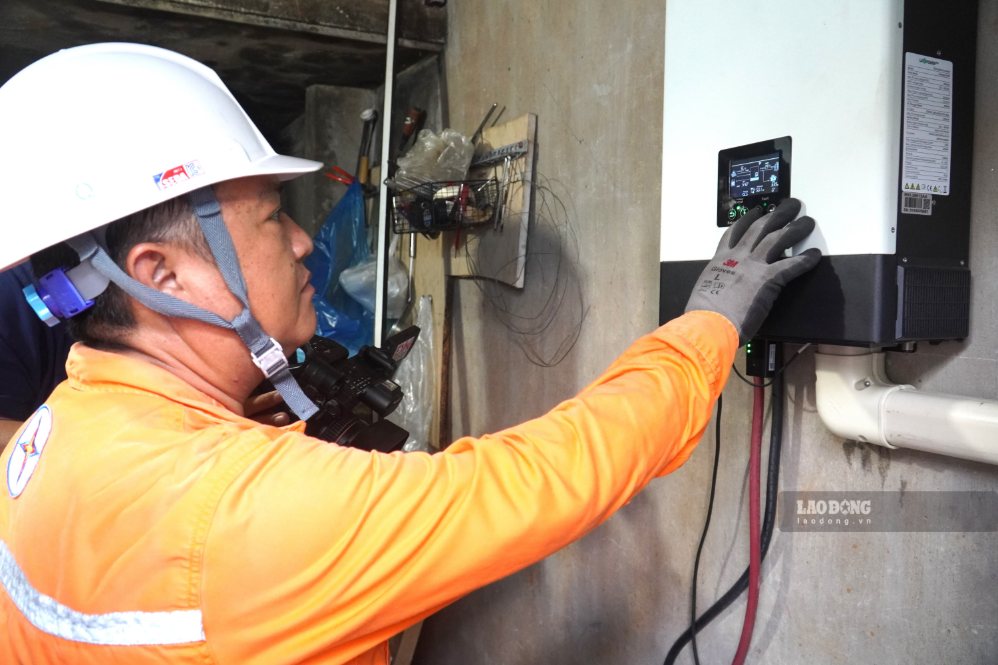
According to PC Dong Nai, the development of self-produced and self-consumed MPAs helps people reduce costs, be proactive in power sources and contribute to reducing pressure on the system during peak hours. However, people need to calculate appropriate capacity, comply with legal regulations, technical standards and fire prevention and fighting; and maintain and clean the system periodically to ensure safety and efficiency. See more...


