
Near the Lunar New Year, "Cho Nho Night Street" - a model of cultural space, cuisine and community tourism has attracted thousands of people and tourists to visit and experience, contributing to promoting the development of the night economy in the area.
Mr. Dang Toan Thang - Chairman of Pleiku Ward People's Committee said that putting Cho Nho Night Street into operation shows the local determination to exploit the potential of the night economy, create more community living space, and at the same time promote tourism and service development, thereby improving people's lives.
Cho Nho night street is planned in a civilized and safe direction, combining diverse culinary activities, shopping, entertainment and introducing local specialties.
The street has a route from Dai Doan Ket Square, along Phung Hung street and adjacent alleys, extending down to the Hoi Phu stream embankment area (section from Nguyen Luong Bang street to Ba Trieu street).
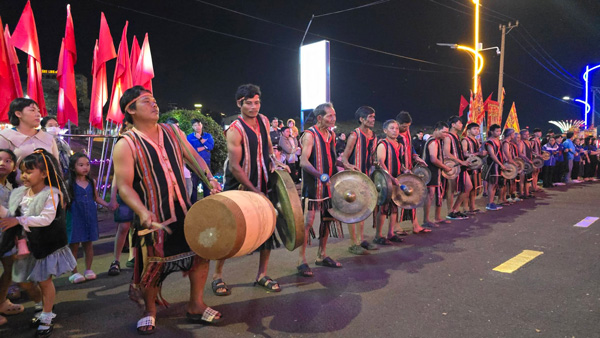
The activities of Night Street focus on cultural services, healthy entertainment; typical cuisine ensuring food safety and hygiene; shopping, introducing local products, OCOP products and typical items.
According to the plan, Cho Nho Night Street operates from 6 pm to 12 am daily and is maintained regularly to meet the entertainment and shopping needs of people and tourists, while creating conditions for business households to develop services.
In the days leading up to Tet, Cho Nho Night Street is brilliantly lit, becoming a highlight attracting a large number of people and tourists. People in Pleiku mountain town expect the new nighttime economic model of Pleiku ward, the western urban center of Gia Lai province to be maintained and develop vibrantly.
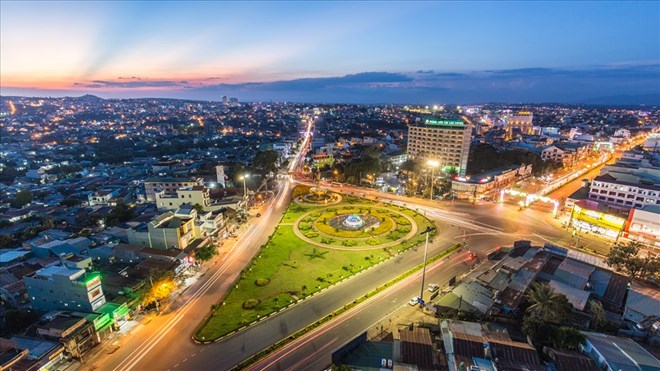
According to the orientation to 2030, Gia Lai province strives to welcome about 18.5 million visitors, including 1.1 million international visitors; total tourism revenue reaches about 45,500 billion VND.
At the same time, the province sets a target to attract investment to develop a system of accommodation facilities with about 33,000 rooms; average stay time reaches 3 days; the number of workers directly serving tourism through training and fostering reaches over 25,000 people.
Tourism development is identified as a key economic sector of Gia Lai province, based on sea advantages, mountain and forest ecology, natural lake system, Tay Nguyen cultural heritage, Champa culture, historical - revolutionary culture and unique landmarks.
By 2030, Gia Lai strives to become a new tourism growth pole of the central coastal region, a world-class, modern, green, safe, friendly and culturally rich destination.


