
One morning in Nhon My commune (An Giang province), when the dew is still lingering on the river surface, the sound of wire machines has resonated regularly in the yards. Without signs, without large workshops, the glue wire craft village exists by the daily rhythm of life of the people.
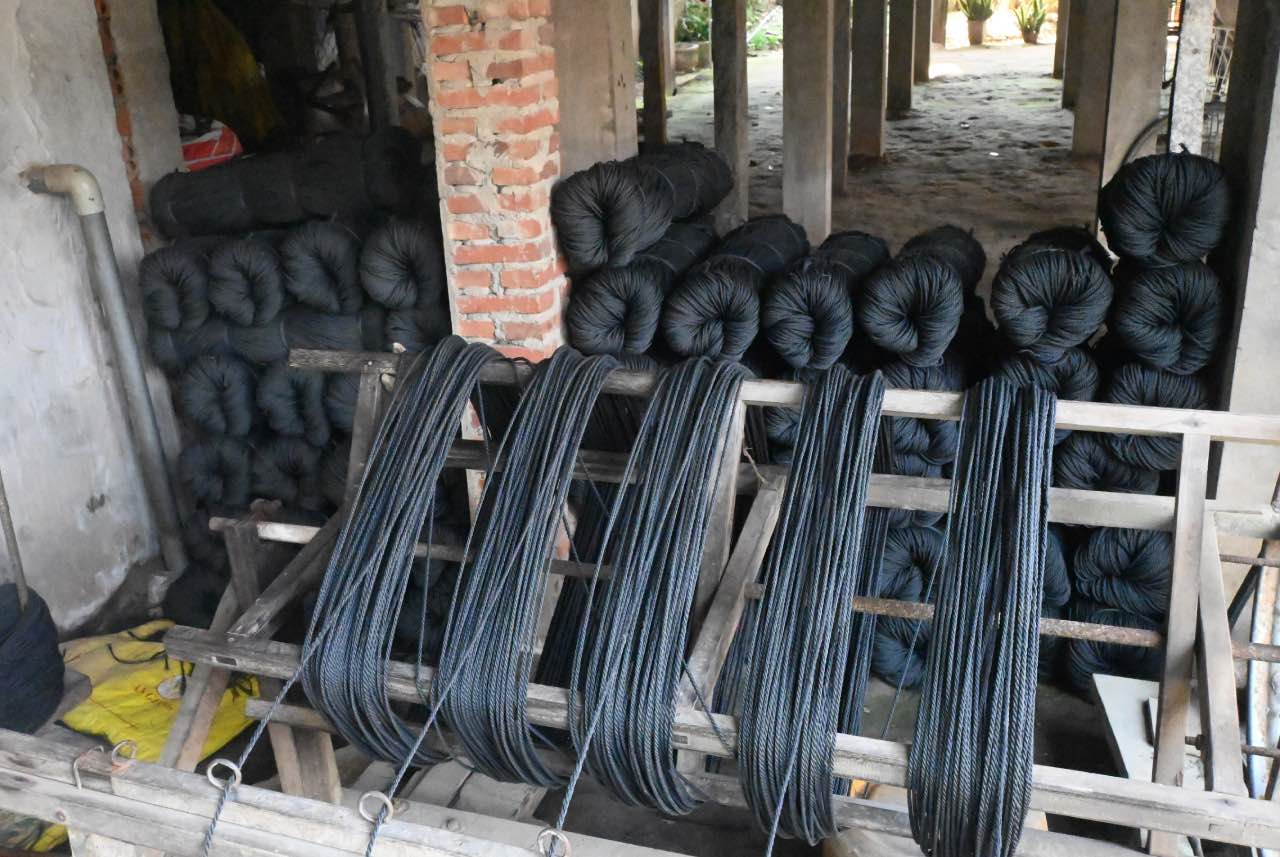
According to local people, the keo rope rolling profession (also known as rope making, rope weaving) here is associated with the need to use rope in agricultural production and fishing. From synthetic plastic ropes, through the skillful hands of artisans, durable rope rolls are born.
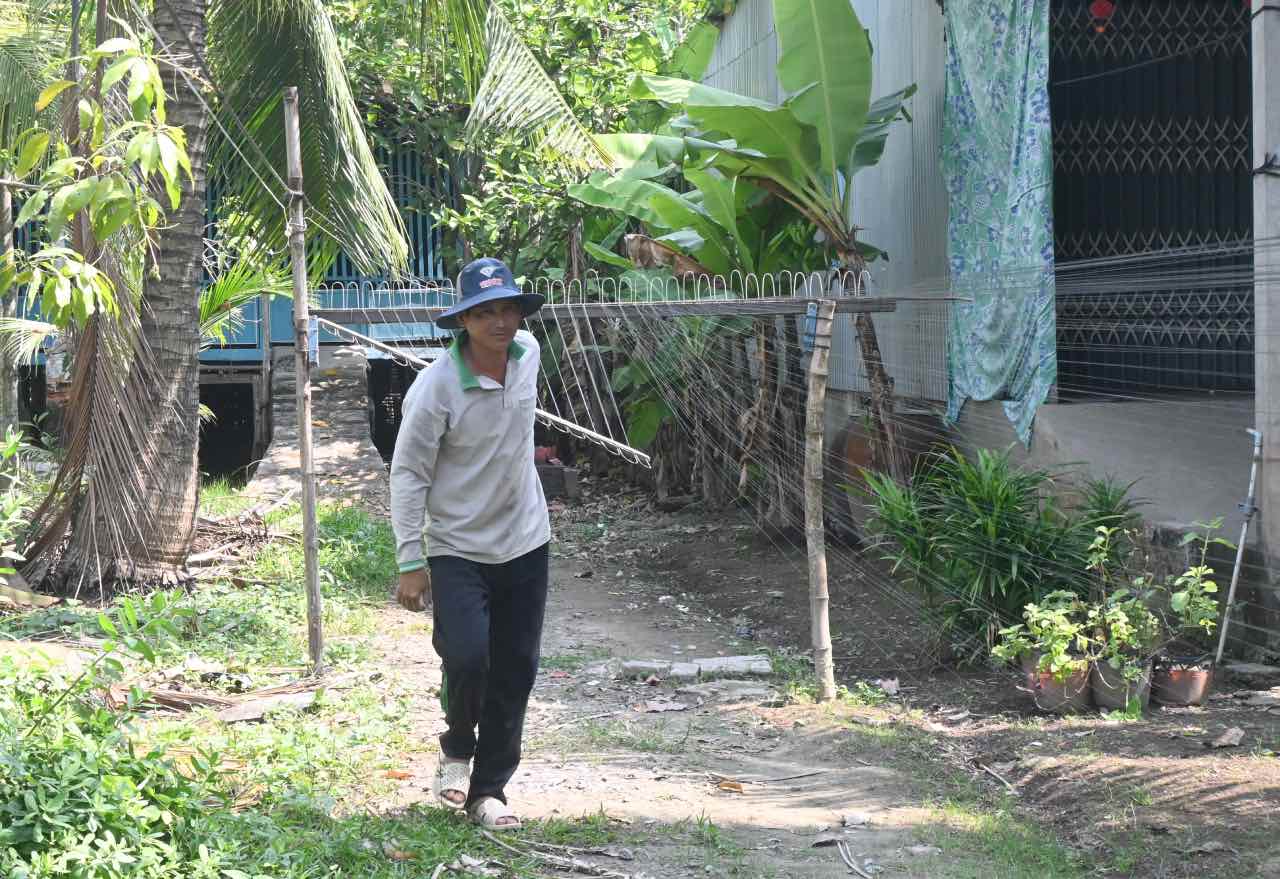
Mr. Lai Quoc Viet (41 years old, Nhon My commune) - who has been attached to the glue rope running profession for more than 4 years - shared: "This profession is considered so, not simple, you must know how to handle yarn and force, running unevenly will cause the rope to break immediately.
According to Mr. Viet, finished ropes are mainly used in cultivation, animal husbandry, anchoring boats. Therefore, although many types of industrial ropes and handmade ropes have appeared in the market, they still maintain a certain position thanks to their durability, firmness and suitability to actual needs.
Mr. Viet also informed that to create a complete rope, the craftsman must go through 4 main stages and run the rope up to 3 turns. Each turn runs for nearly 200m, from the bending end to the fitting point at the end of the rope. The craftsman both runs and adjusts the glue yarn to be even, tight and not disturbed.
The first stage is separating and preparing the glue fibers. Then, the fibers are put into a primer, continue to spin the wire to twist it tightly, and then run another time to complete the durability before producing the finished product. On average, each worker has to run from 10 to 20 km per day, depending on the number of production wires. That distance is repeated in the cramped space of the village, in the sun, wind and even on hot days.
Processing hours are mainly worked. The remuneration will be paid by the establishment owners ranging from 1,700 - 1,900 VND/kg of finished products. One day, about 120 kg is produced, with an income of about 200,000 VND," Mr. Viet said.
Ms. Ngo Thi Diem Xuan (40 years old, residing in Nhon My commune), said: "One day, my husband and I sit on ropes from morning to afternoon, sometimes my back hurts, my hands are tired. But I'm used to it. This job is hard, but the good thing is that it's done at home, taking advantage of free farming time.
According to Ms. Xuan, income from wire running is not high, but for people with little production land, this is still an important source of income.
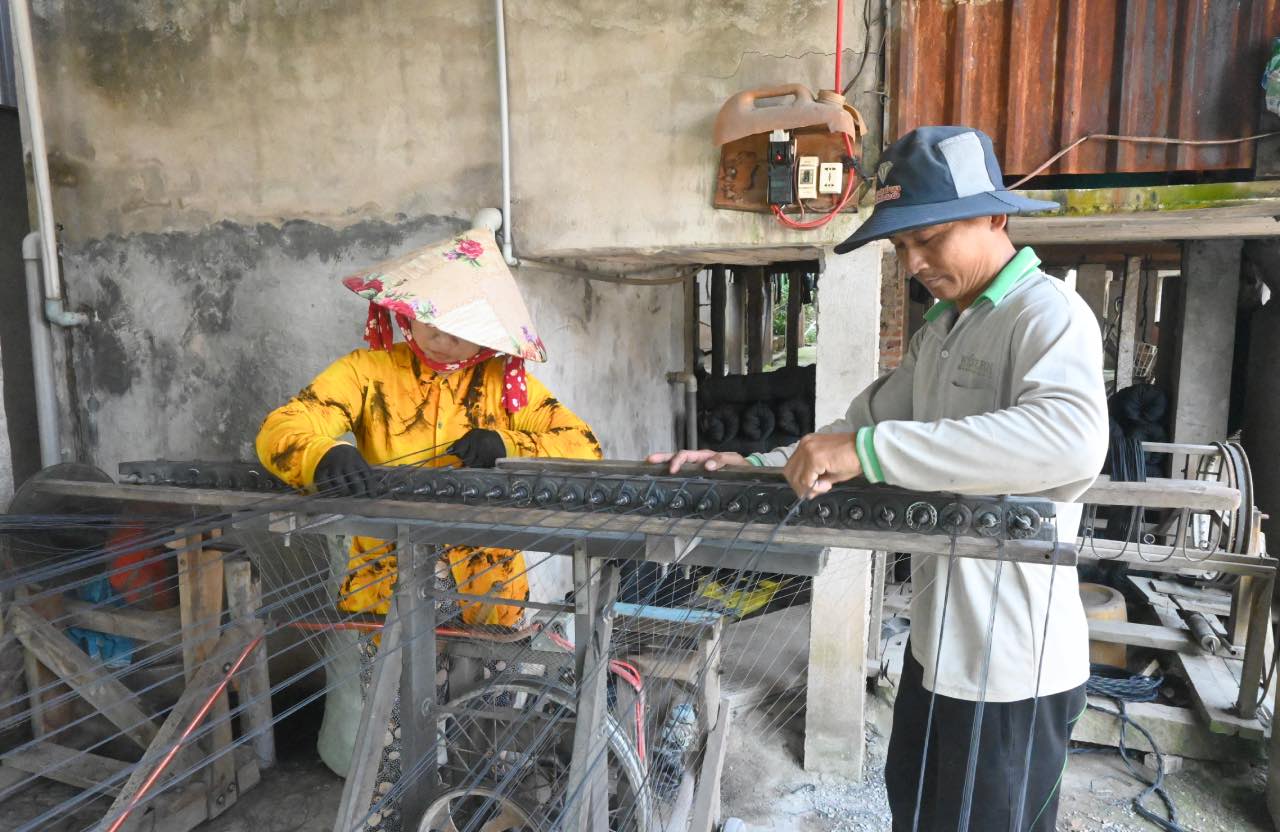
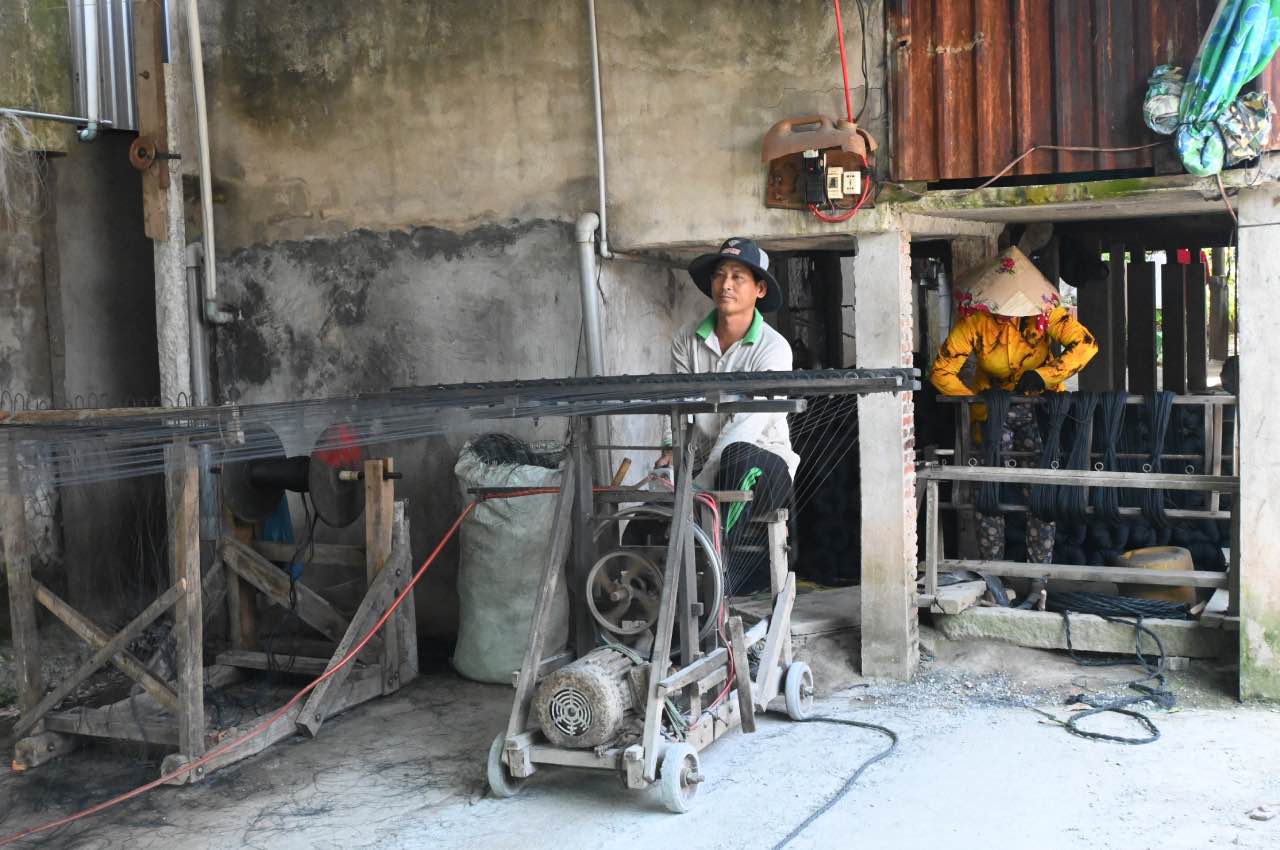
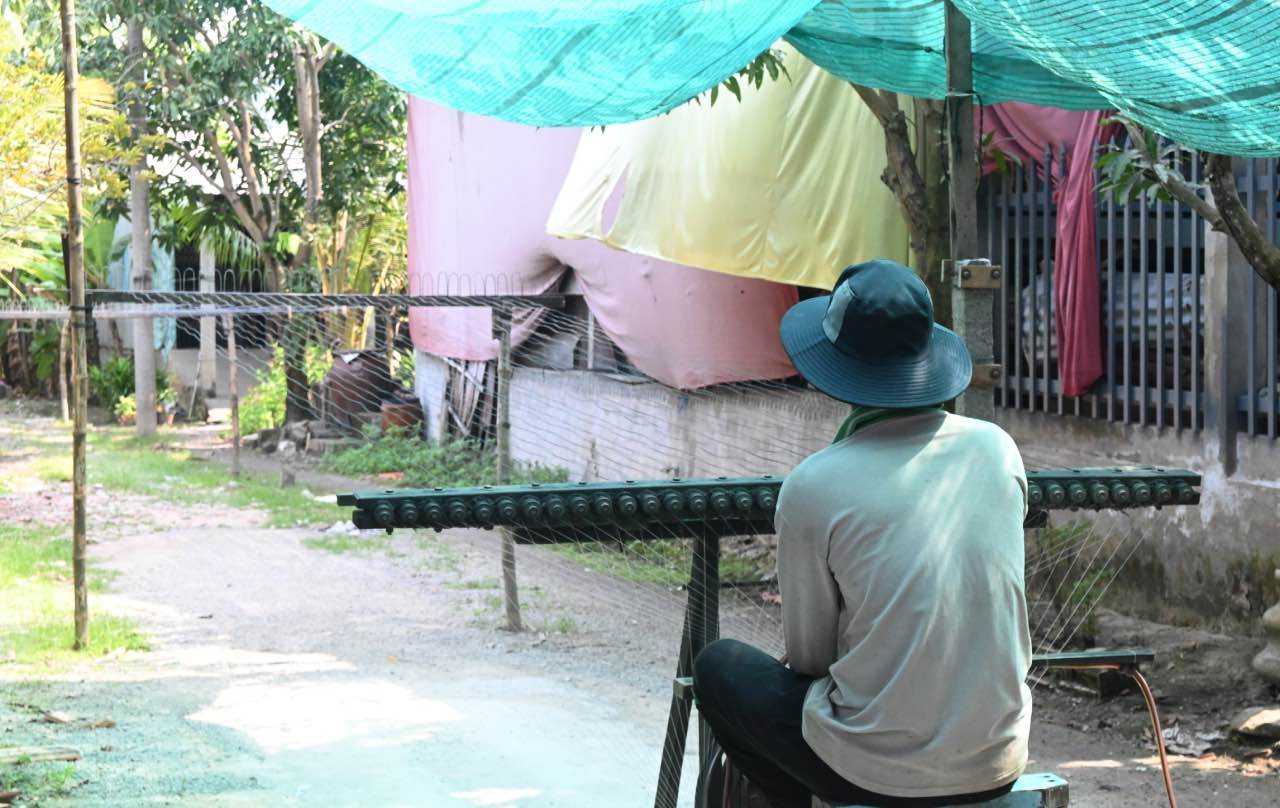
Mr. Nguyen Van Thuc (resident in Nhon My commune, An Giang province) shared: "This profession is hard but familiar. It has supported my family for several years now. Now that I am old, I can do it any day, as long as I have strength, I will stick to the profession." For Mr. Thuc, wire driving is not only a livelihood but also a memory of many generations associated with fields and rivers.
Mr. Thuc also shared: "This profession is hard, but it can be done all year round, earning money every day to take care of family life. It's very regrettable to abandon it. This is a family's livelihood. I just hope there are buyers so that this profession is not lost.


