
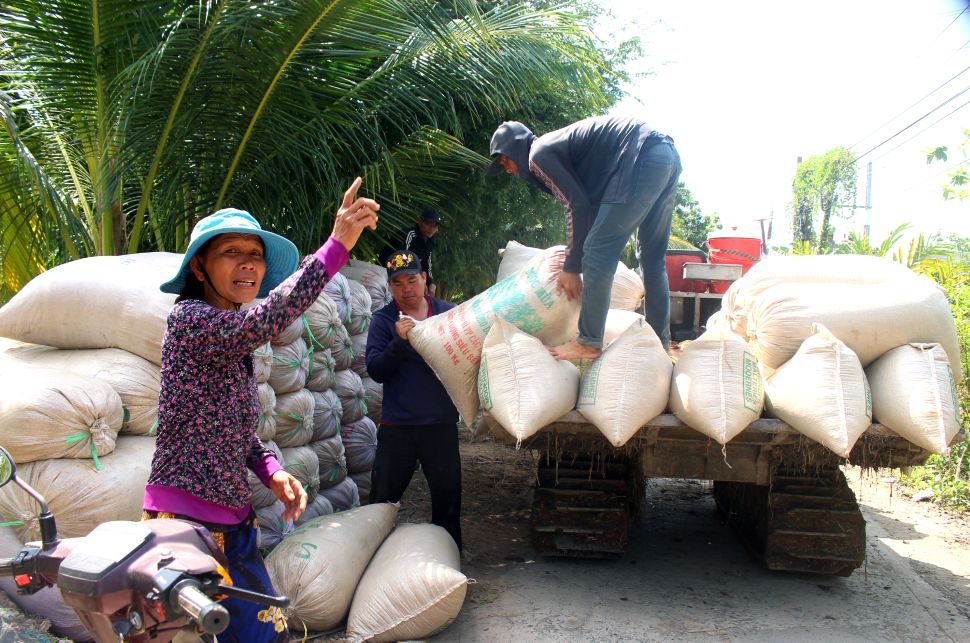
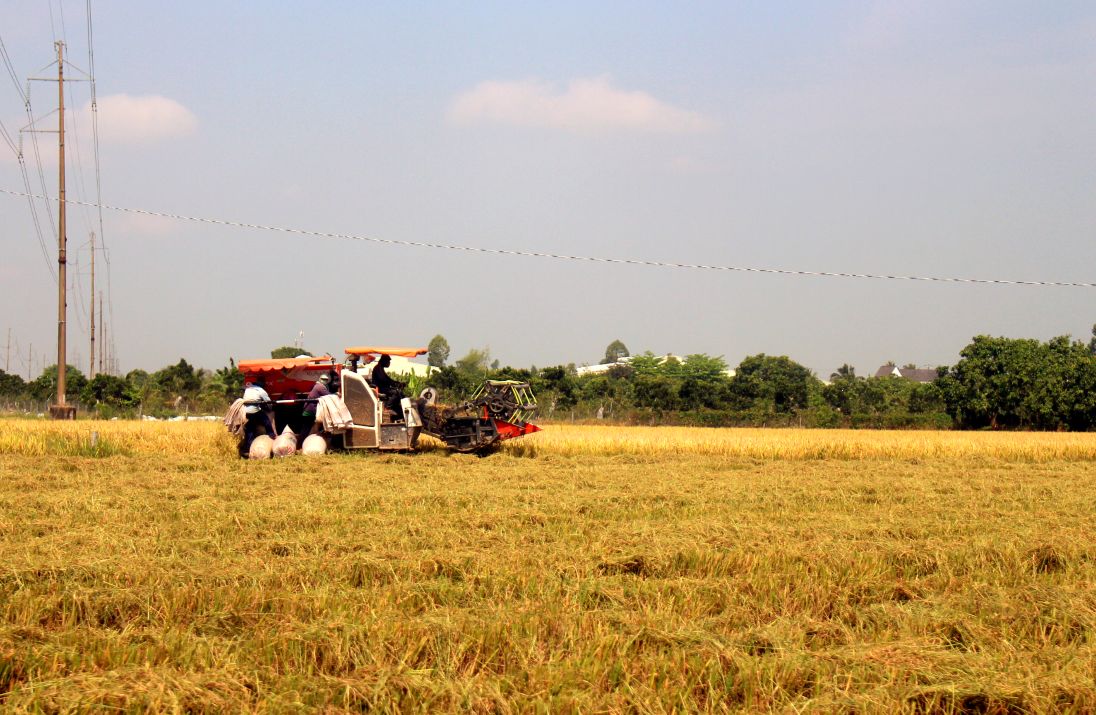
Records at the Dong Xuan rice field in Lap Vo commune, Dong Thap province show that the harvest atmosphere is quite urgent. Most farmers use combine harvesters, mechanizing the entire stage of cutting, threshing and transporting rice from fields to gathering points. The yield of this year's rice crop is rated quite high, many fields reach 9-10 tons/ha.
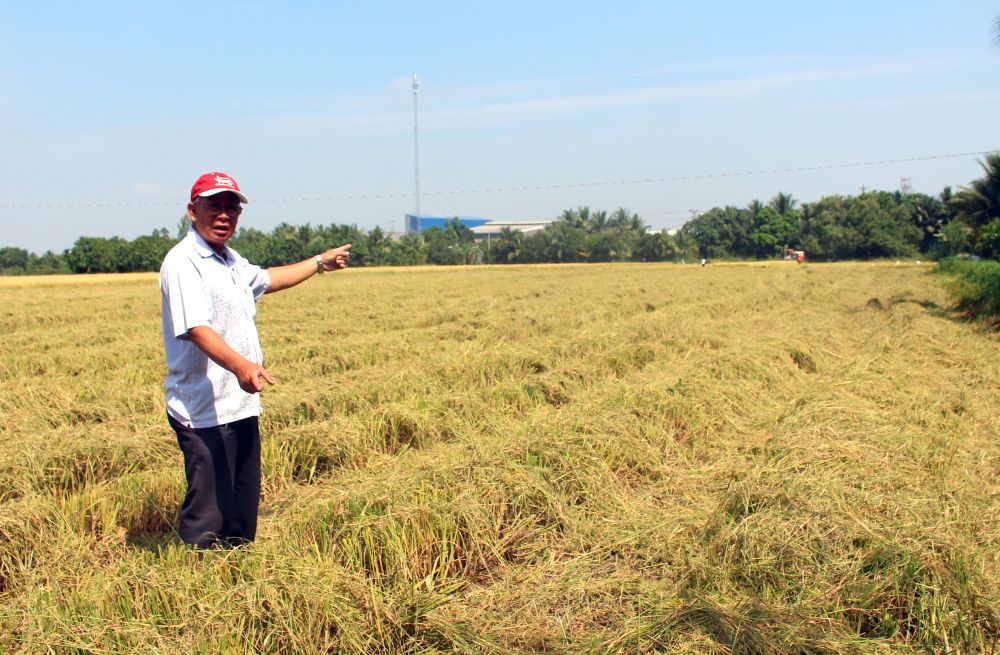
Mr. Nguyen Van Doi - Chairman of the Board of Directors, Director of Binh Thanh Agricultural Service Cooperative - said that the weather is generally favorable throughout the growing process, so rice grows well. However, the joy of a bumper crop for farmers is not complete due to many difficulties in harvesting.
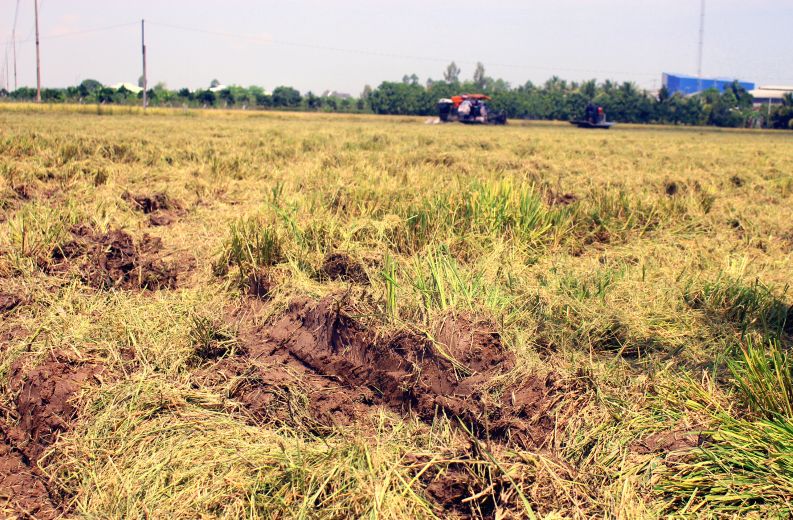
According to Mr. Doi, unseasonal rains appearing at the end of the crop, causing many rice areas to fall, field surfaces to be wet and subsided. This makes the operation of combine harvesters difficult, directly affecting harvest efficiency.
Mr. Cao Tho Truong - a senior farmer who has been attached to the local fields for many years - said that when the field surface is soft after rain, the harvester is prone to getting stuck. To avoid this situation, many drivers are forced to move the machine faster than usual.
Instead of running at a moderate speed to collect rice thoroughly, many machines have to run fast to avoid subsidence and save time. When machines run fast, more rice falls on the field" - Mr. Truong commented.
Not only affected by weather, harvesting costs this year also increased sharply due to rising gasoline prices. The rental price of combine harvesters from about 280,000 VND/cong (1,300m2) has increased to nearly 500,000 VND/cong.
Increased fuel costs force some engine owners to recalculate operating methods. According to Mr. Truong, in many cases, engine operators ignore some necessary technical operations or increase moving speed to shorten operating time, in order to compensate for fuel costs.
As a result, the amount of rice scattered after the harvester passes through has increased significantly. Observations in many fields show that the layer of rice left on the ground is quite thick. "In some places, the amount of rice scattered is even more than the initial sown seed quantity" - Mr. Truong said.
According to his experience, each "cong" of rice field can lose about 20kg of rice, while the initial sown seed amount is only about 12-15kg/cong.
This assessment is also considered by the leaders of Binh Thanh Agricultural Service Cooperative to be quite close to the reality in the locality. If calculated on a large area, this amount of loss could become a worrying figure.
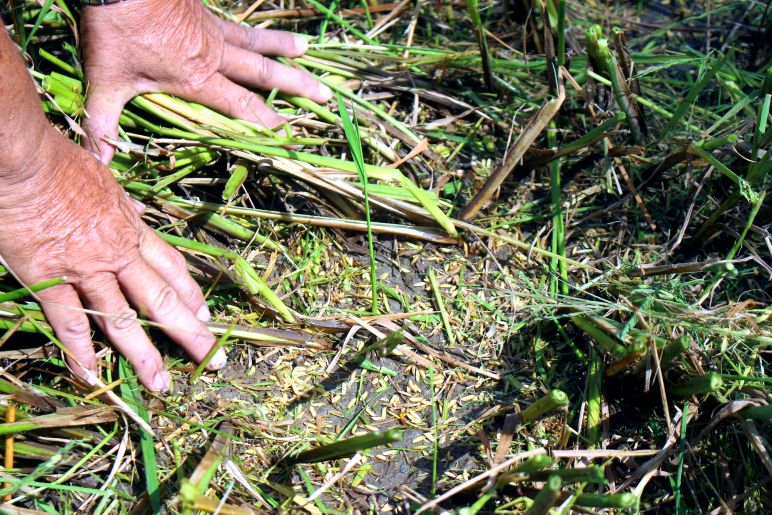
According to agricultural experts, post-harvest losses are a problem that has been warned for a long time, especially in unfavorable weather conditions. When fields are knocked down or damp, the loss rate can increase significantly if the operation of harvesters is not adjusted appropriately.
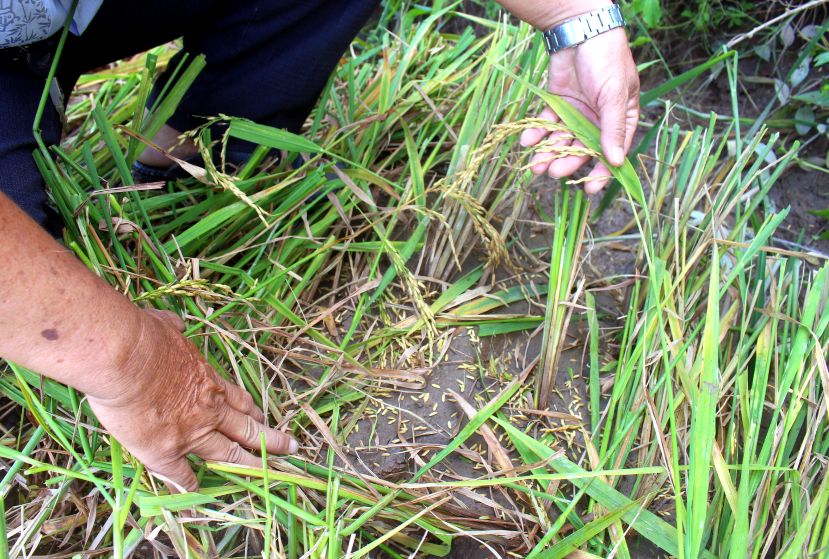
In the context of increasing production costs, reducing post-harvest losses has become an important factor in protecting profits for farmers. In addition to improving harvester operation techniques, localities also need to strengthen mechanized service links and support farmers to be more proactive in harvesting.
This year's Winter-Spring rice crop in Dong Thap is assessed as a bumper crop, but the unexpected impacts of weather and economic fluctuations have shown that agricultural production still faces many risks. For farmers, joy is only truly complete when rice grains not only achieve high yields but are also fully harvested until the end of the crop.


