Brings double efficiency
In the suburban areas of Can Tho City in recent years, the shrimp-rice model has not only brought economic efficiency but also affirmed its role as a sustainable farming direction and adapted to climate change by taking advantage of the natural salt-sweet law.
Unlike intensive shrimp farming or monoculture of rice, the model operates according to the natural cycle: in the dry season, shrimp are raised when the water is salty, in the rainy season, rice is grown when the water is fresh. This approach helps to effectively exploit land, while maintaining ecological balance.
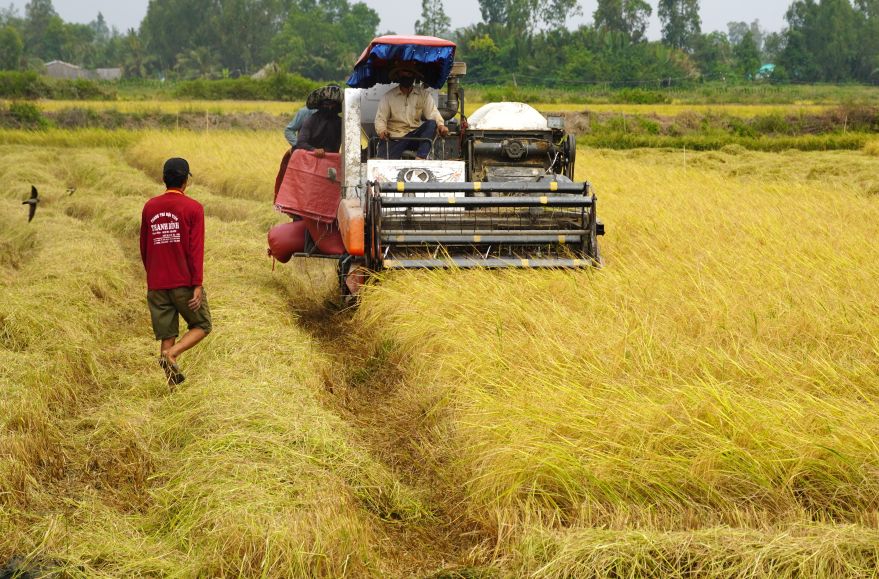
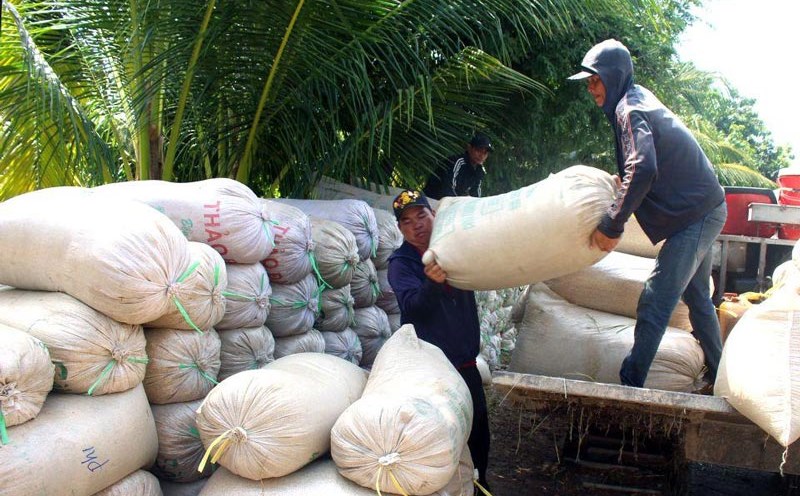
Attached to the model for more than 25 years, Mr. Nguyen Minh Khoa (Hoa Tu commune, Can Tho city) said that cultivating 1 shrimp crop and 1 rice crop each year helps reduce risks, improve the bottom of the farming pond and increase soil fertility. In 2025, he farmed shrimp from the beginning of the year to the end of August of the lunar calendar, then sowed rice. In the Winter-Spring crop, ST25 rice variety achieved a yield of about 700 kg/cong, selling price of 8,000 VND/kg.
According to Mr. Khoa, the big advantage of the model is to limit the use of chemical materials, take advantage of natural laws, thereby reducing emissions compared to many other forms of production. Rice cultivation after the shrimp crop also helps improve the soil and limit pathogens for the next farming crop.
At the cooperative scale, Mr. Ma Van Hong - Director of Hoa De Agriculture and Fisheries Cooperative (Hoa Tu commune, Can Tho city) - said that the unit has maintained the shrimp - rice model for many years with an area of about 32ha, of which nearly 25ha are cultivated ST25 rice in an organic direction. Thanks to taking advantage of natural nutrients from shrimp ponds, fertilizer costs are only about 80,000 - 90,000 VND/cong/crop, significantly lower than pure rice production.
ST25 rice from the shrimp-rice model is always pre-ordered by customers, the selling price gradually increases according to the market: from about 22,000 VND/kg to 30,000 VND/kg and currently reaches about 35,000 VND/kg," Mr. Hong said.
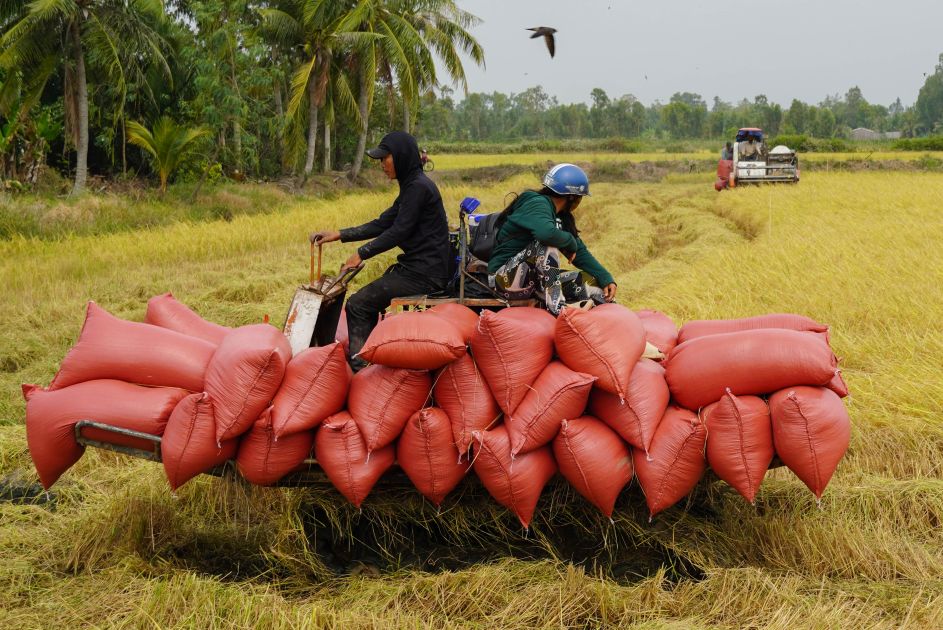
According to Mr. Tang Thanh Chi - Head of the Economic Department of Gia Hoa commune (Can Tho City), in 2025, the locality planted 1,874ha of rice on shrimp farming land, of which ST rice variety accounted for more than 42%. Average yield reached 6 - 6.5 tons/ha, profit about 25 - 30 million VND/ha.
Mr. Chi assessed that this model is suitable in the context of increasingly clear saline intrusion and climate change. In addition to black tiger shrimp and white leg shrimp, farmers also combine farming giant river prawns and growing crops on embankments to increase income.
Can Tho City is also developing a plan to develop the shrimp-rice region in 2026 with an area of about 17,700ha, of which rice accounts for 55%, in order to stabilize livelihoods and adapt to climate change.
Not only in Can Tho, many localities in the Mekong Delta region such as Ca Mau and An Giang are also promoting the development of shrimp - rice models associated with building raw material areas and linking consumption. In the 2025 - 2026 shrimp - rice crop, An Giang province has about 107,000ha; Ca Mau maintains about 9,000ha.
Favorable model
According to Dr. Tran Huu Hiep - Economic expert of the Mekong Delta region, in the Mekong Delta, shrimp - rice is not a new model, but in the context of climate change and increasing saltwater intrusion, it is becoming a typical direction of green agriculture, adapting to nature.
Salt-sweet cycle operation model: rainy season rice cultivation, dry season shrimp farming; two complementary ecosystems, helping to improve the environment, reduce the use of fertilizers, chemicals and antibiotics. Reality shows dual efficiency when both increasing income and dispersing risks for farmers.
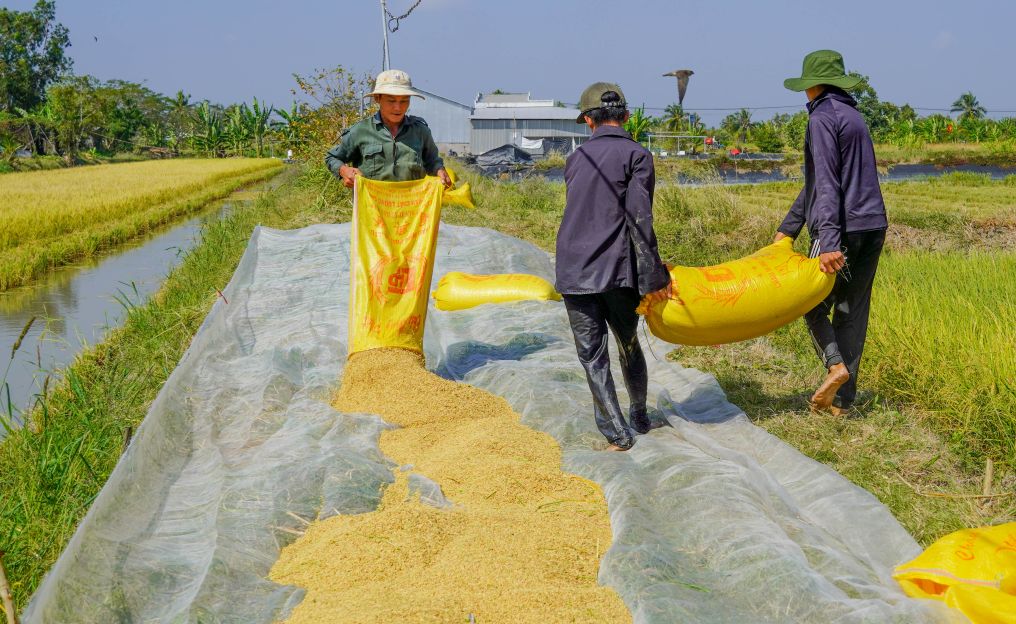
According to Dr. Hiep, shrimp and rice also have strategic significance in developing ecological agriculture and circular economy, especially when the market increasingly favors clean and low-emission agricultural products.
However, for sustainable development, it is necessary to improve irrigation infrastructure, improve production standards, trace origins and strengthen chain links; and at the same time promote the role of businesses, cooperatives and science and technology.
According to experts, this model also suggests an important development philosophy: "Humans do not always seek to resist nature, but need to learn to adapt and exploit the advantages that nature brings.
Dr. Hiep said that shrimp - rice is therefore not only a production story, but also a direction for green, sustainable agriculture development and climate change adaptation of the entire Mekong Delta region in the future.