
Seasonal fates
Already over 55 years old, but more than half of Mrs. Lam Thi Han's life, in Tai Van commune (Can Tho city), is still associated with hired work. More than 20 years ago, her family lived next to My Phuoc forestry farm (belonging to My Phuoc commune), year-round engaged in thuê cajeput cutting.
The work was hard, but the wages were just enough to eat. Sometimes there was a shortage, worrying about each meal," Ms. Han recalled.
Due to difficult circumstances, all 4 of her children had to drop out of school early, and none of them finished primary school.
About 3 years ago, after many years of saving, with the help of 4 children, she bought a small piece of land in Tai Van commune to start a business. However, with only about 3 cong of rice land, she only earns tens of millions of VND in profit each year.
In the remaining months, Ms. Han is busy doing all kinds of jobs to earn a living. In the rice milling season, she and her husband take on hired transplanting, earning about 300,000 VND per day. However, this job only lasts for about half a month to a month in each crop.
Whenever there is work, there is still money. After the harvest, I have to go find other jobs. Sometimes I cast nets to catch fish, sometimes I hunt for snails in the fields," Ms. Han said.
At night, her husband goes to the fields to set traps to catch rats and frogs. If he has a lucky day, he can earn more than a hundred thousand VND each night to cover family expenses.
Currently, the area has finished the crop season, and the couple goes to find snails to sell. On days when there are many snails, they have an income of about 300,000 - 500,000 VND (about 2-3 days to sell), but they have to wade all day in the water, eat rice in the distant fields until late afternoon before returning home. On bad days, they only earn a few tens of thousands of VND.
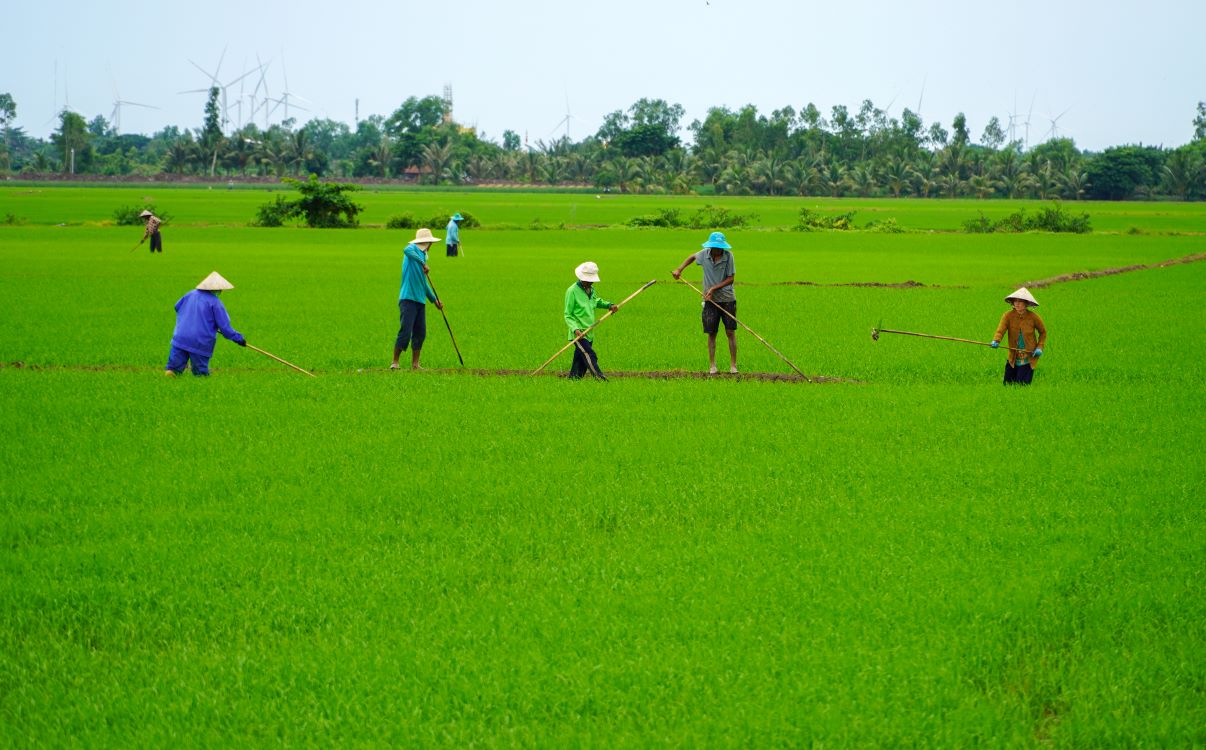
Mrs. Han's children's lives are also not very prosperous. The third daughter and her husband currently living in Thanh Thoi An commune (Can Tho City) are also attached to seasonal jobs like that. Over 30 years old, married and have two young children, but the couple still has no land to produce.
Previously, the couple used to go to Binh Duong to work as workers. However, after a while, they decided to return to their hometown to be close to their children and take care of their children's education. In their hometown, the couple hired each other to do whatever they wanted. Sometimes they followed groups of hired workers to cut rice, sometimes they transplanted rice in the harvest season, sometimes they helped sell fruit to warehouses near the house. At night, they took advantage of going to the fields to catch rats.
Each night, if I win, I can earn a few hundred thousand VND. But these jobs are all seasonal. After the harvest, I have to find another job," Ms. Han's daughter shared.
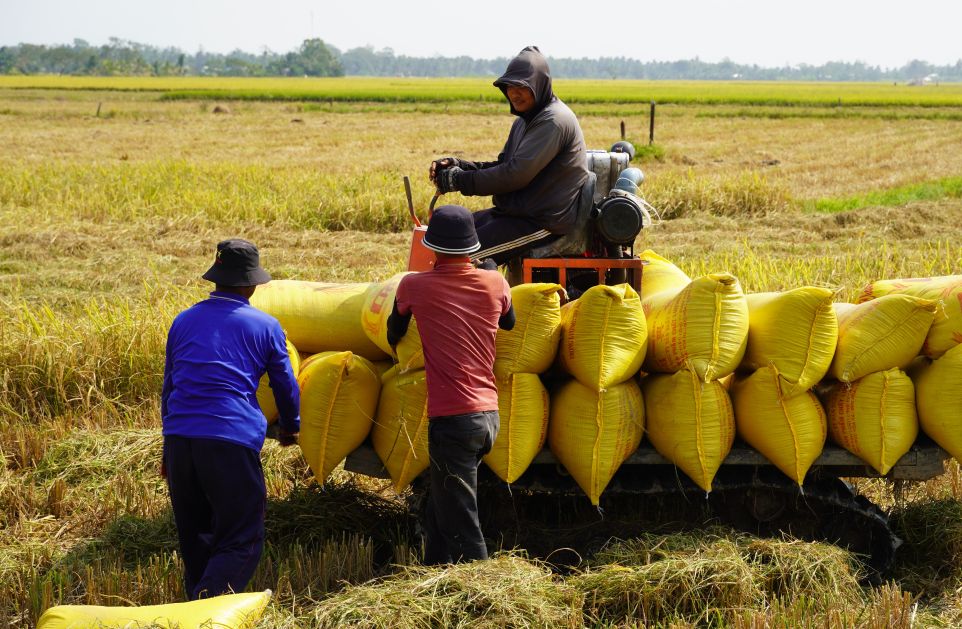
Not only Ms. Han's family but also in many rural areas of Can Tho today, many workers live by such seasonal jobs.
Typically, Thach Khang (20 years old, Thoi An Hoi commune) said that every rice harvest season, he follows a rice harvester to cut rice for hire. When the star apple season comes, he goes to harvest and pack.
During the star apple season, I earn about 300,000 VND per day. The season lasts for more than 3 months, then I have to find another job. Sometimes when I don't have a job, it's considered temporary unemployment," Khang said.
This reality reflects the vicious cycle of many rural workers: lack of production land – few stable job opportunities – income depends on the season. Although working year-round, life is still only enough to cover daily living expenses.
When livelihoods are boosted
In the context of precarious employment, many cooperative models and collective production organizations are gradually becoming a fulcrum to help rural workers have more job opportunities.
Joining Tin Phat Agricultural Cooperative since 2015, Mr. Tran Thanh Vu, in Ke Sach commune (Can Tho City), said that he used to mainly farm and work as a hired laborer, so his income was very precarious. The family has 5 people, 3 children are in school, but he only has 2 cong of rice.
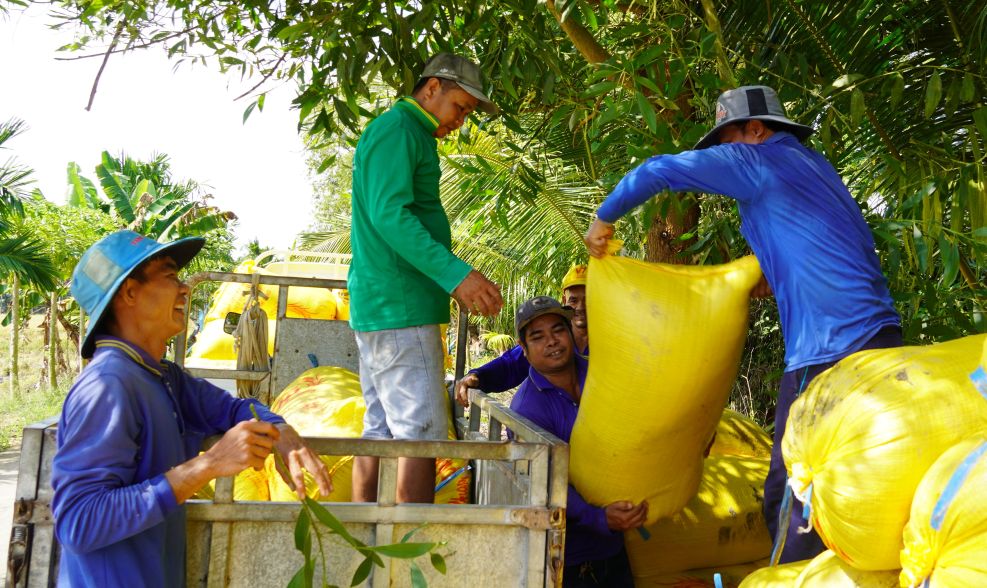
Before joining the cooperative, when I was free, I had to go find outside work, sometimes I didn't have work for a whole month. Now participating in the cooperative, when it's the harvest season, I have to carry loads, deliver fertilizer, deliver rice seeds. Each harvest season is about a month, the income is 9-10 million VND, which is also much better than before," Mr. Vu shared.
According to Mr. Nguyen Van Dam - Director of Tin Phat Agricultural Cooperative, currently the Cooperative regularly employs about 20–25 male workers doing loading, unloading, transporting, and harvesting jobs, and about 20–22 female workers doing transplanting, milling, and collecting rice in the warehouse. The average income of female workers is about 8–10 million VND/month, while male workers is about 10–12 million VND/month.
Although it cannot guarantee year-round jobs for all workers, the Cooperative tries to rotate work so that people have more income outside of rice fields," Mr. Dam said.
In addition, many livelihood support policies are also being implemented to help rural people stabilize their lives. Notably, the National Target Program for socio-economic development in ethnic minority and mountainous areas, with many policies to support vocational conversion, creating livelihoods and sustainable poverty reduction.
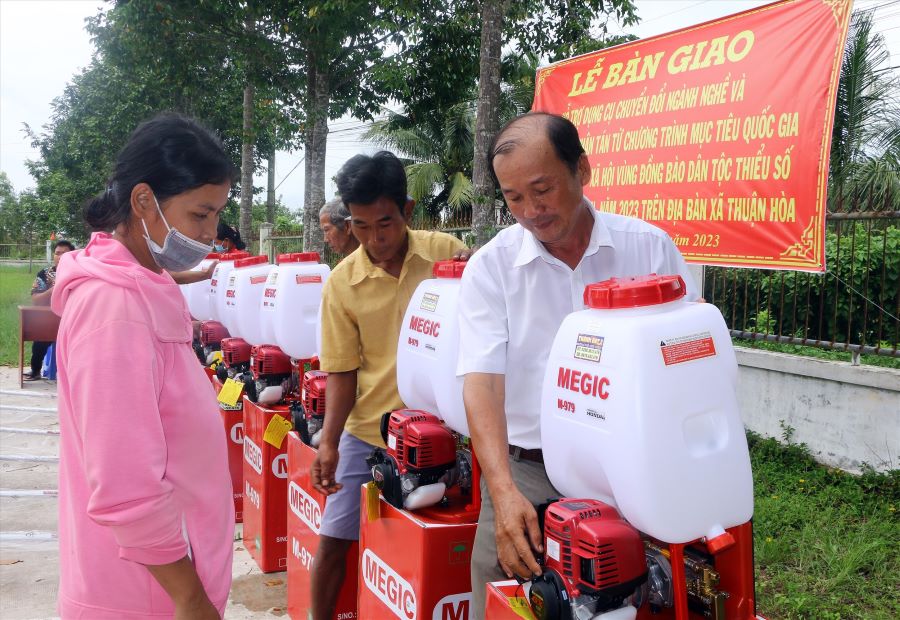
Mr. Thach Thuong, in Nga Nam ward (Can Tho City), said that he and his wife used to go to Binh Duong to work as workers. After the COVID-19 epidemic, they returned to their hometown to work as hired laborers in all kinds of jobs but encountered many difficulties due to lack of transportation. Supported with 10 million VND to change careers, he bought a motorbike to both travel and transport fruits for sale, earning about 7-8 million VND per month.
According to Mr. Nguyen Minh Chi - Vice Chairman of Vinh Chau Ward People's Committee (Can Tho City), thanks to the implementation of many policies to support jobs and livelihoods, the lives of people, especially Khmer people in the locality, have been clearly improved, and the poverty rate of the ward has decreased sharply. Currently, the whole ward has 129 poor households, a decrease of 136 households compared to 2024.


