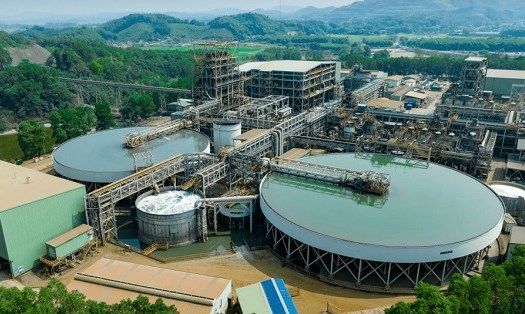
In that context, Masan High-Tech Materials (UPCoM: MSR), through the Nui Phao multi-metal mine in Thai Nguyen, is owning one of the most notable assets of the global tungsten industry: the largest tungsten mine operating outside China.
Changes in the global tungsten market structure in recent years are making the role of non-China supply sources increasingly important. As demand for industrial metals serving high technology increases and global supply chains begin to diversify, large-scale resource assets such as Nui Phao may gradually be valued higher strategically.
Wolfram - an important metal in many strategic industries
Wolfram is one of the special metals in the periodic table with a melting point of about 3,420°C - the highest among all metals, while possessing superior hardness and heat resistance. Thanks to these properties, tungsten is widely used in the production of superhard alloys, precision cutting tools, industrial equipment, electronic components and many high-tech applications.
In the modern economy, this metal plays an important role in many strategic industries such as semiconductors, electronics, high-tech batteries and defense. The development of fields such as artificial intelligence, data centers and semiconductor chip manufacturing is forecast to continue to boost demand for special-performance industrial materials, including tungsten.
Therefore, many countries have included tungsten in the list of strategic minerals in supply chain security policies. The US, the European Union and many developed economies are implementing mineral reserve programs and investing in important raw material supply chains to ensure long-term supply for core industries.
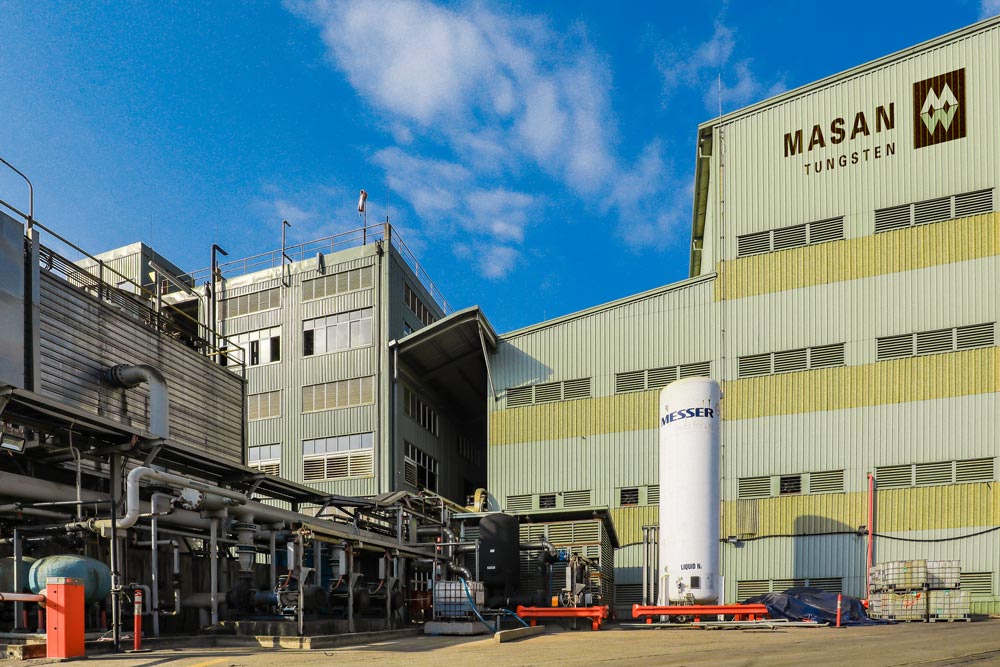
However, the supply of this metal is very concentrated. China currently accounts for more than 80% of global tungsten production, making this metal supply chain significantly dependent on a single country. This makes non-China sources increasingly strategically valuable for market stability.
When the tungsten market structure begins to change
For decades, China has played a central role in the global tungsten industry thanks to its large reserves and strong processing capacity. However, market structures are gradually changing as the country's domestic supply begins to shrink. Mining control policies and production quotas are being tightened. According to Fastmarkets market data, China's tungsten mining quotas have decreased by about 6% per year in recent years, reflecting a trend of stricter management of strategic resources. At the same time, export control measures have also been implemented, causing tungsten exports from China to decrease significantly.
In the context of reduced domestic supply and industrial demand still maintained at a high level, China is gradually becoming a net importer of tungsten. Declining exports while increasing ore imports show that domestic supply is increasingly tightened.
This change is creating clear impacts on the market. Tungsten prices have increased sharply and set a new level recently. According to market data, the price of Ammonium Paratungstate (APT) - an important intermediate material in the tungsten value chain - has increased to about 3,185 USD/MTU in the international market (CIF Rotterdam) in early April 2026, reflecting a significant increase compared to the previous period and showing an increasingly clear trend of supply tightening.
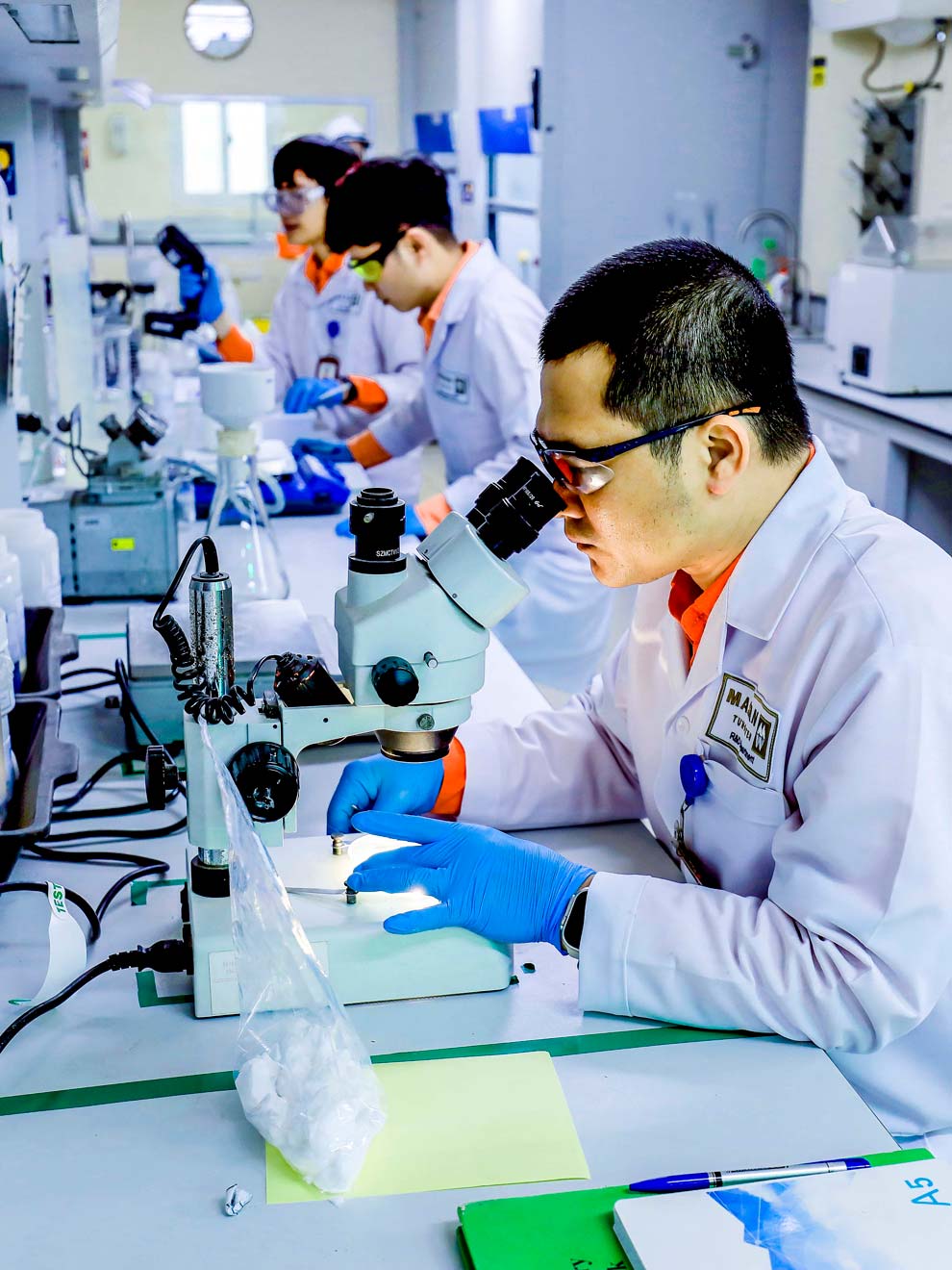
In parallel with that, the market outside of China is also facing a significant supply shortage. According to research by Masan High-Tech Materials, in 2025, the rest of the world is currently short of about 79,000 tons of tungsten supply, reflecting the growing gap between industrial demand and existing supply.
When supply is highly concentrated in a country, any change in exploitation or export policies can have a significant impact on the global market. In that context, large sources of supply outside of China are increasingly being noticed.
Nui Phao - Strategic supplier outside of China
In the context of limited supply outside of China, Masan High-Tech Materials' Nui Phao mine has emerged as a noteworthy source in the global tungsten value chain. This project is considered the largest operating tungsten mine outside of China, with an exploitation capacity of about 3.5 million tons of ore per year and has been operating stably since 2014.
After more than a decade of operation, the factory at Nui Phao has reached a readiness rate of about 94%, showing a stable level in mining and processing operations. Unlike many new mining projects that are still in the development or licensing phase, Nui Phao has become a real source of supply for the global market.
Another notable factor is Masan High-Tech Materials' position in tungsten supply outside of China. According to average data for the period 2020-2025, the enterprise accounts for about 21% of tungsten supply outside of China, thereby becoming one of the largest suppliers outside the country accounting for the majority of global output.
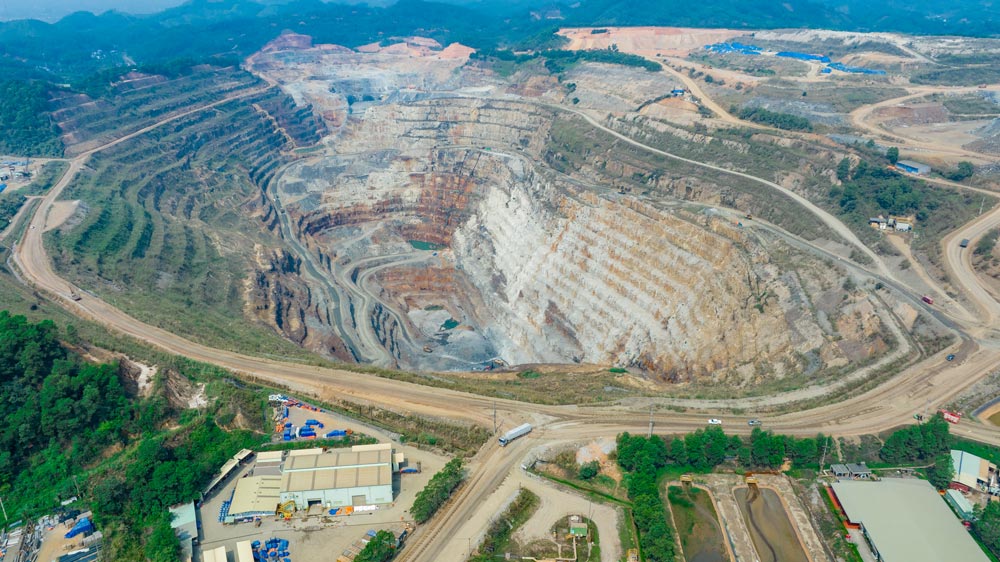
In a market where supply outside of China is increasingly scarce, Masan High-Tech Materials is gradually affirming its role as a reliable tungsten supplier for industrial customers worldwide.
Participating in the supply chain of global corporations shows that Masan High-Tech Materials' products meet strict standards of quality, stable supply and deep processing capability, important factors in high-tech industries.
The combination of large-scale resources, integrated processing value chains and a global customer network is helping Masan High-Tech Materials gradually consolidate its position in the international tungsten supply chain.
In the context of the global tungsten market restructuring and the increasingly clear demand for diversification of supply sources, large and stable supply sources outside of China such as the Nui Phao mine may play an increasingly important role in the market in the coming years.