
More than 112 km long, Ring Road 4 of the Capital region passes through Hanoi, Hung Yen and Bac Ninh, directly connecting to key traffic routes such as Noi Bai - Lao Cai, Hanoi - Hai Phong, Hanoi - Thai Nguyen and Phap Van - Cau Gie. With a total investment of more than 85,000 billion VND, this is considered one of the key infrastructure projects of the North.
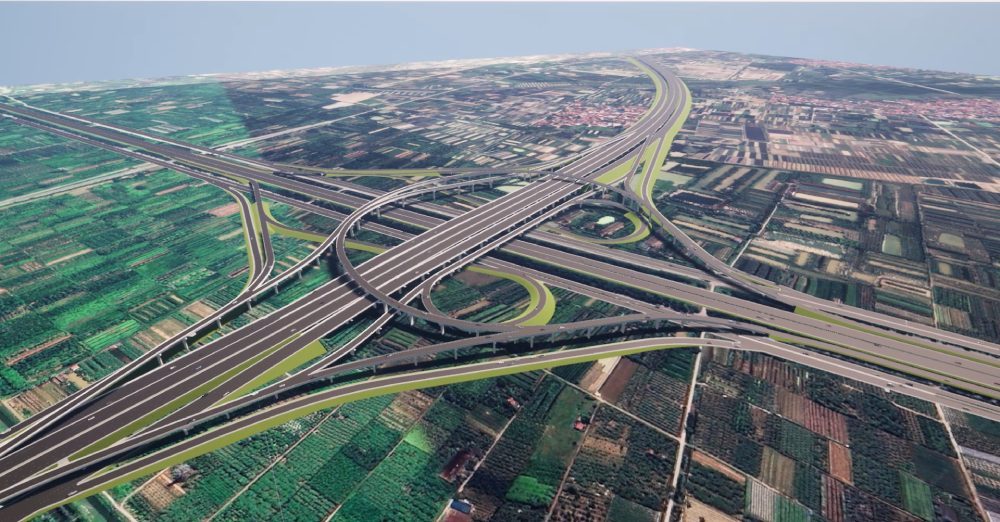
In which, component component 3 - the expressway section invested in PPP method - plays the role of "operating backbone" of the entire route when directly connecting inter-regional transport lines. This is also a component that T&T Group participates in as an investor in the project implementation consortium, and also participates in the management, operation and maintenance of the expressway.
One route, many flows
Nguyen Duc Nam, a container driver specializing in transporting electronic components from Bac Ninh to Hai Phong, said that there are days when the car takes a few more hours just to pass intersections around Hanoi.
Many times the airline is far away, but just a traffic jam at the gateway is considered a delay to get to the port," he said.
Nam's story reflects the increasing logistics pressure in the North as production and warehousing centers continuously expand. In the past decade, industrial poles no longer concentrated around Hanoi but developed strongly to Bac Ninh, Hung Yen, Hai Phong and many neighboring localities.
While the scale of production is increasing rapidly, the regional connection system has not kept up with the expansion speed of industrial goods flows. That gap has made Ring Road 4 a project of special significance for the Capital region.
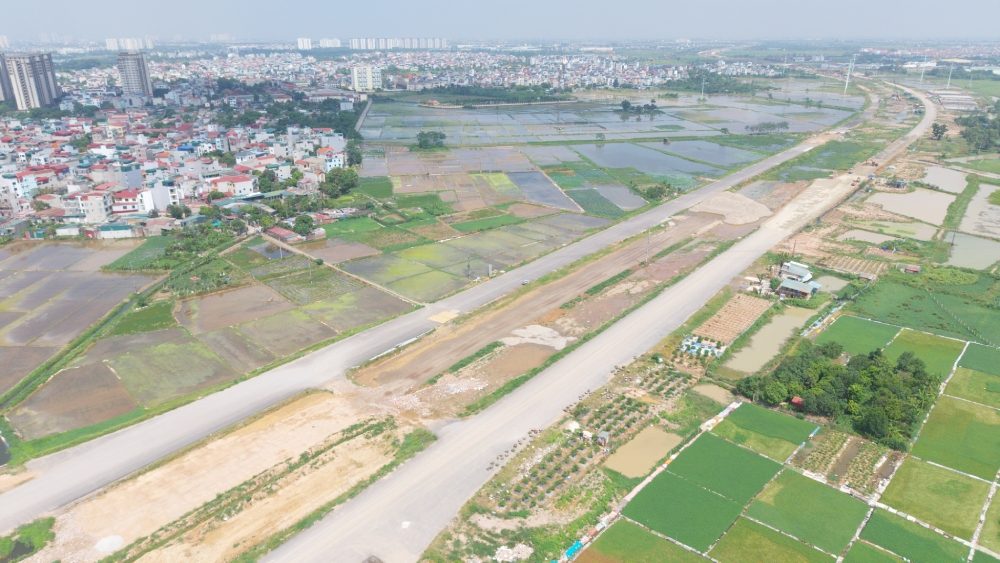
The PPP expressway component is considered the "backbone of operation" when connecting logistics flows between Noi Bai airport, Northern production centers and Hai Phong - Quang Ninh seaport corridor. T&T Group's participation in this central route section shows the business's interest in projects capable of organizing and leading economic flows in the long term.
Looking at the planning map, Ring Road 4 forms a new connecting ring surrounding the largest industrial and logistics poles in the North. The road not only directly connects with key traffic axes but also contributes to increasing the volume of goods circulating between production centers, warehouses and consumption markets.
In Hanoi, the route passes through many areas that are playing an important role in the industrial and external logistics structure of the Capital such as Me Linh, Hoai Duc, Dan Phuong, Thanh Tri or Thuong Tin. These are all areas that are forming new industrial parks, industrial clusters and logistics centers.
In the Northeast, Bac Ninh continues to be the leading electronics manufacturing center in the country. Notably, Ring Road 4 not only connects existing industrial parks but also passes through strongly developing areas such as Thuan Thanh, Gia Binh and Tien Du. Meanwhile, Hung Yen has emerged as a new logistics center with a series of large industrial parks along the Hanoi - Hai Phong corridor.
From this perspective, Ring Road 4 is not simply an inter-provincial traffic route but is gradually forming a new network connecting production centers, logistics, airports and seaports. That role becomes even more important as the Northern economic structure develops in a multipolar direction and requires an increasingly high level of intercommunication.
Bau Hien's choice in a hundred-year development structure
In the Ring Road 4 project, T&T Group is present at the expressway section playing the role of operating inter-regional logistics – a place connecting production centers, warehouses, airports and the northern seaport corridor.
In addition to participating in financial arrangement, businesses also directly participate in the operation and maintenance of the expressway. This shows that the concern is not only limited to transport infrastructure but also to components that have the ability to organize transport flows and regional economic links in the long term.
Considering the overall recent steps of T&T Group, this choice is not accidental.
In 2025, the T&T Group – FUTA Group – Phuong Thanh consortium was selected as the investor of the Bao Loc – Lien Khuong expressway with a total capital of nearly 18,000 billion VND, contributing to completing the corridor connecting Ho Chi Minh City with Da Lat and the Central Highlands.
In the Central region, Quang Tri airport is expected to become a new infrastructure driving force of the North Central region. In the North, Vietnam SuperPort in Phu Tho is positioned as an important link in the Vietnam - China - ASEAN logistics corridor. Meanwhile, Quang Ninh Port continues to play the role of the maritime gateway of the key economic region of the North.
Along with that are many other large-scale projects in the fields of energy, industry and infrastructure. Although belonging to many different fields, these projects all have in common the goal of creating a long-term development foundation for economic regions.
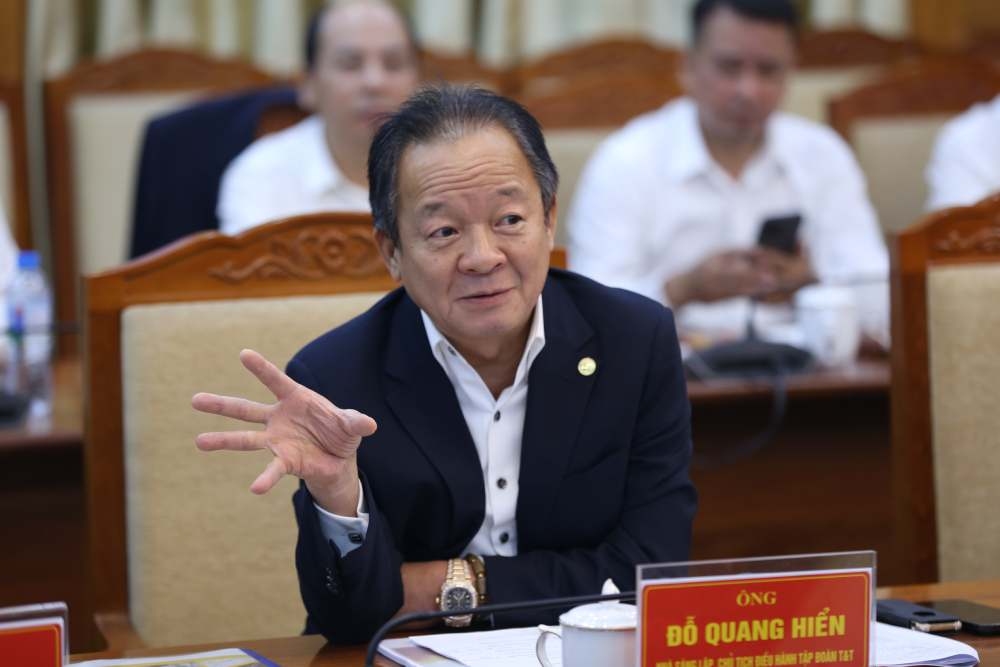
Businessman Do Quang Hien has repeatedly emphasized that businesses can only develop sustainably when investment activities are linked to national interests, the efficiency of the system and the ability to create real value for the economy.
According to Assoc. Prof. Dr. Tran Dinh Thien, when reaching a certain threshold of development, many large private enterprises will no longer only pursue short-term benefits but switch to thinking about creating the future, participating in long-term development structures of the economy.
Returning to Ring Road 4, the new Capital Planning determines that Hanoi will develop according to a multi-polar, multi-layer, multi-layer model, in which traffic rings and economic corridors play the role of the backbone for urban, industrial and logistics expansion.
It may not be necessary to wait for a 100-year vision to see the first impacts of this orientation. When the main components of Ring Road 4 are completed, goods from Bac Ninh, Hung Yen or Noi Bai area will circulate more conveniently between production centers, logistics and northern seaports.
For people like driver Nguyen Duc Nam, it is simply a shorter journey. But behind those shortened routes may be the formation of a new development structure, where infrastructure not only connects localities but also connects the growth drivers of an entire economic region.


