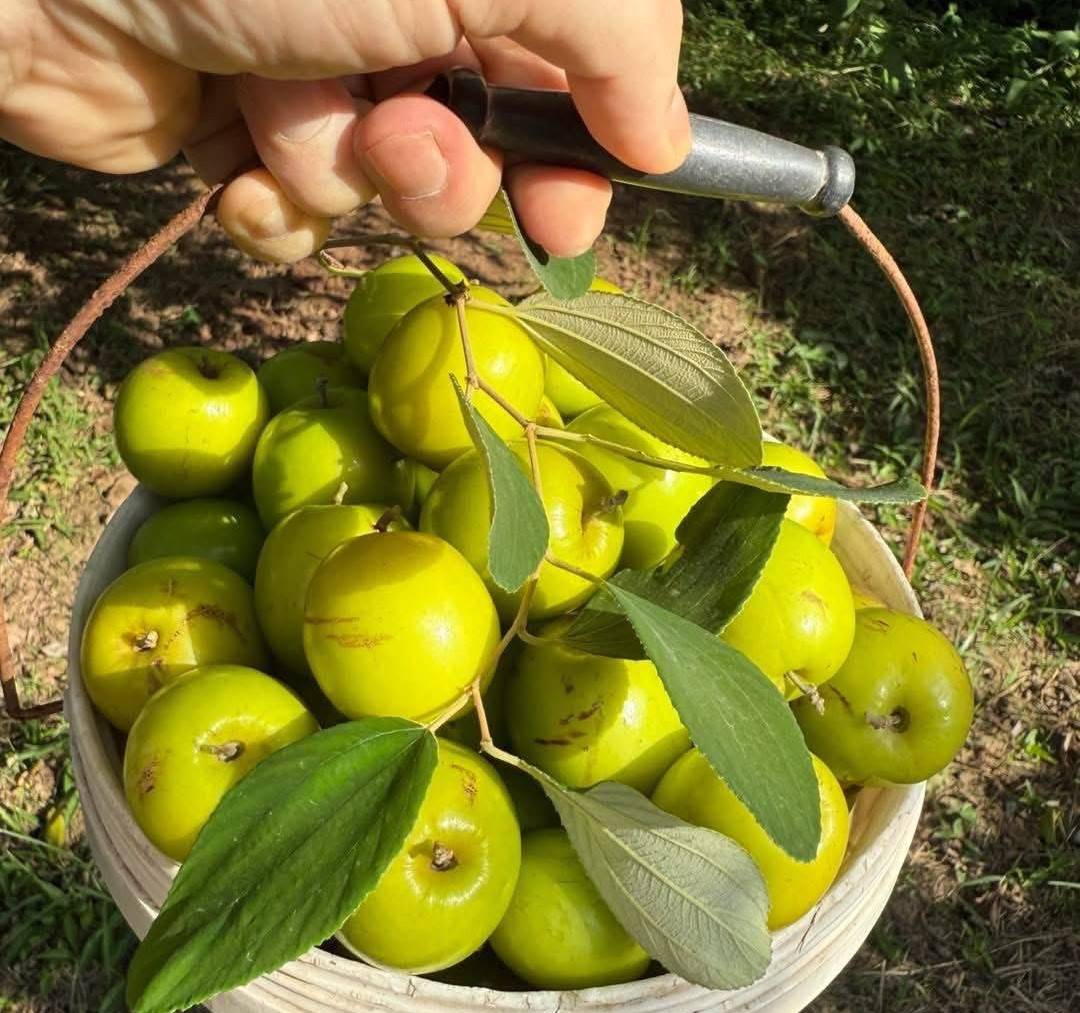
Busy harvesting specialty salted apples
After lunch break, Ms. Pham Thi Linh (Dong Tien 2 residential group) quickly went to the garden, preparing to pick apples to deliver to customers to order. Mrs. Linh's apple garden has only 50 trees but has been harvested for a month now, a few days it weighs 5-10 kg, a lot of days it weighs half a ton.
Ms. Linh said that this year, due to the relatively favorable weather, the apricot is in season, the fruit is big, delicious, crispy, sweet, just the taste of the specialty of Bang La apples.
Also because apples are in good harvest, the price of apples sold in the garden has also decreased compared to last year. Specifically, traders bought at Mrs. Linh's garden on the afternoon of December 22 at 30,000 - 35,000 VND/kg; customers chose to sell the fruit at 40,000 VND/kg. At the beginning of the season, there were days when apples were sold in the garden for 50,000 VND/kg. " apple prices will be higher for Tet, but it is likely that this year the apples will ripen evenly and ripen early, so there will be no more apples to sell during the Lunar New Year" - Ms. Linh said.
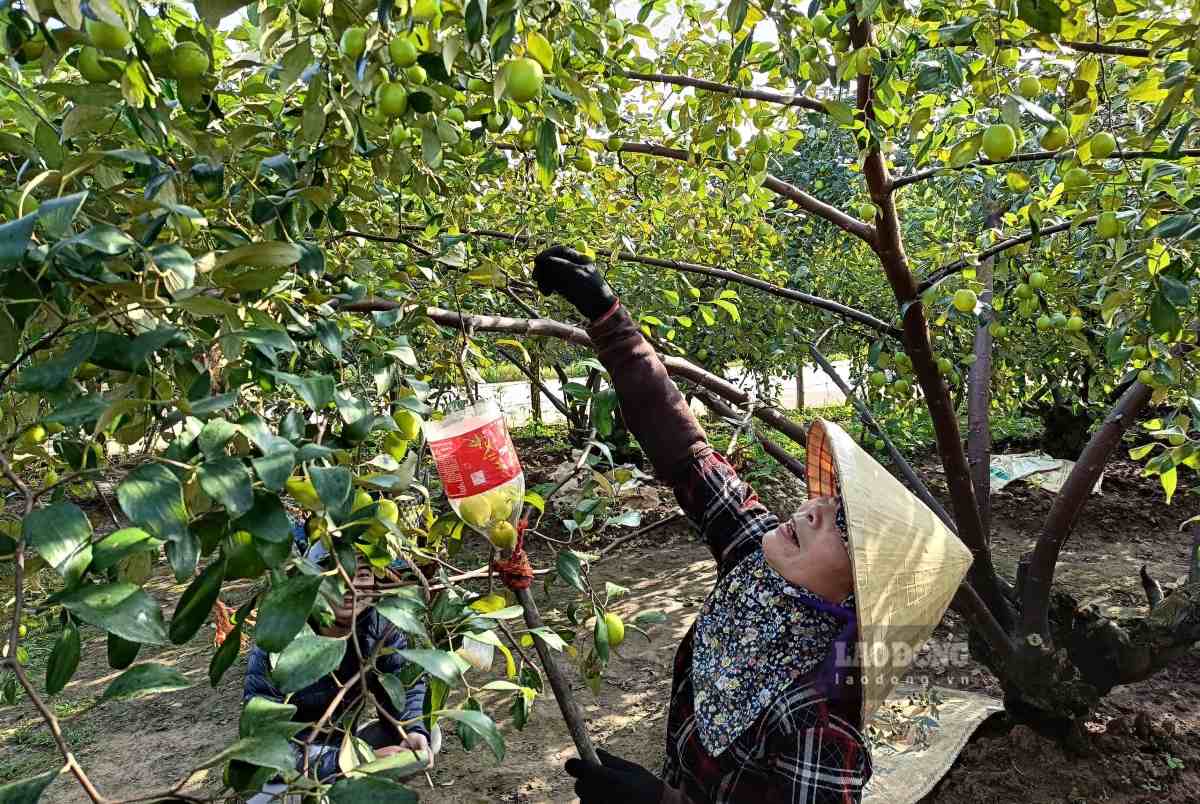
According to Ms. Thuong, the owner of a 100-year-old apple orchard in Bien Hoa residential group, as long as the apples are ripe, traders will order them, there are no more apples for retail sale. With a familiar relationship, Ms. Thuong had to buy them in neighboring gardens to keep customers.
According to apple growers, this year, the average yield of each tree is 70 - 100 kg/crop. For a sao of apples, people earn 30 - 50 million VND/year, many times more than the previous generation of salt and regular rice production. On days when the garden does not have ripe apples for harvest, people go to pick apples for hire, earning 400,000-500,000 VND/day.
Replicating good models with high economic efficiency
Nam Do Son ward currently has an apple growing area of over 120 hectares with nearly 1,000 households participating in apple growing. Salted apples become a major crop in the locality. In addition to growing apples in the traditional way, from 2018 to now, many households in Nam Do Son ward have applied growing juan apple. Accordingly, the jujube model is a traditional jujube tree that will have its branches prone to being prone to being prone to being truncated, the frame of the jujube is made from concrete piles and bamboo trees that are securely over 1m high to avoid collapsing during storms, making it easy to care for and harvest. Gian apple is well photosensed, so it increases the pollen rate for flowers, producing many quality fruits; with the characteristic aroma, crunchy, sweetness of salted apples that are rare in other places.
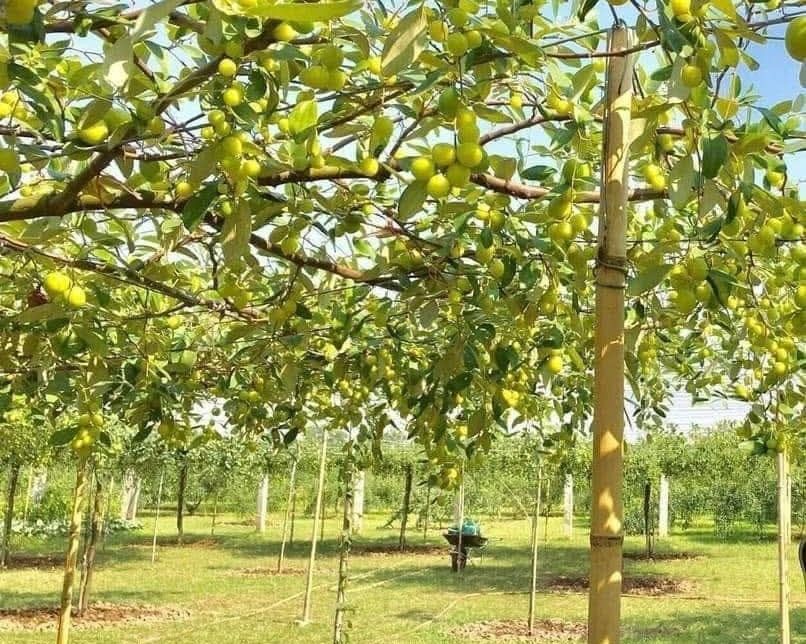
In addition, with beautiful scenery, the cool green jujube garden attracts visitors to visit, take photos, and experience, creating a spillover effect to help people consume products better and increase income for people. Therefore, the locality is interested in and creating conditions to replicate this apple growing model to bring high productivity and quality, contributing to the development of the local economy and bringing stable income to the people.
According to the Department of Crop Production and Plant Protection of Hai Phong, not only stopping at apple trees, farmers in Nam Do Son ward also seek to exploit model intercropping to increase economic efficiency such as raising bees for honey in apple gardens. The apple - bee combination model also creates a sustainable agricultural ecosystem, safe agricultural products, limits pesticides, improves product quality and protects the ecological environment. Visitors can visit apple gardens, learn about bee farming processes, collect honey themselves... to form a chain of services.
With this new direction, Tao Bang La is opening up opportunities and prospects, both affirming the brand of 3-star OCOP salted Tao products of Hai Phong and creating sustainable development momentum for local people.