Prolonged hot weather, many people in Gia Lai and Quang Ngai invite each other to the forest to find and pick up cicada carcasses to sell to traders, creating additional income during the off-season.
In communes such as Ro Koi, Sa Thay, Kon Braih (Quang Ngai) or Ayun, Mang Yang, Ia Mo (Gia Lai), this activity takes place quite actively. From early morning to late afternoon, many families go into the forest together, weaving through the edge of the forest and fields to find and pick up cicada carcasses still clinging to tree trunks and dry leaves.
Ms. Y Hien (resident of Ro Koi commune) said that income from swidden fields is unstable, so her family takes advantage of going to the forest to earn extra income. "If lucky, each day we can earn about 2 million VND from picking up cicada carcasses," she shared.
However, this job is not easy when having to travel for many hours in the forest, in the harsh hot weather.
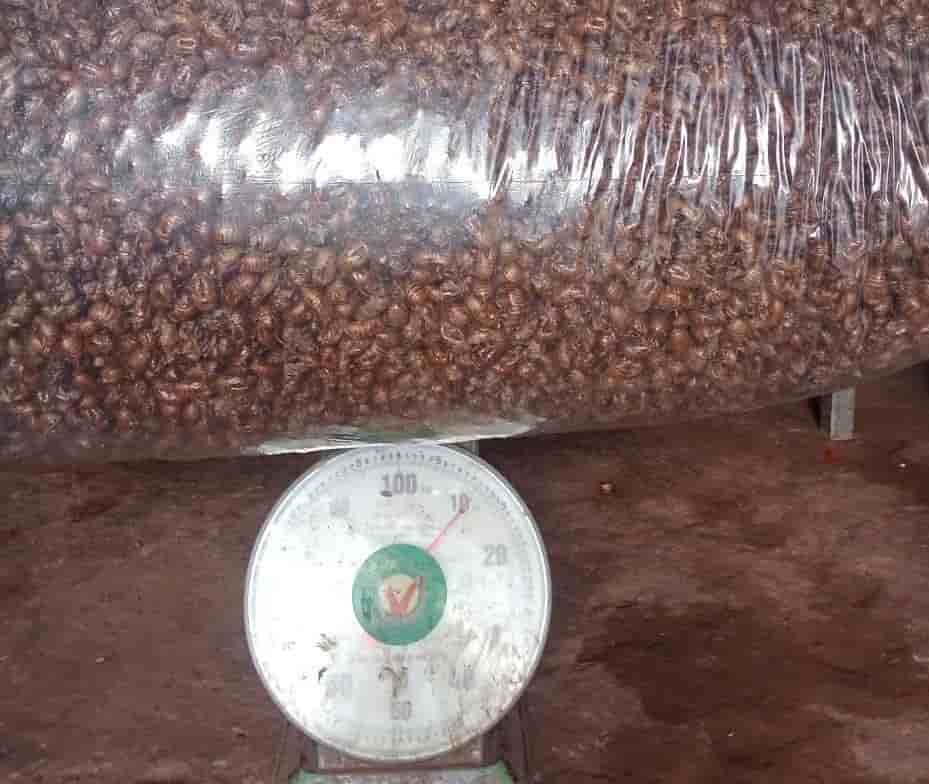
According to people, cicada carcasses are very light, it takes a whole day to collect a few taels. On average, each person only collects about 300-400 grams, equivalent to hundreds of cicada carcasses. As the number of participants increases, the source of cicada carcasses in the area near the edge of the forest becomes scarce, forcing people to go deeper into the natural forests to search.
Traders said they are ready to buy all the quantity people bring back. The current price of cicada carcasses ranges from 2 to 2.2 million VND/kg; small types are priced at about 600,000-700,000 VND/kg.
After purchase, the goods are transported to the northern provinces for consumption. However, the specific purpose of use has not been clearly defined, many people believe that they can be used as medicinal herbs.
Picking up cicada carcasses contributes to helping people improve their income without directly affecting forest resources.
However, in prolonged hot weather conditions, local authorities recommend that people absolutely do not bring fire into the forest, do not throw cigarette butts or cook arbitrarily to avoid the risk of widespread forest fires.