
Within the framework of the Dak Lak Provincial Investment Promotion Program in 2026, experts and businesses focus on analyzing solutions for socio-economic development and investment attraction.
In which, the issue of building a synchronous logistics system is considered an important factor to promote key agricultural product industries.
According to Mr. Nguyen Thanh Son - Chairman of the Board of Directors of Cat Lai Port Joint Stock Company, modern logistics needs to be seen as a unified system, in which traffic "blood vessels" must be connected smoothly.
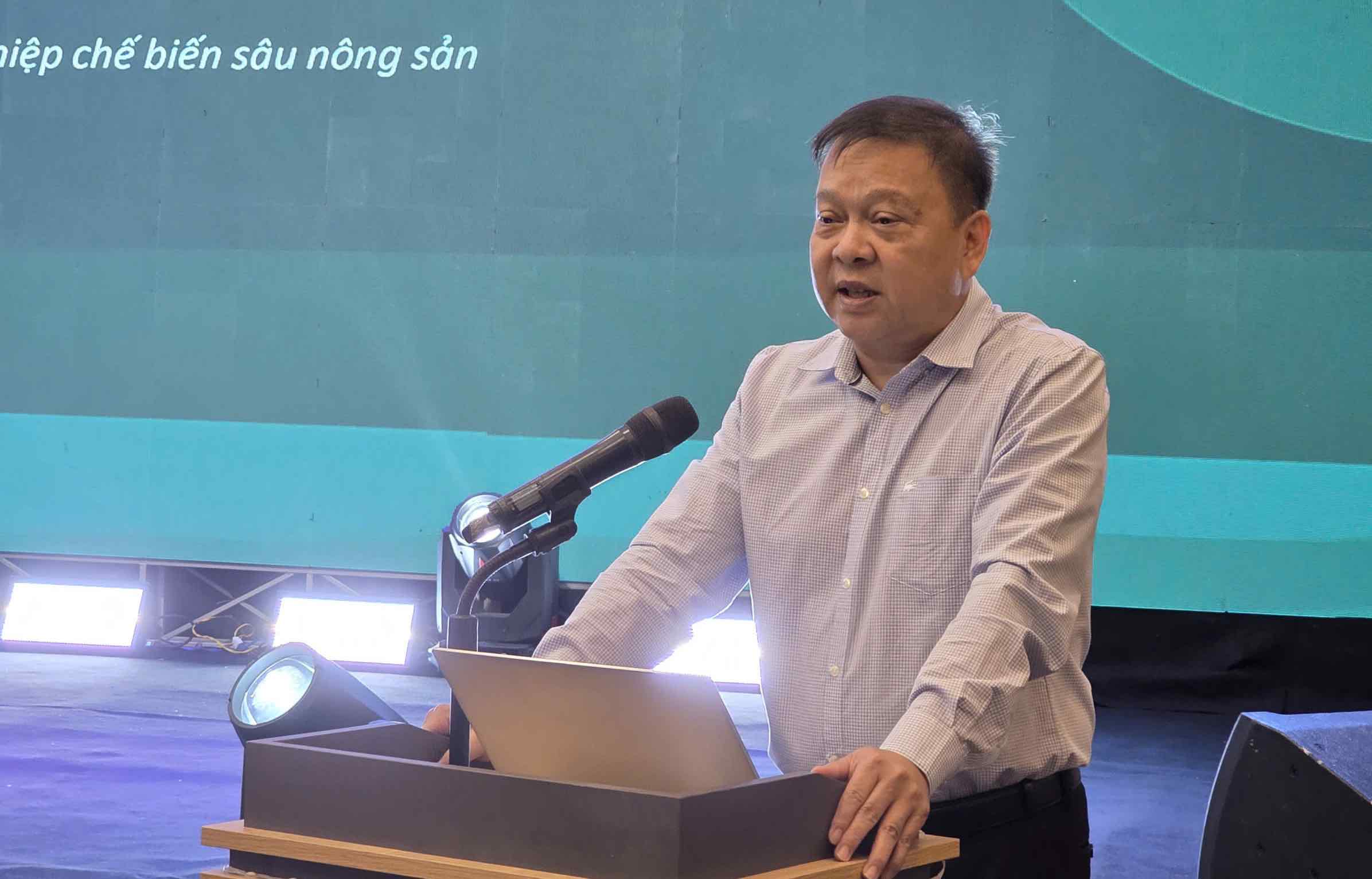
Mr. Nguyen Thanh Son cited that investors can spend trillions of VND to build smart warehouses, apply digital technology or optimize internal distribution chains.
However, expanding expressways, upgrading national highways or building multimodal connecting corridors from roads, sea, railways to aviation is a responsibility that the State and local authorities need to take a step ahead.
For example, durian is currently one of Dak Lak's key crops with a total area of about 44,900 hectares, of which the harvested area reaches 26,400 hectares. Estimated output exceeds 390,000 tons, expected to bring in revenue of about 1.1 billion USD.
However, behind these growth figures are major challenges in logistics infrastructure and linkages in the value chain.
According to Mr. Nguyen Thanh Son, one of the biggest bottlenecks today is transportation costs and the shortage of empty containers.
Fresh Durian from Dak Lak exported officially to China is currently heavily dependent on road transport through northern border gates such as Lang Son, Lao Cai, Quang Ninh by car or refrigerated containers, requiring maintaining a temperature of 10-15 degrees Celsius.
Because the locality does not have a standard ICD shallow port system and logistics center, businesses must take and return empty containers from depots in Ho Chi Minh City or Cai Mep - Vung Tau area according to the regulations of foreign shipping lines.
This causes road transport costs to increase. A tractor-trailer trip traveling about 400 km can incur trucking costs of up to 15 million VND, much higher than some other agricultural production areas.
According to Mr. Nguyen Thanh Son's analysis, logistics limitations make businesses tend to choose the option of exporting fresh durian by road instead of investing deeply in export models by sea, especially frozen products.
To develop sustainably the durian industry and key agricultural products, Mr. Son believes that Dak Lak needs to focus on three groups of solutions including: Infrastructure planning associated with actual goods flows; prioritizing multi-modal infrastructure development; and flexibly applying effective logistics models in the world.
On June 26, Dak Lak Provincial People's Committee organized 2 seminars on industrial park/cluster development associated with deep processing industry and inter-regional logistics and a seminar on digital transformation and sustainable business ecosystem development.
These seminars will be an opportunity for experts and managers to share about inadequacies and advantages in attracting investment, thereby having better management solutions.


