
In mid-June, on the fields of Van Ho village, Bat Xat commune, the atmosphere of watermelon harvesting becomes busier than ever.
Amidst the long green color of the watermelon beds, the laughter of farmers echoed loudly as trucks continuously carried watermelons from the fields to the gathering point.
For the people here, watermelon is not only a short-term crop but also an important source of income on single-crop rice land areas that are difficult to exploit effectively.
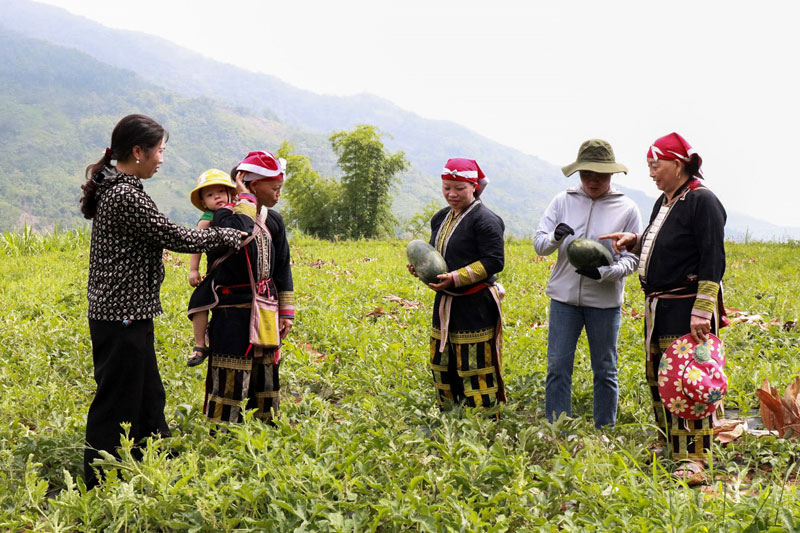
From taking advantage of idle farming time, many households have gradually turned watermelon trees into commodity production directions, bringing significant income to their families.
Ms. Chao Ta May's family is one of the households with many years of attachment to watermelon trees in Van Ho village. This year, her family planted more than 3 sao of watermelon. Thanks to favorable weather and proper technical care, watermelons developed well, with even and sweet fruits.
Yield reaches about 10-12 tons/ha, selling price fluctuates from 10,000-15,000 VND/kg. After deducting expenses, her family earns a profit of more than 20 million VND.
Growing melons is not too difficult, the economic efficiency is higher than corn and cassava. Next year, my family plans to expand the area to have more income and reduce difficulties," Ms. May shared.
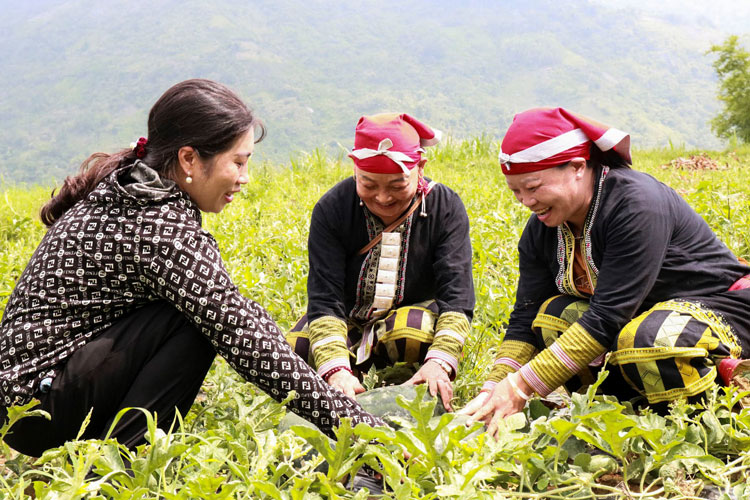
In recent years, realizing the economic efficiency of watermelon trees, many households in Phin Ngan area have boldly converted crop structures, taking advantage of land funds after rice production to develop watermelon areas.
To improve production efficiency, households linked up to establish Phin Ngan Watermelon Growing Cooperative with nearly 30 members.
Not only sharing experiences in caring for and preventing pests and diseases, members also agreed on crop schedules, gradually building concentrated production areas to improve product quality.
This linkage is also contributing to changing people's production thinking from fragmented to commodity-oriented.
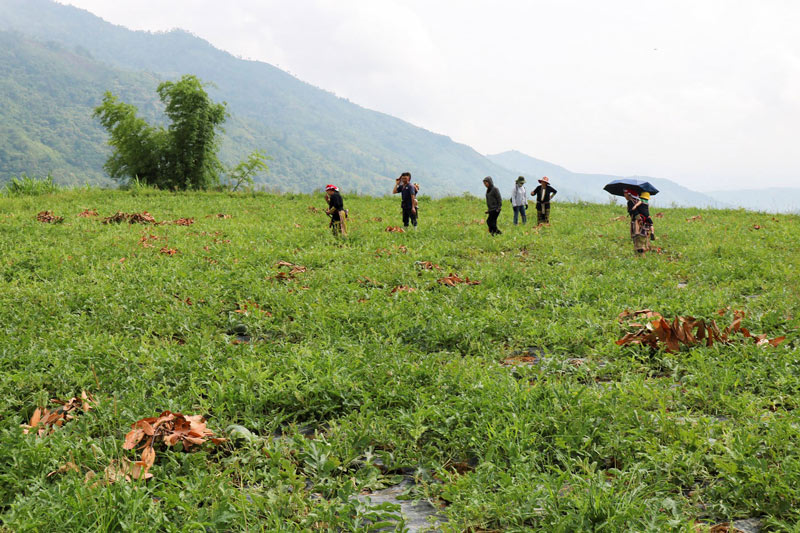
Ms. Chao Kieu May, a member of the cooperative group, said that people want to continue to receive support from the government and specialized sectors on farming techniques, connecting product consumption so that watermelons can develop more sustainably in the coming time.
Currently, people in Phin Ngan area maintain about 20ha of watermelons each year on one-crop rice land areas. The model not only improves land use efficiency but also creates jobs and increases income for many local households.
Notably, Phin Ngan watermelon products have been recognized as OCOP 3-star since 2024. This is an important premise for the locality to continue building brands, improving product value and expanding consumption markets.
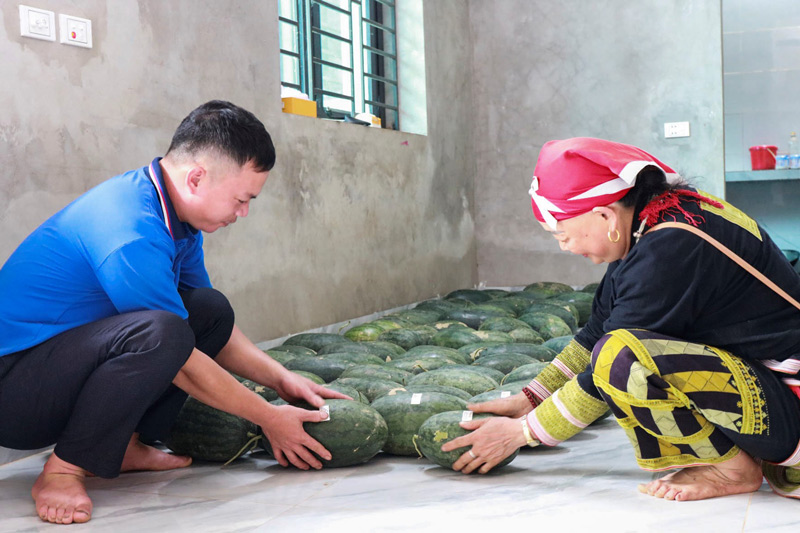
Ms. Ngo Thi Kim Hoa, technical officer of the Bat Xat Commune General Service Center, said that watermelon trees are suitable for local climate and soil conditions, and are also an effective solution to increase crops on single-crop rice land.
In the production process, professional staff always accompany people to guide technical processes, contributing to improving productivity and product quality," Ms. Hoa said.
From fields that once only yielded one rice season, today's watermelon crops not only create a stable source of income, but also contribute to changing production thinking, opening up a direction for commodity agricultural development associated with building local agricultural product brands.


