
Linkage is still low, many difficulties exist
On the morning of April 26, Ca Mau province organized the "Conference on connecting production and consumption of the rice industry". Attending the conference were Mr. Le Van Su, Vice Chairman of the Provincial People's Committee; along with leaders of the Department of Agriculture and Environment of many provinces and cities; businesses, cooperatives inside and outside the province.
According to Mr. Le Van Su, Ca Mau currently has more than 185,000 hectares of rice, of which about 50% of the production area is according to the rice - shrimp model, with an output equivalent to 1.8 million tons/year. This is great room for developing the rice industry towards high quality.
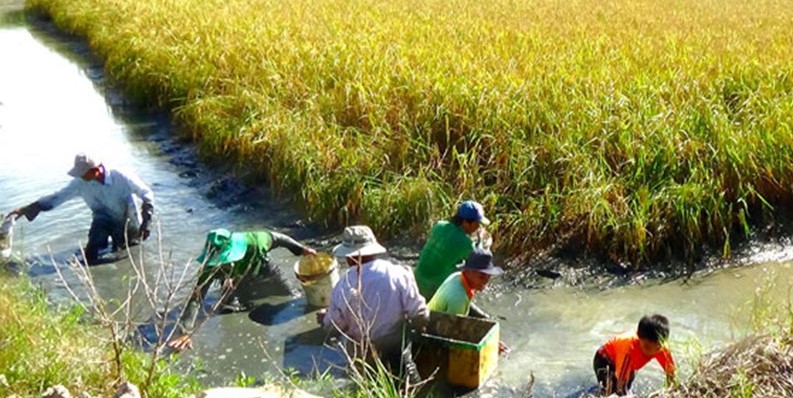
However, the area of production and consumption linkage only reached about 16.7% of output. The situation of contract breaches when market prices fluctuate still occurs; many linkages are not close enough, not legally sufficient.
In addition, the infrastructure serving production is not synchronized, especially the sewer system, pumping stations, and inter-field transportation in some southern areas of the province. This affects irrigation, mechanization and transportation of agricultural products.
Ca Mau has implemented high-quality rice, safe rice, organic rice and emission-reducing rice models under the Project of 1 million hectares of high-quality rice in the Mekong Delta region. The province registered to implement 54,680ha by 2030, but currently only about 1,380ha have been implemented.
Mr. Le Van Su said that the conference is an opportunity to clearly recognize the current situation, thereby proposing effective solutions to improve the value of rice grains and build the Ca Mau rice brand.
Building a sustainable value chain
At the workshop, delegates focused on discussing issues such as the implementation of linkage contracts, bank credit, agricultural product market forecasts, the role of leading enterprises, cooperative capacity and carbon credit market.
Dr. Tran Minh Hai, Vice Rector of the School of Public Policy and Rural Development (Ministry of Agriculture and Environment), said that Vietnamese agriculture has faced the paradox of "bumper crop, price drop" for many years, while businesses lack standard raw materials.
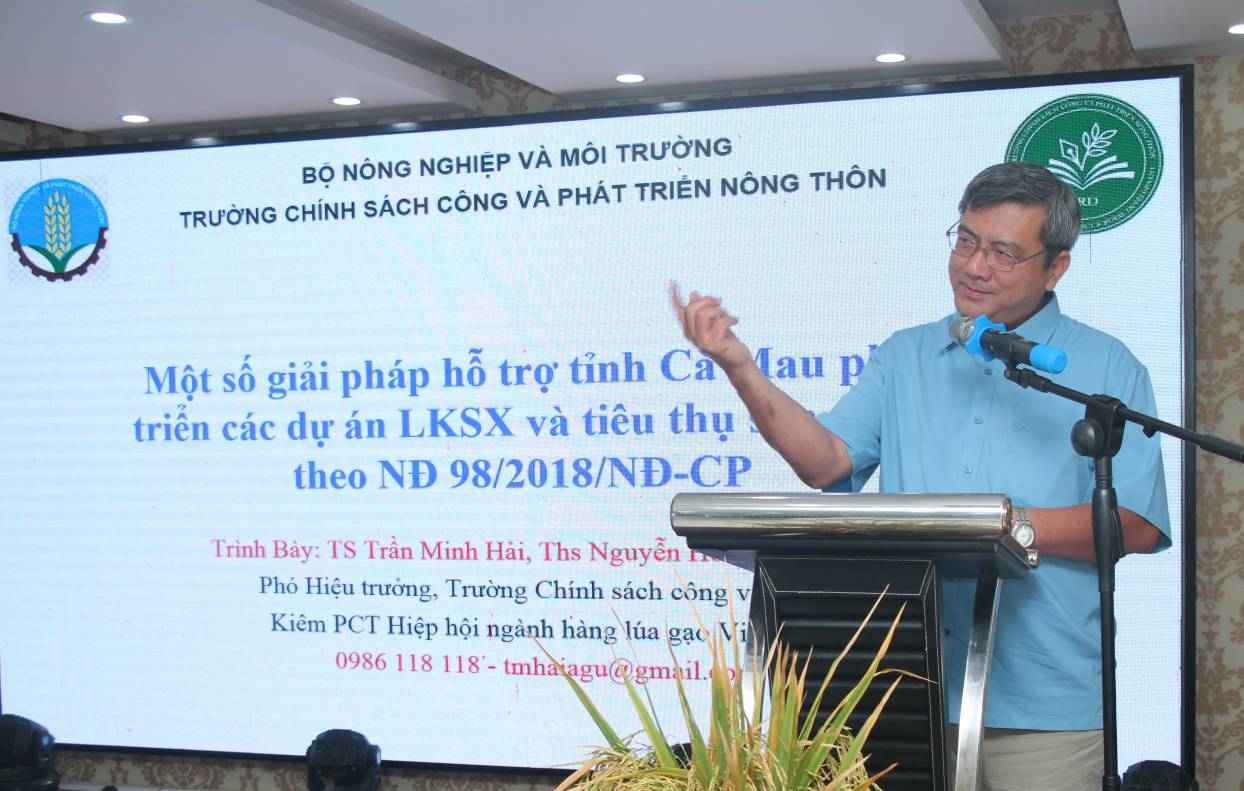
According to Mr. Hai, the reason is that production is still fragmented, small-scale, lacks linkages and is not linked to market demand. Therefore, developing the value chain between farmers - cooperatives - businesses is an inevitable direction.
Labor Hero Ho Quang Cua, father of the ST 25 rice brand, said that trademark protection registration is a vital "legal shield" for rice businesses. If not protected in the export market, businesses may lose the right to use their own brand abroad.
Mr. Nong Van Thach, Chairman of the Board of Directors - Director of Ba Dinh General Agricultural Cooperative, said that the cooperative is promoting the application of science and technology, digital transformation into rice production. However, consumption linkages are still unstable, the market fluctuates greatly, and access to the digital market is still limited.
According to the Department of Agriculture and Environment of Ca Mau province, in the coming time, the locality will develop the rice industry in a sustainable, high-quality, low-emission direction, adapting to climate change; expand the shrimp-rice model, build concentrated raw material areas with traceability.
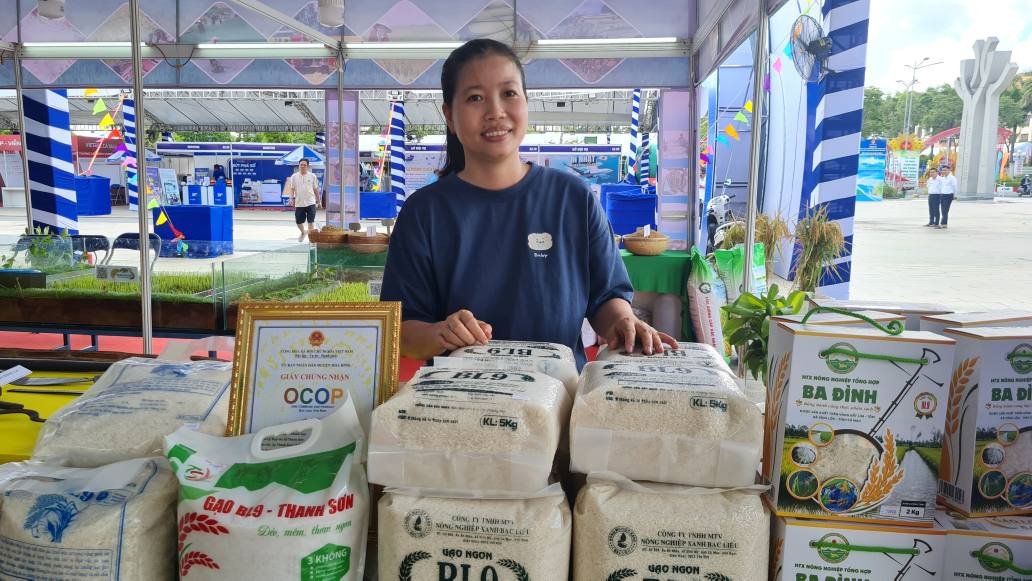
One of the key tasks is to promote the "4-house" linkage including the State - scientists - businesses - farmers. In which, cooperatives play the role of production organization, businesses lead the market, and farmers are the production subjects.
At the workshop, many businesses and cooperatives signed memorandums of understanding to consume products and link rice production, opening up prospects for more stable output for Ca Mau rice.


