Bad debts continue to be a major challenge
On April 15, at the headquarters of Vietnam Asset Management Company Limited (VAMC), the Vietnam Banking Association coordinated with relevant agencies and units to organize a seminar: "Bad debts in the new context".
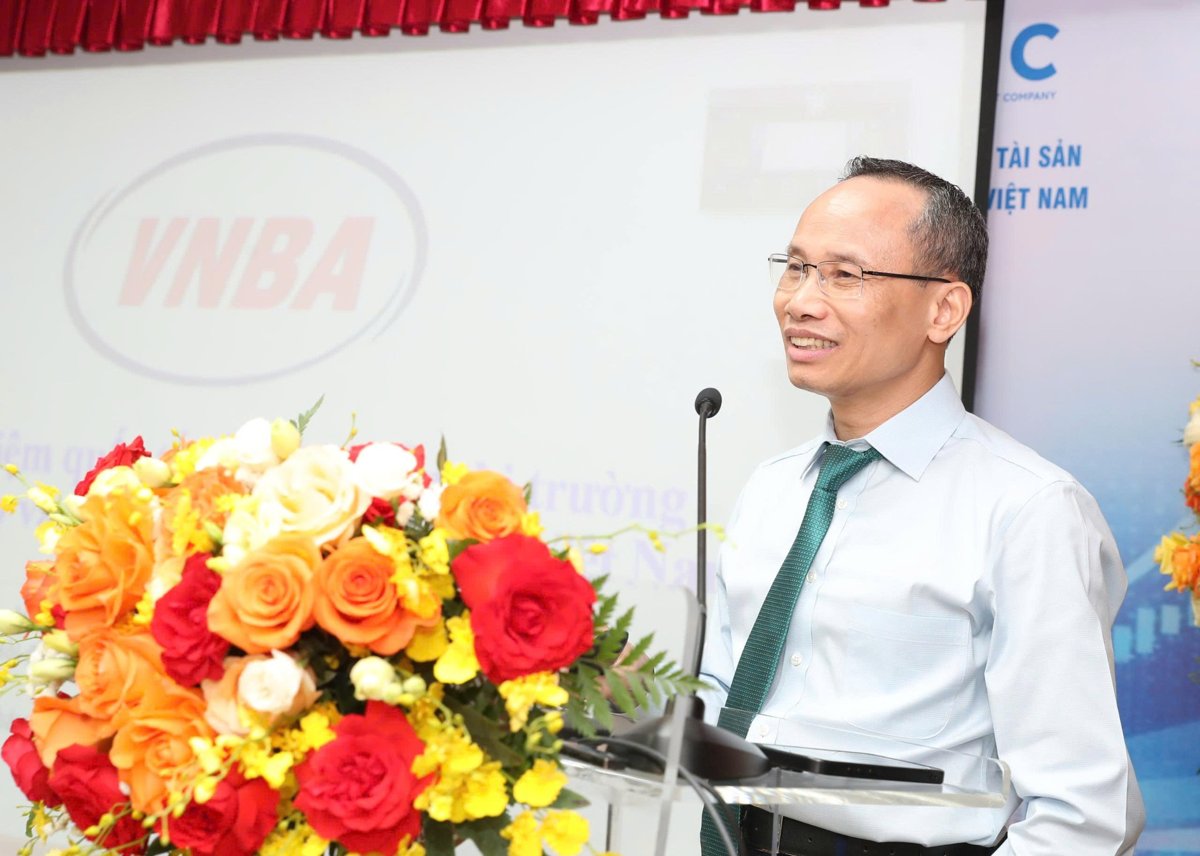
Speaking at the opening, Dr. Nguyen Quoc Hung - Vice President cum General Secretary of the Vietnam Banking Association - emphasized that bad debts continue to be a major issue, requiring effective and sustainable handling.

According to Dr. Nguyen Quoc Hung, mobilizing resources from the people to serve economic development is very necessary, and at the same time, it is necessary to exploit resources that are being blocked, especially procedural problems, especially in the field of land, to put them into production and business. However, in the current context, bad debts and how to handle bad debts are posing many challenges.
Dr. Nguyen Quoc Hung said that with the current situation, without drastic solutions and support from all levels and sectors, the Banking sector cannot unilaterally handle bad debts. This will increase the burden on the system, increase costs, limit the ability to reduce lending interest rates and block capital flows.
Reality shows that in the first 3 months of 2026, credit growth reached over 3%, while capital mobilization was less than 1%, reflecting a large gap between capital demand and mobilization capacity. The demand for capital for production and business is very large, but mobilizing resources from the people still faces many difficulties.
Regarding management policies, the Governor of the State Bank has requested banks to implement solutions to unify a reasonable deposit interest rate level, thereby ensuring appropriate lending interest rates, creating conditions for businesses to access capital.
Regarding the legal framework, the National Assembly has passed the Law amending and supplementing the Law on Credit Institutions 2025, granting important rights to banks, especially the right to seize collateral. However, in reality, the implementation still faces many obstacles despite having guiding decrees and circulars.
Dr. Nguyen Quoc Hung said that VAMC after 13 years of operation has contributed to bringing bad debts in the balance sheet below 3% according to international practice. However, the nature of bad debts still exists and recovery is still facing many difficulties.
Currently, credit institutions and asset management companies (AMC) are participating in debt recovery, but the powers are not significantly different. Without a special mechanism, bad debt handling will continue to face obstacles.
In practice, debt recovery work still faces many difficulties such as problems in transferring collateral, arising disputes, and even cases of fake disputes aimed at hindering the handling of assets. Although the judgment has taken effect, judgment enforcement is still limited, and coordination between parties is not effective, especially in procedures related to natural resources and the environment.

Completing the legal framework, developing the debt trading market
Discussing solutions, Dr. Can Van Luc - Chief Economist of BIDV - said that the legal framework for bad debt handling has made certain progress. Vietnam has promulgated the amended Law on Credit Institutions for the period 2024–2025, legalizing some important regulations from Resolution 42/2017/QH14.
In addition, debt trading activities are also regulated by decrees such as Decree 53/2013/ND-CP, Decree 18/2016/ND-CP, Decree 69/2016/ND-CP and related guiding circulars.
However, according to Dr. Can Van Luc, in the process of operation, the debt trading market still has new bottlenecks. There are no appropriate loan valuation standards when credit institutions still apply the common asset appraisal method. At the same time, the mechanism for publicizing information about collateral is still lacking, causing difficulties for investors.
The structure of market participants is also not diverse, mainly VAMC, DATC and bank AMCs. The participation of the private sector and foreign investors is still limited, while intermediary organizations such as brokerage, independent valuation, investment funds, insurance, and securities have not developed commensurately.
From international experience, countries such as China, Thailand, and South Korea all have strong state leadership through large-scale asset management companies, which are allowed to buy bad debts at discounted prices. At the same time, debt securitization helps increase liquidity and expand the target audience of investors.
On that basis, Dr. Can Van Luc proposed that it is necessary to complete a synchronous legal framework, expand the right to seize collateral for non-bank entities, allow debt trading at market prices, including below book value, and soon build a legal corridor for debt securitization.
Develop the secondary market, complete the bad debt trading floor and the ecosystem of intermediary organizations. The restructuring of weak credit institutions and state-owned enterprises also needs to be linked to bad debt handling.
In addition, it is necessary to improve the financial capacity of VAMC, allow debt conversion into contributed capital to participate in enterprise restructuring, and at the same time strengthen governance, promote digital transformation and apply technology in debt handling. Thereby, contributing to effectively handling bad debts, unblocking capital flows, supporting businesses, promoting economic growth and stabilizing interest rates at a reasonable level.