Not worthy of potential
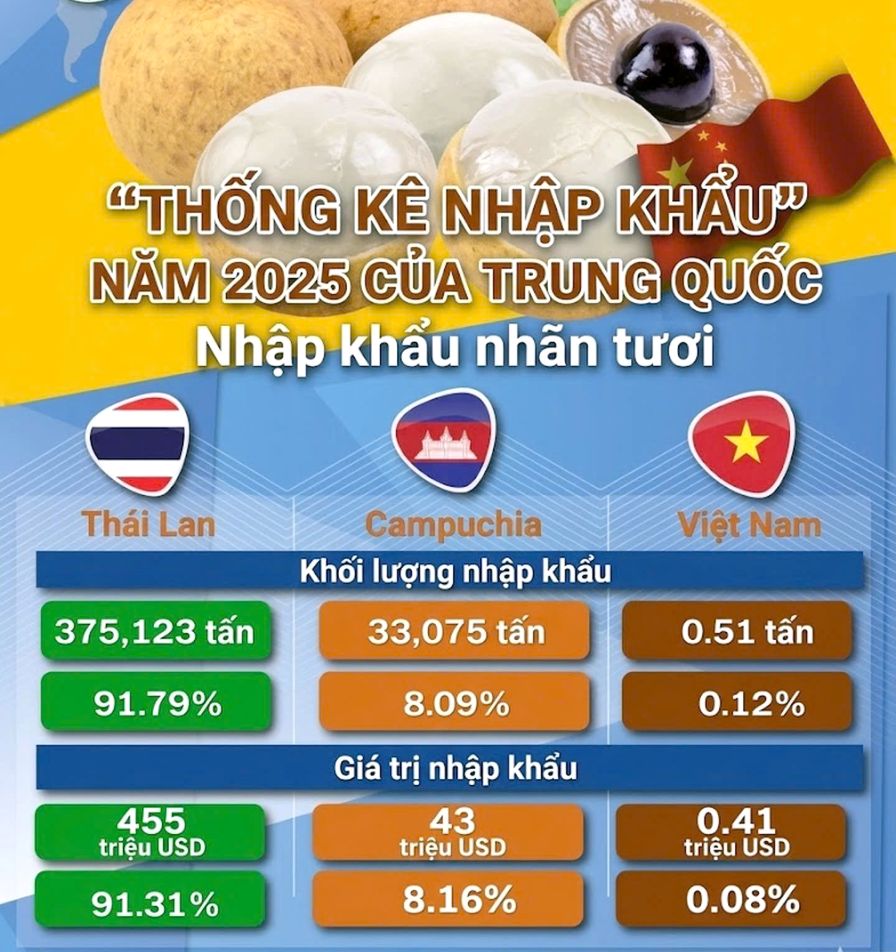
According to statistics from China Customs, in 2025, the country's fresh longan imports reached about more than 400,000 tons, worth nearly 500 million USD. Supply is almost concentrated in a few Southeast Asian countries, in which Thailand has absolute advantage, while Vietnam - although a large longan grower - only accounts for a modest proportion.
According to data compiled from the Agricultural Advisory Office in Beijing, Thailand alone exported 375,123 tons of longan to China, equivalent to 91.79% of the market share, with a value of about 455 million USD. Cambodia ranked second with 33,075 tons, accounting for about 8.09%, worth 43 million USD. The amount of fresh longan from Vietnam entering this market is only about 0.5 tons, too small compared to the actual cultivation.
According to data from the Institute of Policy and Strategy for Rural Agriculture Development, in the past 5 years, longan has been a crop with a growth rate in both planting area and output. Currently, the whole country grows about 80,000 hectares, with an output of 600,000 tons/year. This shows a paradox: Vietnam has a large longan output but has not effectively exploited the largest consumption market in the region.
Competitive pressure
Longan is a popular fruit in China, especially popular in the southern provinces. In addition to fresh consumption, longan is also used as raw materials for processing tea, functional foods, medicinal herbs or traditional desserts. Therefore, market demand is relatively stable and tends to increase. Meanwhile, Vietnam's longan output is estimated at over 600,000 tons per year, concentrated in many localities such as Hung Yen, Son La, and Dong Thap.
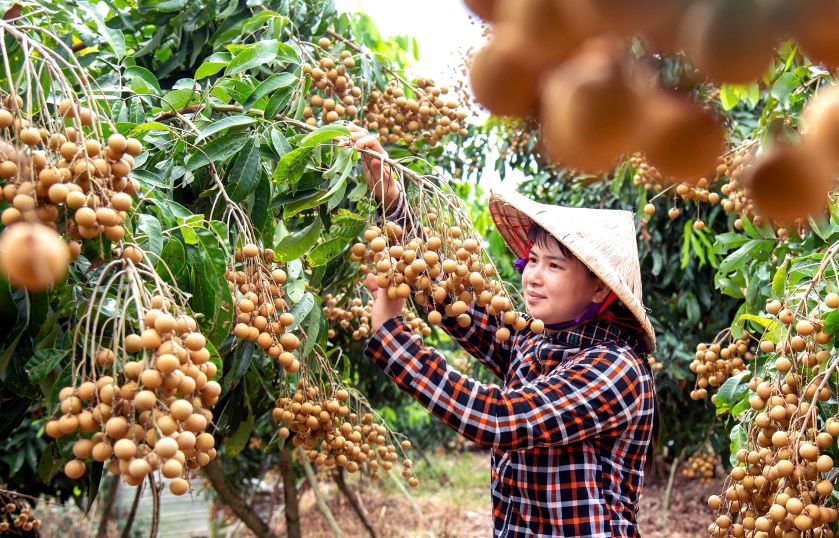
However, most of the output is still consumed domestically or exported through small channels, with low added value. One of the reasons is that the longan industry value chain is not organized synchronously. Meanwhile, Thailand has invested heavily in production, packaging, logistics and brand promotion standards. Thanks to this, Thai longans have a stable presence in major distribution systems in China.
Even Cambodia - a country with not too large longan growing area - quickly took advantage of the opportunity after being licensed for official export by China. In just a few years, the country's longan export volume has increased sharply. This shows that the competitive advantage of a commodity industry also lies in the ability to organize a professional export chain.
Potential, but caution is needed
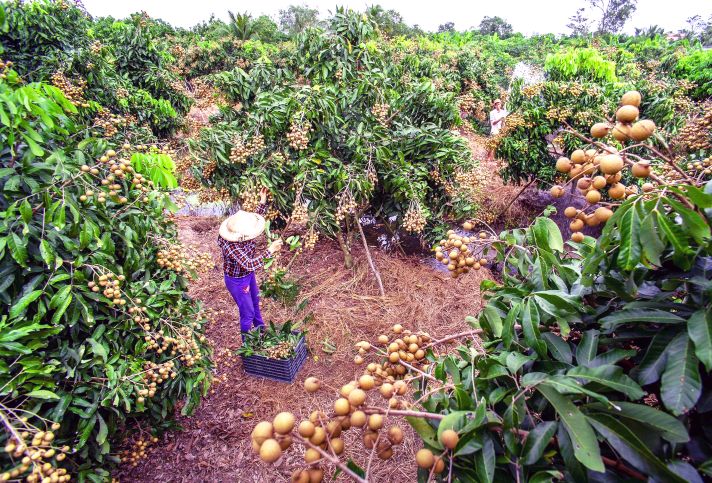
From a market perspective, longan is still considered a fruit with potential for development in the coming time. First of all, this is a crop suitable for Vietnam's ecological conditions. From the plains to the midlands, longan can be grown with quite high yields. In addition, the investment cost for longan trees is not too large compared to some other fruit trees.
Second, the room to increase value is still quite large. Currently, Vietnamese longan is mainly sold as fresh fruit. Meanwhile, the international market still has many products processed from longan such as dried longan, longan, longan tea, juice or medicinal products. These products have higher value and longer shelf life.
However, according to agricultural experts, in terms of economic value, longan is unlikely to become a " spearhead" industry like durian. The export value per unit of longan product is much lower, and at the same time, it must strongly compete with supply from Thailand. Therefore, the appropriate development direction is to build longan into an important fruit industry but develop in a sustainable direction, not chasing after massive area expansion.