
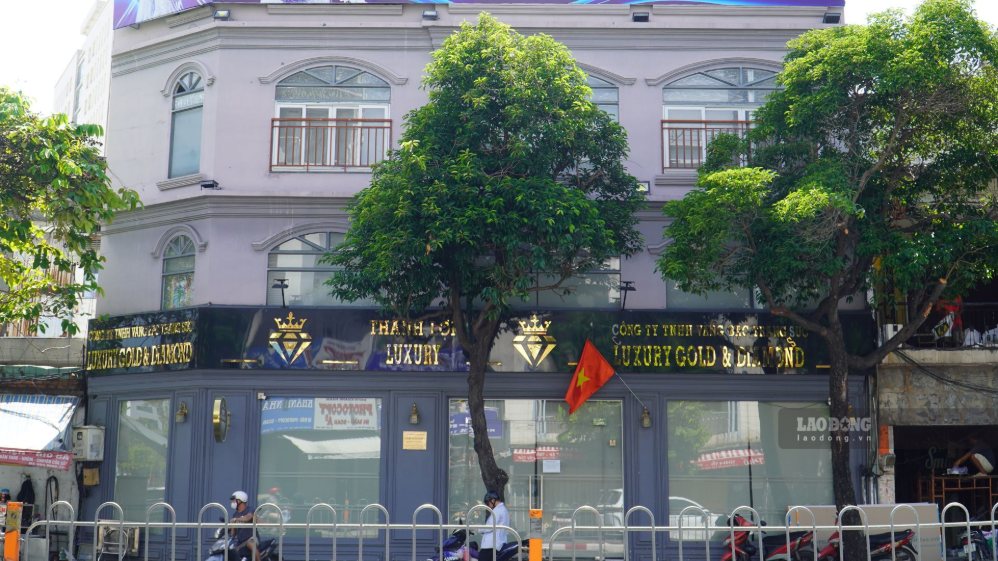
Temporary closure for repair", "Temporary suspension of operations to handle internal matters", "Temporary business suspension"... are the announcements that have appeared in front of many gold, silver and gemstone stores in Ho Chi Minh City recently. Along with the smuggling of 28,000 diamonds, controversies related to appraisal activities and more than 30 diamond businesses stopping trading have made the market cautious.
Talking to Lao Dong Newspaper, Dr. Tran Nguyen Dan - Director of the Institute of Insurance and Financial Risk Management (IFRM) - said that the Vietnamese gold, silver and gemstone market is in a particularly fragile stage, in which confidence is the factor most affected.
According to him, if considered separately, each incident such as the smuggling of 28,000 diamonds, the incident of manipulating the appraisal results, or the simultaneous closure of many businesses may have different causes and explanations. However, when events occur continuously in a short period of time, they create a synergistic effect, directly affecting consumer psychology.
To restore trust, Dr. Tran Nguyen Dan said that first of all, the entire industry needs to build transparent practices on the retail price structure of gemstone jewelry. Accordingly, when selling products, businesses need to clearly disclose the gold price, stone price, processing labor costs and brand value. At the same time, the repurchase policy also needs to be expressed in writing right before the transaction, clearly stating which criteria will be used to value the stone and how it will be calculated.
According to him, this is not too complicated a requirement because many developed markets have applied it. This approach not only protects consumer rights but also helps businesses limit disputes, because when customer expectations are clearly established from the beginning, there will be no feeling of being disadvantaged or deceived after a transaction.
For management agencies, he suggested that it is necessary to supplement explanatory guidance for off-balance sheet assets in the gemstone and jewelry industry. Accordingly, businesses should be required to clearly classify gemstones, semi-precious stones and decorative stones; and at the same time announce the method of determining book value as well as explaining the reasons for off-balance sheet classification. These guidelines both help businesses avoid misunderstandings when announcing financial statements, and increase transparency and protect the interests of the public.
For consumers, Dr. Tran Nguyen Dan believes that the fear of buying products that do not meet the value is well-founded, but the appropriate response is not panic but proactively equipping knowledge. When buying stone-studded jewelry, customers should request businesses to clearly explain the price structure and repurchase policy in writing.
He also noted that it is necessary to clearly distinguish between popular stone-studded jewelry and separate gemstones. According to him, semi-precious stones or decorative stones studded on popular jewelry often have very low value compared to precious metals, while separate diamonds, rubies or sapphires sold with appraisal certificates have completely different pricing mechanisms. Equating these two segments easily leads to misjudgments about product value.
The Vietnamese gemstone market is going through a stage that I consider necessary screening. Consecutive incidents, although causing pain in the short term, are forcing the entire system to raise transparency standards. Consumers are increasingly proactive in finding out, asking questions, and demanding explanations.
Public interest in corporate financial data, although sometimes leading to misunderstandings, is itself a positive sign and a driving force for the entire system to raise standards. Businesses that embrace that trend by being more transparent will overcome this stage more strongly than before" - Mr. Dan assessed.


