
Recorded on the morning of May 2nd at some traditional markets in Ho Chi Minh City such as Ba Chieu market, Pham Van Hai market, Nguyen Tri Phuong market, Hoa Binh market... the trading atmosphere is quite quiet. The number of customers is sparse, many stalls are still open but sellers mainly sit and wait.
In the pork selling area, the sluggish situation is clearly shown. Stalls display all kinds such as pork belly, pork shoulder, pork ribs... but the number of customers visiting to buy is very small, mainly people buying retail for family meals.
Ms. Nguyen Thi Be - a small trader selling pork at Hoa Binh market said: "Every year during holidays, sales are very good, especially in the morning, customers often buy a few kg to gather to eat and drink. But this year, customers are much less, by noon I have only sold less than half of the imported meat.
According to Ms. Be, pork prices in recent days have almost not fluctuated, fluctuating around 9,000-140,000 VND/kg depending on the type.
Recorded at wholesale markets in Ho Chi Minh City, some popular items such as pork belly and cốt lết are at about 82,000 VND/kg; pork belly 115,000 VND/kg; pork ribs 135,000 VND/kg; lean meat 120,000 VND/kg; gio truoc 78,000 VND/kg; gio sau 70,000 VND/kg... Although this price level has not increased, it is not enough to stimulate consumer demand in the context of weak purchasing power.
Mr. Ngoc Hoa - a small trader selling pork at Hoc Mon wholesale market said that the amount of goods arriving at the market is still quite abundant, but purchasing power from wholesale sources has decreased significantly.
Prices have not increased but sales are slow, so profits have decreased, transportation costs and labor still have to be borne" - Mr. Hoa shared.
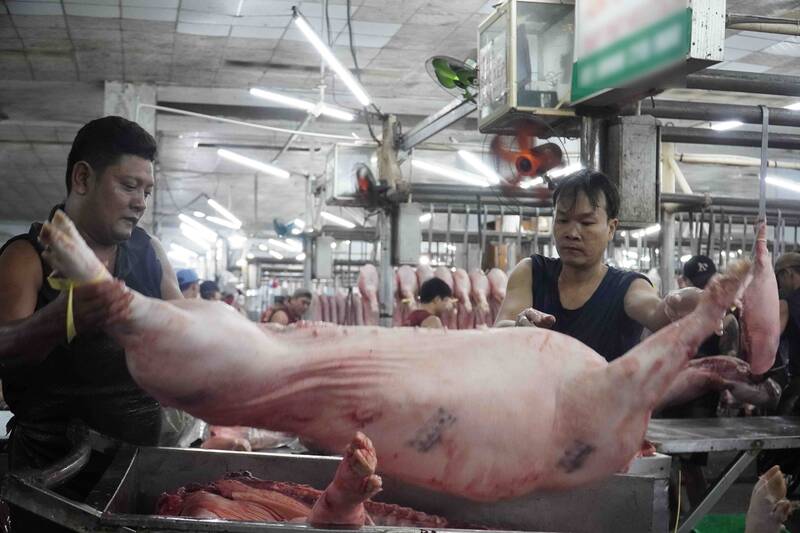
While purchasing power at traditional markets has stagnated, pressure from input costs is falling on both small traders and businesses, making the price retention - demand stimulus problem even more difficult.
Not only small traders, businesses in the industry also have to balance between selling price and cost. Mr. Le Minh Tuan - General Director of Vietnam Livestock Industry Joint Stock Company (Vissan) said that from the beginning of 2026 to now, pork purchasing power has been quite slow, while input prices have increased. At times, live pig prices reached 74,000 VND/kg; packaging costs increased by 30-40%; imported raw materials increased by 10-20%...
In that context, businesses are forced to cut costs, accept reducing profit margins to maintain stable selling prices, solutions to maintain purchasing power when consumers are increasingly sensitive to prices. At the same time, businesses promote the application of technology to optimize operations, reduce labor costs and restructure operations to adapt to volatile markets.
Also according to Vissan leaders, the deployment of the pork trading floor in Ho Chi Minh City is considered a positive sign for fresh meat businesses. When standards are put on the floor, suppliers will compete on price, helping businesses be more proactive in controlling input costs if the floor operates stably.
From a management perspective, Mr. Pham Kim Dang - Deputy Director of the Department of Livestock and Veterinary Medicine said that feed costs currently account for 60-70% of product costs, while most raw materials must be imported. This makes the domestic livestock industry face many disadvantages in competition, especially when the domestic consumption market has not recovered strongly.


