
Building a unified ecosystem instead of competition to attract investment
Assessing the new points of Resolution 10, Dr. Nguyen Minh Phong, former Head of the Economic Research Department, Hanoi Institute for Socio-Economic Development Research, assessed that Resolution 10 has many noteworthy new points, in which the prominent is the strong shift in thinking from attracting foreign investment capital to building an economic ecosystem with foreign investment capital.
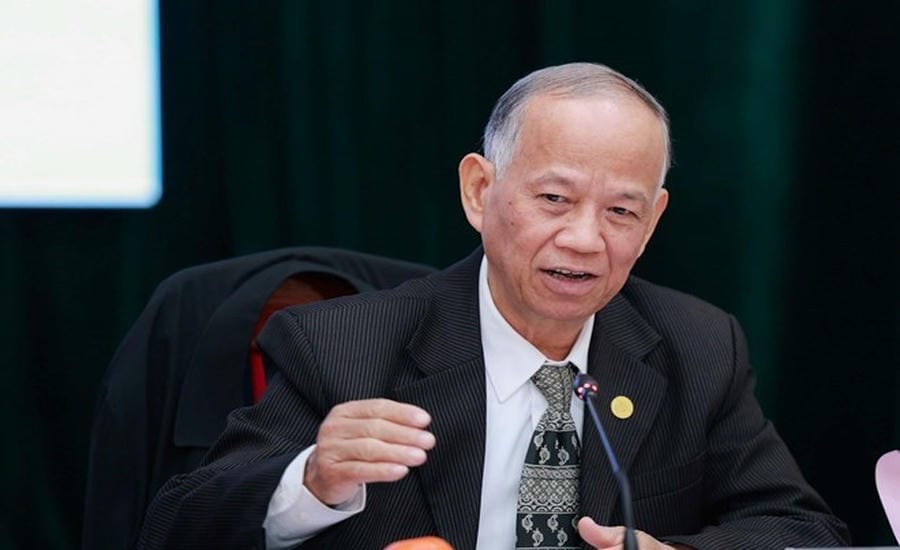
According to Mr. Phong, this approach is completely different from before when FDI attraction mainly focused on quantity or individual projects, each locality competing with each other to attract investment.
This time, Resolution 10 affirms the need to build a unified ecosystem nationwide, while ensuring FDI attraction in the direction of improving quality. The goal is no longer to attract FDI for each locality or each time, nor to only take quantity as a goal, but to aim for quality and investment efficiency.
Mr. Phong assessed this as a very important point because the ecosystem is more meaningful than the previous short-term goal approach. At the same time, this approach will contribute to reducing competition between localities. When the ecosystem is built unified, together towards the common goal of the whole country, localities will be connected, forming a synchronous ecosystem instead of competing with each other.
According to him, in the past, there was a situation where localities raced to reduce taxes and increase incentives to attract investment. In the end, investors benefited more while the efficiency brought to the State was not commensurate.
Towards quality capital flows and increasing links with domestic enterprises
According to Mr. Nguyen Minh Phong, Resolution 10 also introduces many new points in building the FDI development ecosystem. For example, preferential policies will shift from preferential treatment according to project commitments from the beginning to post-investment support mechanisms, based on actual investment results.
In addition, the ecosystem also focuses on creating favorable procedures for priority investment capital flows, as well as investment projects in priority areas and fields. In which, not only paying attention to attracting direct investment capital but also towards attracting indirect investment capital.
Mr. Phong analyzed that if Resolution 10 is thoroughly grasped and well implemented, Vietnam will create a change in awareness, and at the same time form a legal basis and ecosystem for FDI development in accordance with the spirit of the Resolution. This will create favorable conditions for both direct and indirect investment capital flows, thereby Vietnam will not only be a destination for direct FDI capital flows but also become a place to attract and spread indirect investment capital flows in the region.
Agreeing with this view, Mr. Dinh Minh Tri, Director of Personal Customer Analysis, Mirae Asset Securities Joint Stock Company (Vietnam) assessed that Resolution No. 10-NQ/TW lays the foundation for the shift from the goal of attracting FDI to developing the foreign-invested economic sector in the direction of improving capital flow quality. Accordingly, Vietnam will prioritize attracting projects in the fields of semiconductor, artificial intelligence (AI), big data, biotechnology, new energy and high-tech industries with high added value.
Mr. Tri said that the Resolution also further quantifies the development goals of the FDI sector. Vietnam sets a target of 10,000 domestic enterprises participating in the value chain of the FDI sector and forming from 500-1,000 level I suppliers for multinational corporations. This shows that the new direction is not only limited to attracting capital flows but also promoting linkages between FDI enterprises and domestic enterprises, thereby improving the capacity of the domestic economic sector.


