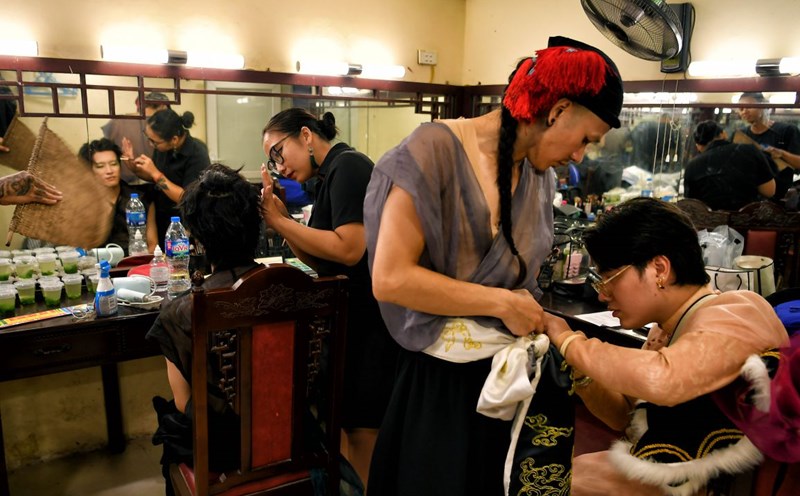
After the merger, artist Hoang Van Long - Acting Director of the Vietnam Tuong Theater holds the position of Deputy Director of the Vietnam National Traditional Theater. He assessed that this is an opportunity, but also a challenge for traditional theater.
Artist Hoang Van Long has had a long journey attached to Tuong art. He and his wife, NSND Minh Gai, had difficult youth years, struggling to nurture their passion for Tuong. Mr. Long still remembers clearly, life was full of difficulties after marriage, he did all kinds of jobs to earn a living, from running loudspeakers, lighting, organizing events... But, he has never faded his love for the Tuong stage.
Lao Dong Newspaper reporter had a conversation with artist Hoang Van Long when his journey with Tuong art, with the traditional stage, has passed completely, before the New Year 2026.
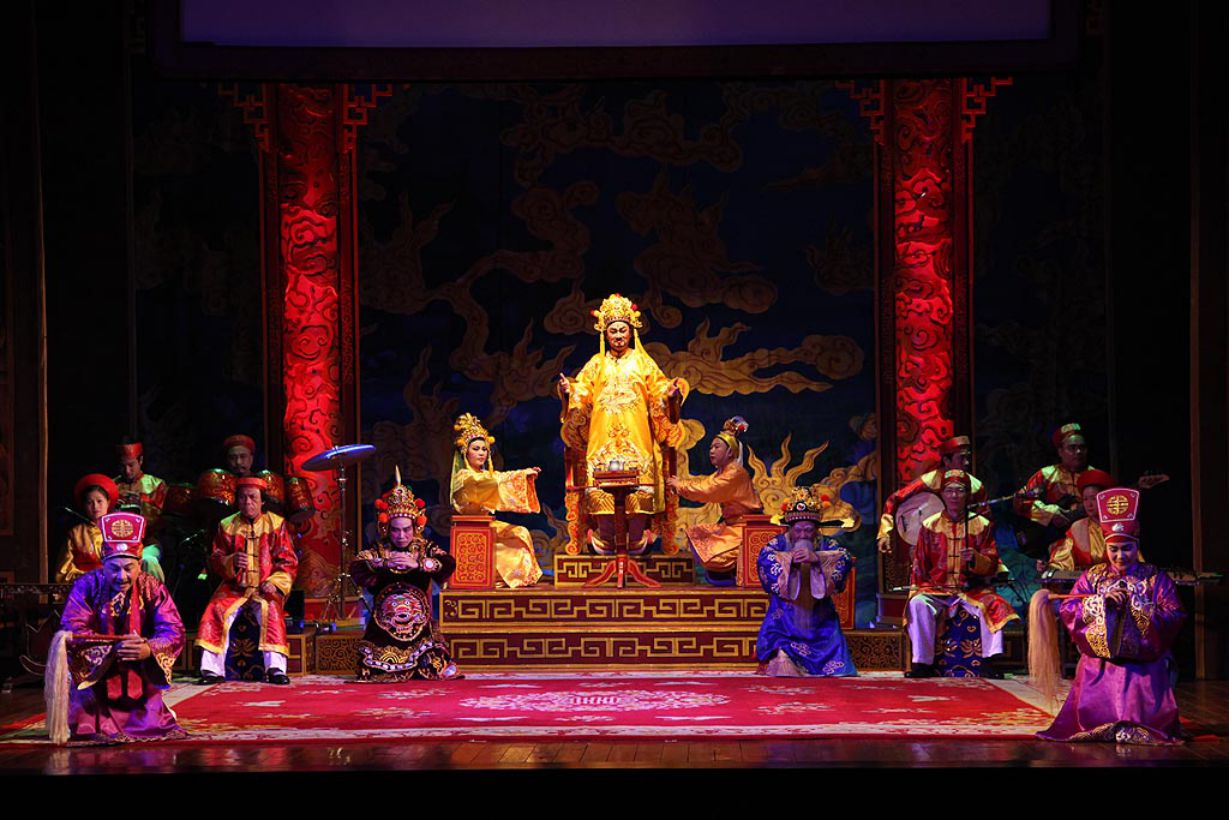
2025 marks the milestone of the Vietnam Tuong Theater merging with the Vietnam Cai Luong Theater, the Vietnam Cheo Theater into a new unit named Vietnam National Traditional Theater. According to you, how will this turning point bring a new breeze to traditional art in general, and Tuong art in particular?
- At this time, I have retired, completed my journey at the Vietnam Tuong Theater, and from August 1st is the Vietnam National Traditional Theater.
Previously, when the merger project was just emerging, I and the leaders of the Vietnam Tuong Theater were the ones who participated in writing the project to merge 3 theaters, build and develop them into the Vietnam National Traditional Theater, along with the leaders of 2 Vietnam Cheo Theaters, Vietnam Cai Luong Theater to approve and submit to the Ministry of Culture, Sports and Tourism.
This will be a great opportunity for all 3 fields to be arranged and streamlined, and at the same time join forces to develop. We are promoting the cultural industry, in which we always emphasize preserving national cultural identity, and need to take national culture as the focus to elevate, reach out and develop. Traditional stages such as: Tuong, Cheo, Cai Luong... are the unique cultural features of the Vietnamese nation, which need to be preserved and have a specific development strategy.
Many traditional art forms, including Tuong, are struggling with the issue of lacking successor human resources. What difficulties and challenges does Tuong art face in the process of merging and developing, can you share?
- Human resources for Tuong theater are currently extremely scarce. Because indeed, learning Tuong must be very systematic, not only requiring talent but also learning how to speak and write in the correct form.
The script structure, the Tuong singing structure is very tight; if written like a play, actors cannot sing and dance. Therefore, adapting from a spoken drama script to Tuong is extremely difficult, the adapter must deeply understand Tuong, about the form such as lục bát, tứ tuyệt...
Tuong is stylized, symbolic, expressing the characteristic heroic and tragic beauty that has been polished through many generations. That is the result of hundreds of years of generations of ancestors polishing and drawing. It can be said that Tuong is like a symphony combining many genres: Singing - acting - dancing. Actors also have to wear armor weighing up to ten kilograms and use many performing techniques. Very difficult!
Currently, the University of Theater and Cinema still trains screenwriters for many types: Drama, cinema and even traditional theater. Does the Tuong subject take advantage of the source of young authors from these screenwriting departments?
- In recent years, many young people have returned to the theater, but most of them have not stayed long. The theater still accepts personnel, but they are not attached for a long time. Some people work for 4-5 years, are assigned work, are exposed, but writing Tuong scripts still does not meet the requirements. The most difficult job today is the lack of Tuong script authors.
In fact, funding for art forms, especially traditional arts such as: Cheo, Tuong, Cai Luong... is always limited. Is that the biggest pressure for artists?
- Basically, when I held the position of Acting Director at the Vietnam Tuong Theater, we tried to arrange the funding reasonably. The play is sponsored by the State, we fundamentally arrange to stage the play. Usually, actors receive no high compensation because it is crowded, one play can have up to 40-45 participants. Each performance, actors receive about 200,000 VND, supporting roles 160,000 VND, extra roles 120,000 VND, logistics work 80,000 VND.
The theater will take on more external jobs to have finances and pay more for the brothers.
Can you reveal the characteristics of costumes of Tuong art, which is an art known for its elaborate and massive costumes?
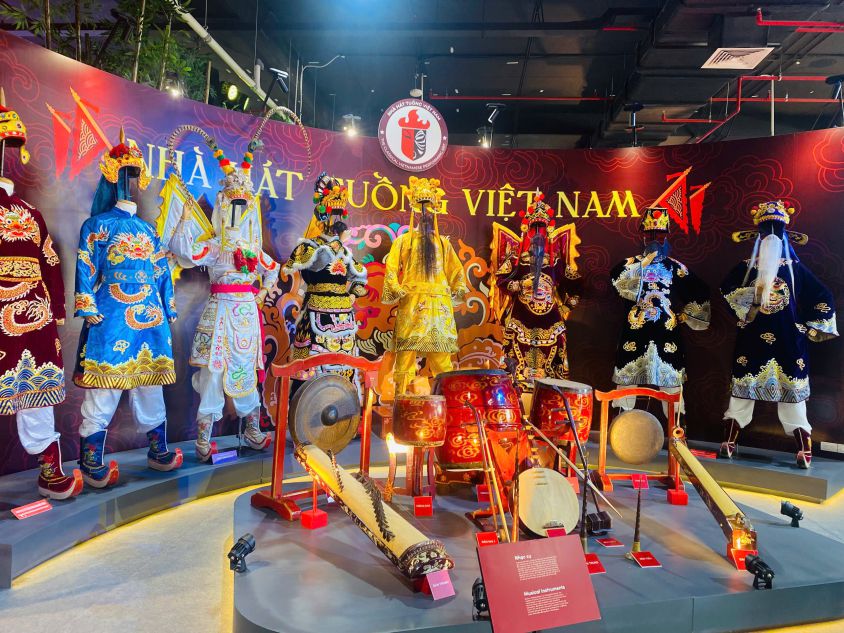
- Each new Tuong play, costumes must also be completely newly sewn. Traditional Tuong sews a set of clothes worth about 50 million VND, excluding hats and accessories. Hand-embroidered costumes are very expensive. Motor embroidery is exactly the same, not ensuring aesthetics. In a Tuong play, if the costumes are old or lack costumes, we will sew new ones. If the costumes are still new, the theater tries to take advantage of them to save money. If the entire costumes are newly sewn, it will cost about 1 billion VND.
Try to calculate, an armor is at least 50 million VND, a hat is 3.7 million VND; hemorrhoid feathers are 6 million VND imported from abroad. Tuong armor cannot be reused. Not to mention, each role must have shoes, shirts, and different colors according to character standards. A little mistake is that the actor cannot act.
Therefore, no opera has been completely tailored. A costume set in traditional operas costs about 50 to 70 million VND, if the costumes are tailored really beautifully, it will clearly bring a completely different theatrical effect. Beautiful costumes make actors sublimate. The Theater has a showroom of suits tailored for more than ten years, each year only daring to tailor one set to make "dowry", not wearing it for fear of sweat spoiling it.
Low income, but it is the dedication and effort of the actors when wearing heavy clothes, performing singing and dancing continuously on stage for many hours, perhaps that is the special beauty that creates value for Tuong?
- That's right! Tuong and Cheo are both traditional art talents. Tuong reached its peak from the feudal era, telling old stories to talk about today, praising the spirit of patriotism and love for the people.
The value of Tuong after many changes of times is still there, teaching people to uphold the law, be loyal to the country and filial to the people. In ancient times, many dynasties of kings and mandarins loved Tuong to the point of opening private stages for Tuong, and many famous poets also loved this subject.
Over the past decade, when technology developed like a storm, young people had too many entertainment choices, traditional art was difficult to attract audiences, theaters were difficult to sell tickets, artists struggled with life. What about you?
- I was once invited to go abroad but chose to stay because of my family and wanted to preserve the traditional craft. I once retired to be a rear so that my wife could wholeheartedly pursue the profession. For us artists, when the profession is ingrained in our blood, we cannot give it up.
In my family, many members are destinedly attached to Tuong art. My eldest brother is NSND Hoang Khiem, who used to hold the position of Director of the Vietnam Tuong Theater in the period 1994 - 2010.
My wife is NSND Minh Gai. My husband and I have a predestined relationship thanks to Tuong. But indeed, having gone through difficult periods, it's still hard to believe when I think about it now. I have done enough jobs to earn extra income, because both husband and wife's salaries at the theater are meager. I run loudspeakers, lighting, event organizing... doing all sorts of things.
When I held the leadership position of the theater, I and the leadership team built regulations, found many performance methods to help them feel secure in their profession, continue to try to contribute and pursue this art form. We performed throughout localities, diligently staging plays and performing to increase revenue for the theater. Receiving projects to perform at festivals in many provinces and cities... to have more money.
We perform at Hong Ha theater with a capacity of nearly 400 people, mostly young audiences coming to watch. There are crowded nights, but there are nights with only 50 - 70 audiences. No matter how many people come, we still perform, still wholeheartedly.
Is Tuong art, with its characteristic of telling epic stories and old stories, a barrier when approaching the general public, especially the young generation?
- In fact, young audiences are more interested in Tuong than people think. We perform in localities, and many young people buy tickets to watch. Before the COVID-19 epidemic, many foreign tourists and tourist groups came to Vietnam to watch Tuong.
In recent years, many young people come to train at the theater, become interested and invite friends to watch. Most young people buy tickets online, no longer going to the theater to buy paper tickets.
Communication through digital platforms also helps Tuong art reach audiences better. By all means possible, we have done everything to spread Tuong art.
In recent years, we have talked about the strategy of cultural industrialization, in which traditional arts are the factors that help distinguish Vietnamese identity from countries around the world. Are you optimistic about traditional art being able to flourish, sell tickets, and bring Vietnamese culture to the world level?
- If culture continues to be concerned and facilitated by the State and ministries, I believe that traditional subjects can spread further. It is necessary to bring traditional art into political and international events. Theaters can take artists to cultural exchanges abroad... That is the way to bring national cultural identity to the world, promote the image - national beauty.