
Working in the profession now is mainly to preserve the profession
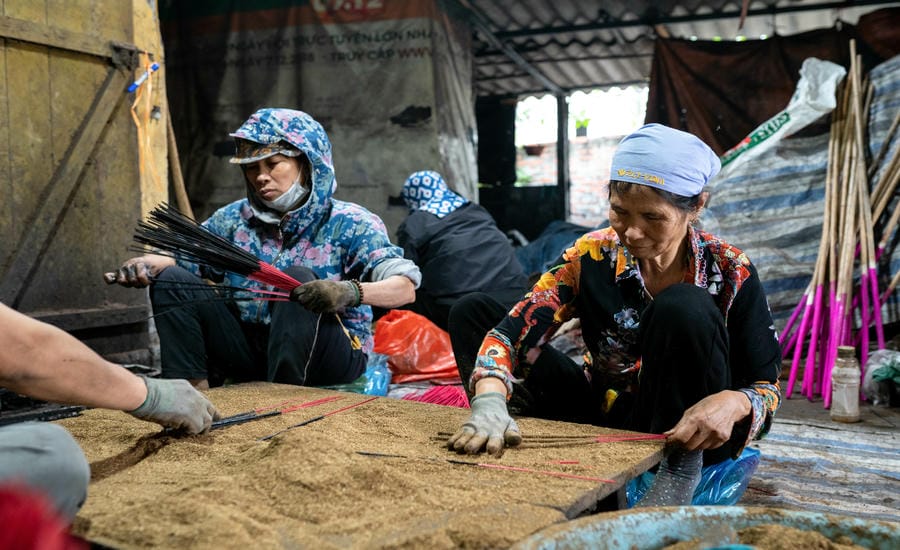
In Duong Thai Bac village (Phu Thai commune, Hai Phong city), incense making was once a familiar job for many families. Every year-end, the whole village is filled with red incense sticks drying all over the yard and alleys. People work from morning to night to meet Tet orders.
But now, that atmosphere has become much quieter.
Ms. Tran Thi Thao, who has been attached to the profession for many years - said that making incense is a hard job, covered with candlestick resin, incense dust all year round and heavily dependent on the weather. When it is humid, incense takes a long time to dry, goods sell slowly, and the craftsmen become even more worried.
Working a lot but income is not high. Tet holiday is busy all day and night" - Ms. Thao said.
According to her, young people who grew up witnessed that hardship, so they no longer wanted to follow the profession. Some went to work in companies, others switched to other more stable professions. From an incense village with a history of more than 100 years, Duong Thai Bac now only has about 6 households maintaining the profession. What worries those who are still attached to the profession the most is the increasing age, while the successor is almost non-existent.
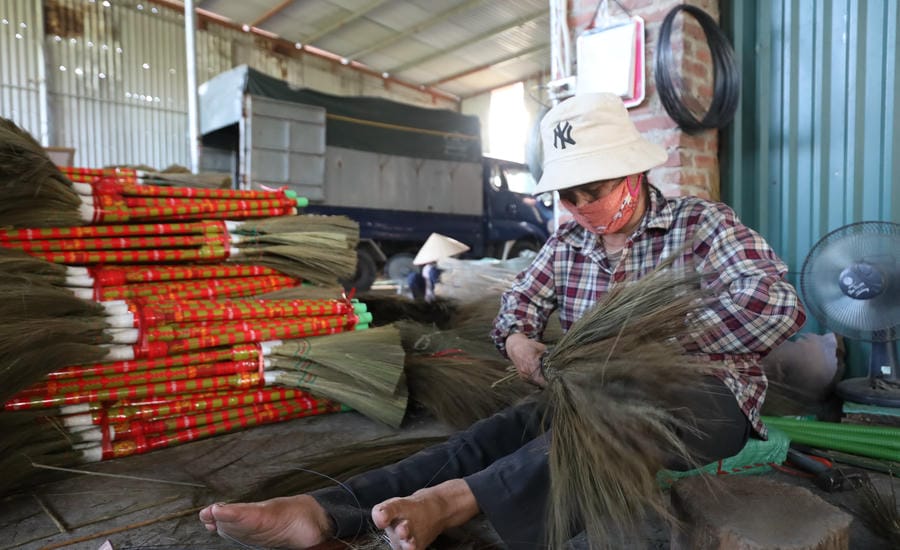
Not only incense making, many other craft villages in Hai Phong are also in a similar situation. In Mat Son residential area (Chu Van An ward, Hai Phong city), making chit brooms used to be the main livelihood of the whole village. The bundles of chit filling the yard, the sound of chit splitting, bundles of brooms once created a familiar rhythm of life for many years.
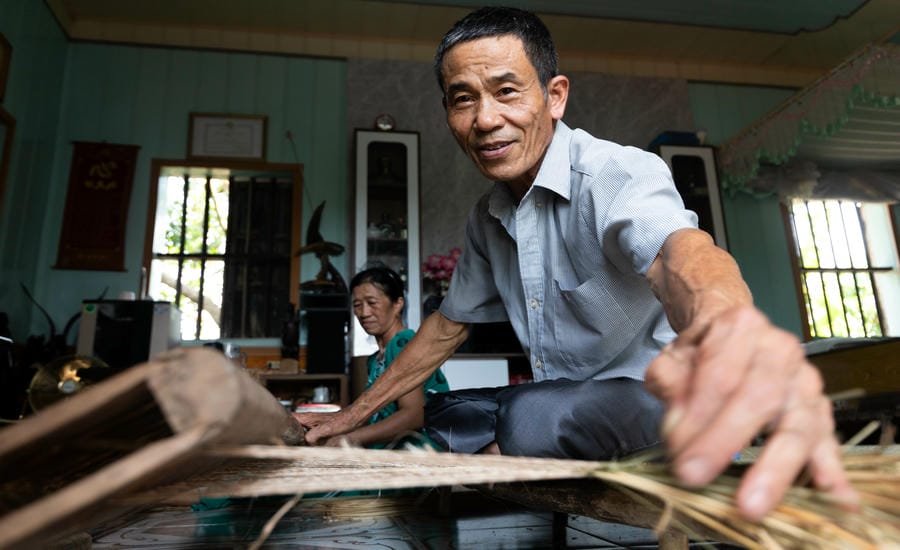
Attached to the profession since 1979, Mr. Nguyen Van Quyet is one of the few people who still persistently follows the profession to this day. For more than 40 years, his hands have been used to each bundle of chit, each tie. "Now I mainly keep the profession. The hardest thing is still selling goods, sometimes I make them but they can't be sold" - Mr. Quyet shared.
According to him, industrial brooms are appearing more and more, diverse designs make handicraft products difficult to compete. Most young people in the village have switched to work as workers or go elsewhere to find jobs. Those who are still attached to the profession are mainly old.
The story in Tien Kieu mat village (Ha Dong commune) is even more heartbreaking. At one point, nearly 80% of households in the village were making mats. The sound of weaving frames echoed throughout the village, mats were produced and sold out as soon as they were produced. Now, the whole village only has 2 households maintaining the profession.
Mr. Pham Van Thieu looked at the dusty cutting frames and could not help but regret. According to him, handicraft sedge mats are difficult to compete with industrial products in terms of price and design. The profession that once supported the whole village has now become a rare job, mainly lasting thanks to the dedication of a few families who are still attached to the old profession.
Reality in many craft villages shows that when traditional crafts no longer bring enough attractive income, young people find it very difficult to choose to stick with them for a long time. Those who stay mostly keep the craft for love and because of regret for the village customs that have followed them for life.
Finding young people in traditional craft villages
However, among the craft villages that are gradually lacking successors, there are still places where young people choose to stay and continue traditional crafts in a new way. Dong Giao carpentry village (Cam Giang commune) is an example.
With about 6,000 people, Dong Giao has about 90% of households attached to the fine art carpentry profession. The whole village currently has about 2,500 workers participating in production, of which about 80% are young workers. In carpentry workshops, it is not difficult to see images of young people proficient in everything from design, carving to product promotion on social networks and e-commerce platforms.
Meritorious Artist Vu Xuan Thep, who has been attached to Dong Giao carpentry village for many years, believes that young people are the decisive factor in the survival of the craft village. According to him, the increasing number of young workers choosing to stick with the profession not only helps maintain production but also creates a foundation for traditional crafts to adapt to modern life.
Young people are quick-witted with technology, know how to change designs, and look for new markets. If there is no next generation, the profession will gradually fade away" - Mr. Thep said.
In Tan Hung ward, Thanh Lieu carving village with a history of more than 500 years, there are also young people silently keeping the craft. Young artisan Nguyen Cong Dat chooses to stick with the profession that requires perseverance, sophisticated technique and even understanding of words. In the digital age, the job of sitting for hours to carve each letter on wood seems difficult to keep young people, but he still decided to continue following his ancestors' profession.
According to Mr. Trinh Quoc Dat - Member of the Central Committee of the Vietnam Fatherland Front, Chairman of the Vietnam Craft Village Association, the biggest problem for many craft villages today is not only the market or raw materials, but the successor human resources.
Finding the shadow of young people in traditional craft villages is not only a concern of today, but also a question for the future. When the old workers gradually let go of the cutting boards, the planks or the wooden molds that have followed them for life, the craft village can only survive if there is a generation young enough to continue and capable enough to innovate.
In the context of digital commerce opening up markets beyond the bamboo hedges of villages, traditional crafts no longer only require skillful hands but also technology skills, market thinking and the ability to tell product stories. And only when young people still want to stay with the craft, the familiar sounds of the craft village will not become memories.


