
Placed side by side, the two works not only reflect modern life but also show the increasing need of people: to be truly connected with themselves and with those around them.
Modern people and unnamed gaps
In "How is today?", Thai Hung builds many stories with realistic and surreal colors to depict the spiritual state of contemporary people. Walls that know how to shudder, separations that only carry half emotions, ATMs that know how to self-destruct or reality shows recruiting "super ugly" people all have a bizarre appearance but clearly reflect today's life.
Behind those seemingly illogical images is the feeling of emptiness, loneliness and loss of connection that many people are facing. People are increasingly drawn into the cycle of work, technology and social networks to the point of losing the ability to feel real life.
The author pays special attention to the invisible distances between people. Those are members living under the same roof but confined to their own world, conversations replaced by phone screens, fierce anger online and then quickly disappearing as if they never existed.
The atmosphere in Thai Hung's collection of short stories always feels cold and suffocating. It is noteworthy that he does not try to create dramatic tragedies, but lets everything happen very calmly. That naturalness makes readers feel heavier, because many instabilities have become a familiar part of modern life.
In that world, emotions are gradually consumed quickly like content swiped through social networks. Personal pains are put on camera, broken relationships are turned into topics of discussion, and people find it increasingly difficult to distinguish between their true emotions.
The collection raises a big question about how humans are existing in the age of technology. We connect with many people but rarely truly listen to each other. We constantly seek attention but are increasingly difficult to face ourselves in silence.
In the opposite direction, Nguyen Phong Viet's "We live to return" is like a break after all those upheavals. If Thai Hung dissects the "wounds" of modern life, then Nguyen Phong Viet goes to find a place where people can heal.
Go far to understand what is most important
In "We live to return", the concept of "returning" does not only have a geographical meaning. It is also a journey back to the most basic values after people have gone through many impacts of life.
Nguyen Phong Viet writes a lot about the roof, parents, childhood memories or the feeling of being unconditionally loved. But the noteworthy thing is that the author does not exploit those images in a purely nostalgic direction. For him, they are spiritual supports so that people do not get lost in the fast pace of life.
Unlike the coldness in "How is today?", the writing style of "We live to return" is softer and slower. The author does not offer great philosophies but only tells about very ordinary things: a meal, a hug, a quiet morning or the feeling of sitting next to loved ones.
That simplicity creates touch. In an era where people are always forced to go faster, more successfully and more prominently, the book reminds readers of the right to rest and to live a life that is suitable for themselves.
One of the highlights of the work is the concept of "home" within each person. According to Nguyen Phong Viet, after all the competition and bumps, the important thing is not how far you can go but what you can keep for yourself.
That's when people learn to slow down, stop comparing themselves to others and see more clearly what they really need. The book does not encourage the escape from reality but emphasizes that each person needs a moment of silence to understand themselves before continuing to walk.
Notably, the work also marks the return of poetry after many years of Nguyen Phong Viet focusing on the essay genre. The poem passages appear throughout the book with a narrative color, like heartfelt words to parents, hometown and the author himself.
When placing "How is today?" next to "We live to return", it can be seen that both books talk about a common issue: the mental state of modern people.
A book looking at the rifts, disconnection and feeling of emptiness in technology life. The remaining book opens up a journey to find peace, love and the ability to return to oneself.
Despite differences in tone and expression, both works show that today's literature not only tells stories but also reflects the problems people are facing. In an era where everything happens too quickly, the two books remind readers of the need to stop, look inside and ask themselves: how are we living, and where is the place we really want to return to.
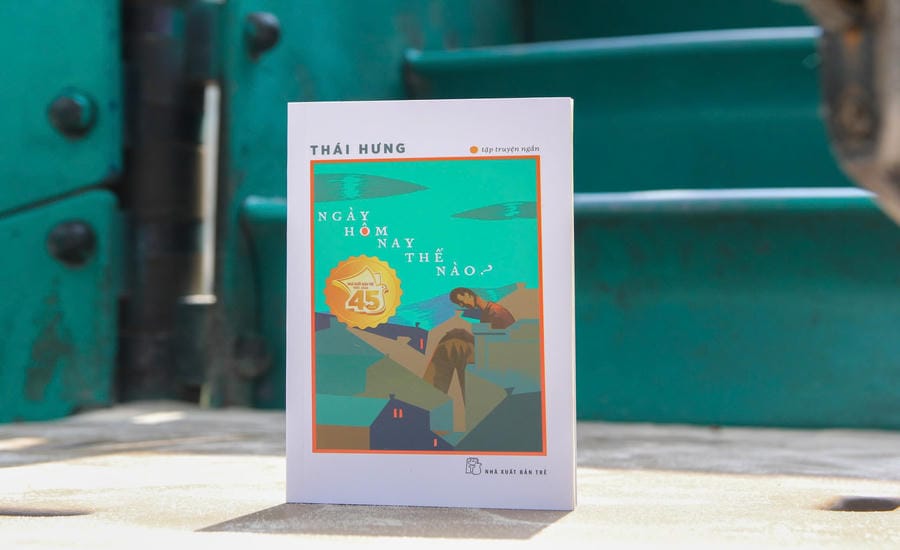
Two authors with two different styles but both show efforts to delve deeper into inner life and contemporary reality. Nguyen Phong Viet returns to poetry after many years of writing essays with gentle, emotional words about family, homeland and the journey back to himself. His poetry is not fussy in form but lets emotions freely flow, filled with longing, gratitude and even apologies of a person far from home.
Meanwhile, Thai Hung attracts attention with short stories with modern, edgy and tense colors. Short, fast-paced writing style and somewhat bizarre details help him portray an urban life full of insecurity, where people face loneliness, pragmatism and spiritual "wounds". If Nguyen Phong Viet chooses gentleness to touch memories and family affection, Thai Hung directly exposes the dark corners of today's society.


