Household tradition preserves 400-year memories
Setting foot in Nam Cao (Le Loi commune, Hung Yen province) on a pale sunny afternoon, the first image that invaded my mind was the houses full of nostalgia. From the small workshop, the crackling sound echoed regularly from the cutting frames, the characteristic pungent smell of silkworm cocoons lingering in the wind.
According to historical records, the silk weaving profession here originated in 1584, when the two ancestors of the craft, Tu Tien and Tu An, brought techniques from the old Ha Tay land to teach to the villagers.
Looking back at the flow of time, Mr. Ha The Cong, Head of the Culture and Social Department of Le Loi commune, recalled the 1980s - the golden age when Nam Cao bamboo trees proudly reached the world. However, the "deep note" of the 1990s shook the craft village, and many families had to sadly leave the weaving line.
Amidst these fluctuations, the persistence of production facilities, especially Nam Cao Castor Weaving Cooperative, has become a solid support to revive the underground heritage, both supporting people to expand their scale and continuing the journey to bring Vietnamese cast iron through the ocean.
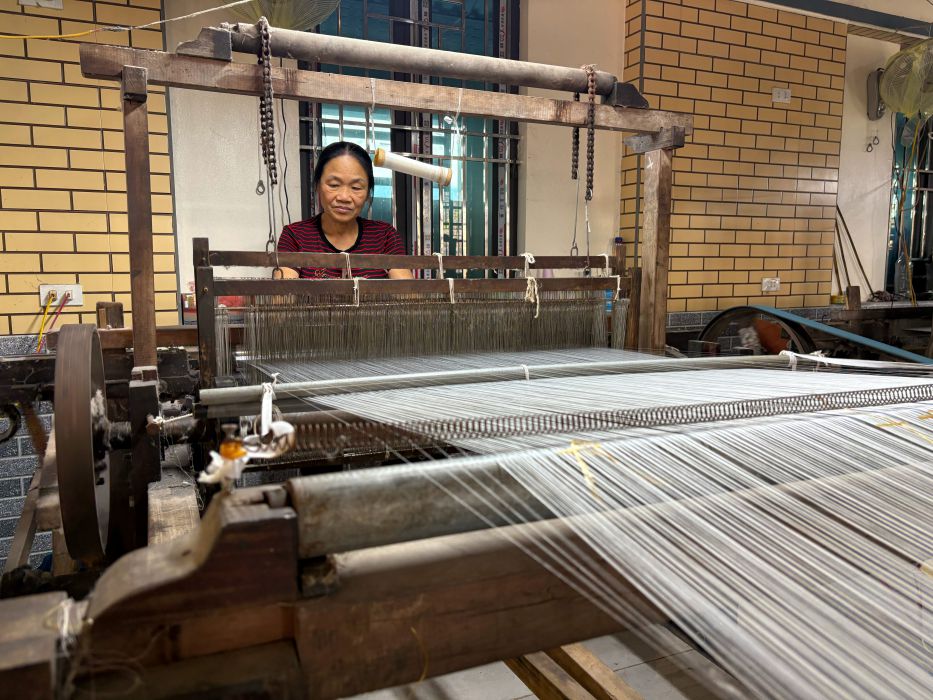
Nam Cao bamboo village is not originally a village growing mulberries or raising silkworms, but is famous for its weaving profession. To have a soft bamboo board, the production process is a series of meticulous stages.
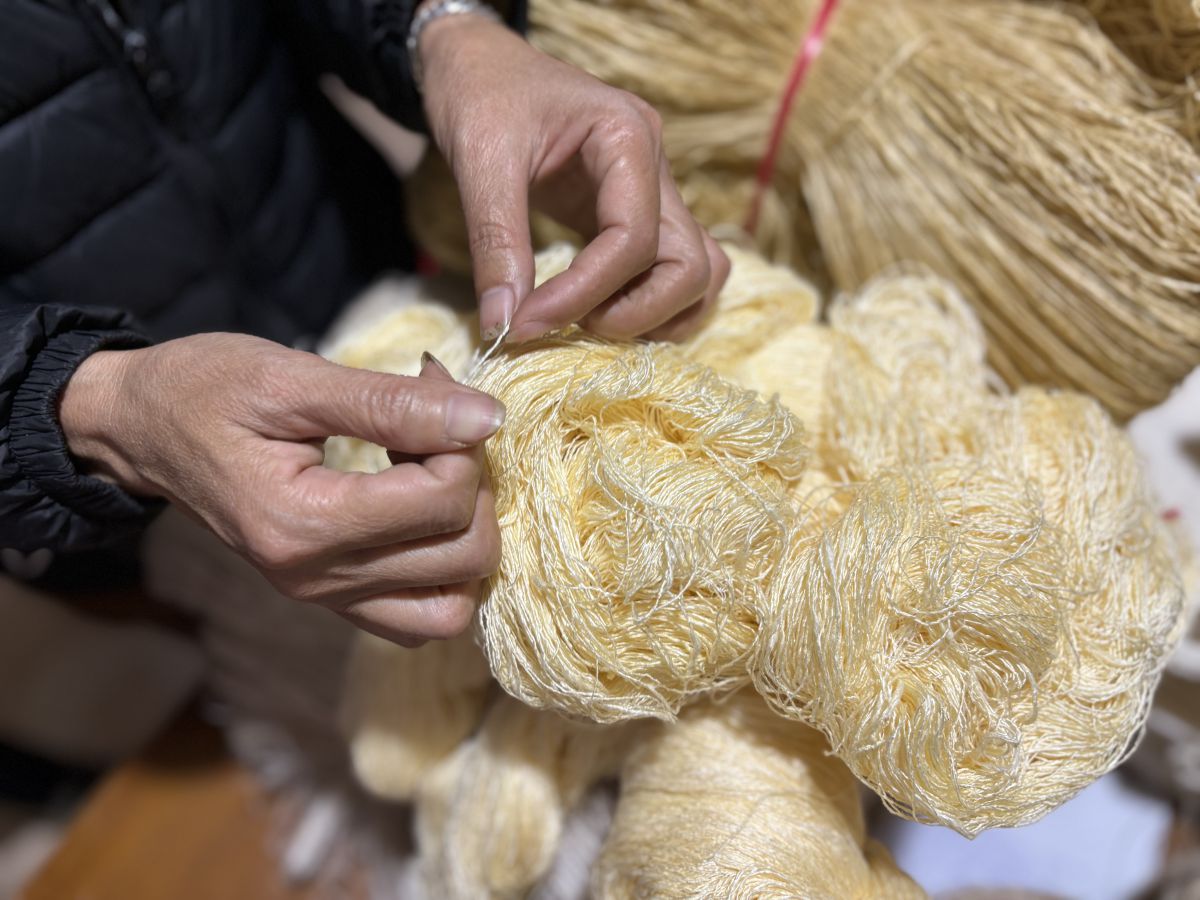
The most elaborate is the thread pulling stage (pulling silk thread). Unlike ordinary silk weaving, silk thread is pulled from rough cocoons. The craftsman must soak his hands in water whether Winter or Summer, using his keen eyes to select each silk thread, skillfully rolling it up to be round. A skilled and diligent artisan working all day only collects about one tael of silk thread. Each meter of Nam Cao silk thread is an artwork crystallized from the sweat and patience of the artisan.
Stepping into the weaving workshops, we were captivated by the harmonious coordination between the weaving feet and the thoi-shaped hands. Wood weaving frames that are decades, even hundreds of years old, still operate persistently. Although many weaving frames are now equipped with electric motors, each piece of lino fabric still has to go through each step of stepping, pulling, and adjusting to make each fiber uniform, characteristicly porous, bringing a feeling of warmth in winter and coolness when summer comes.
Destination of a soul that loves heritage
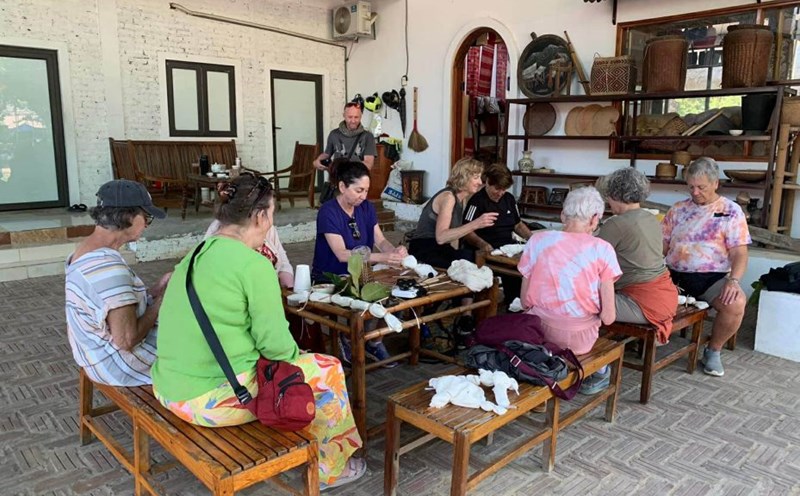
Not only a production place, Nam Cao today has become a unique experiential tourist destination of Hung Yen province. Every year, this craft village welcomes tens of thousands of visitors, including about 10,000 international visitors from the US, France, Japan...
Tourists come here not only to visit but also to "live" with the craft village. Visitors can spend the whole morning personally experiencing the stage of dyeing silk scarves. Feeling the color released on the water surface, witnessing each unique motif gradually appearing on the silk surface according to personal marks is a truly unforgettable experience. From there, each visitor will understand why people cherish Nam Cao silk so much - because each product is an unforgettable story.
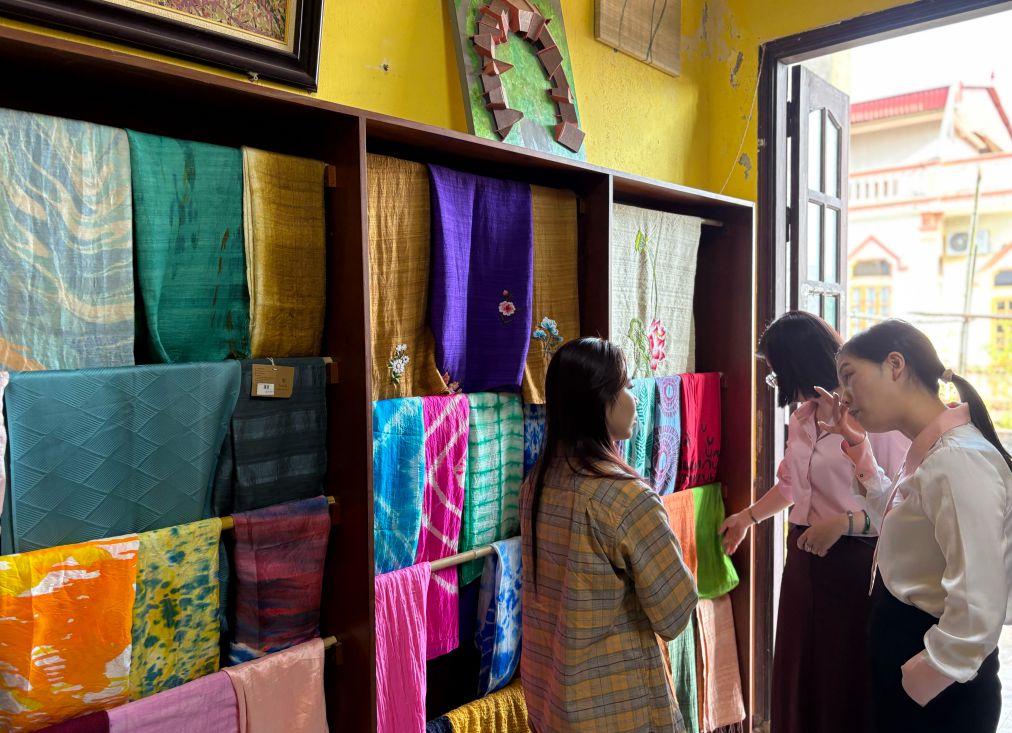
The recognition of Nam Cao silk weaving as a national intangible cultural heritage (2023) and the OCOP 4 star certification for silk blankets and sheets (2025) are proof of the efforts to restore the craft village. Although there are still concerns about attracting young people to stay in the village or accommodation infrastructure for tourists, the sincere smiles and hospitality of the artisans here are the strongest magnets to keep tourists experiencing traditional craft village tourism.
Not stopping at preserving the original state, Le Loi commune is realizing strategic steps to elevate the craft village. The locality plans the western area with an area of up to 29ha, creating a centralized conservation space for cooperatives. This direction not only solves the production problem but also opens the door for cultural and ecological tourism development, helping traditional weaving to take deeper roots in modern Hung Yen.
Leaving Nam Cao bamboo village with a bamboo scarf in hand, each visitor can understand that the value of the craft village is not only in the economic value of the fabrics. The sound of the shuttle still resonates steadily like the heartbeat of a Northern countryside, connecting the 400-year past and a sustainable future.