
Historical and religious imprints
Dinh Bang communal house was built by local people from the early 18th century to worship the village tutelary god. In 1736 (Vinh Huu 2 era), the communal house was rebuilt on a large scale and completed as it is today. The communal house worships three tutelary gods: Cao Son Dai Vuong, Thuy Ba Dai Vuong and Bach Le Dai Vuong, gods respected by the people for their contributions to protecting and securing the villagers.
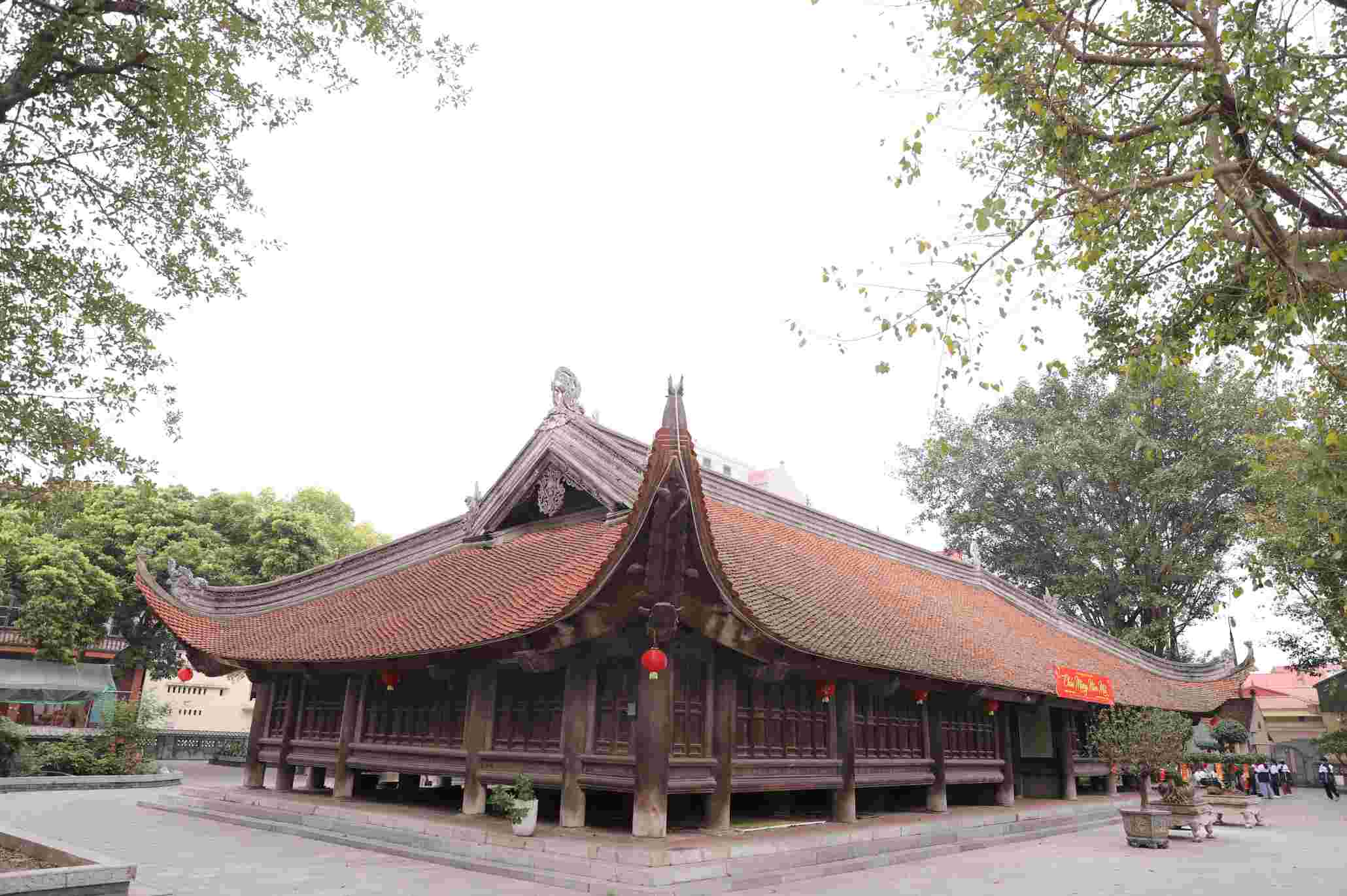
Dinh Bang has a Cong-shaped architectural layout including: Dai Bai, Ong muong, Hau cung. The Dai Bai tower has a majestic architecture with four large, wide-spread roofs, occupying 2/3 of the building. Most architectural components are elaborately carved, detailed with different themes such as: dragon, horse, unicorn, phoenix,...
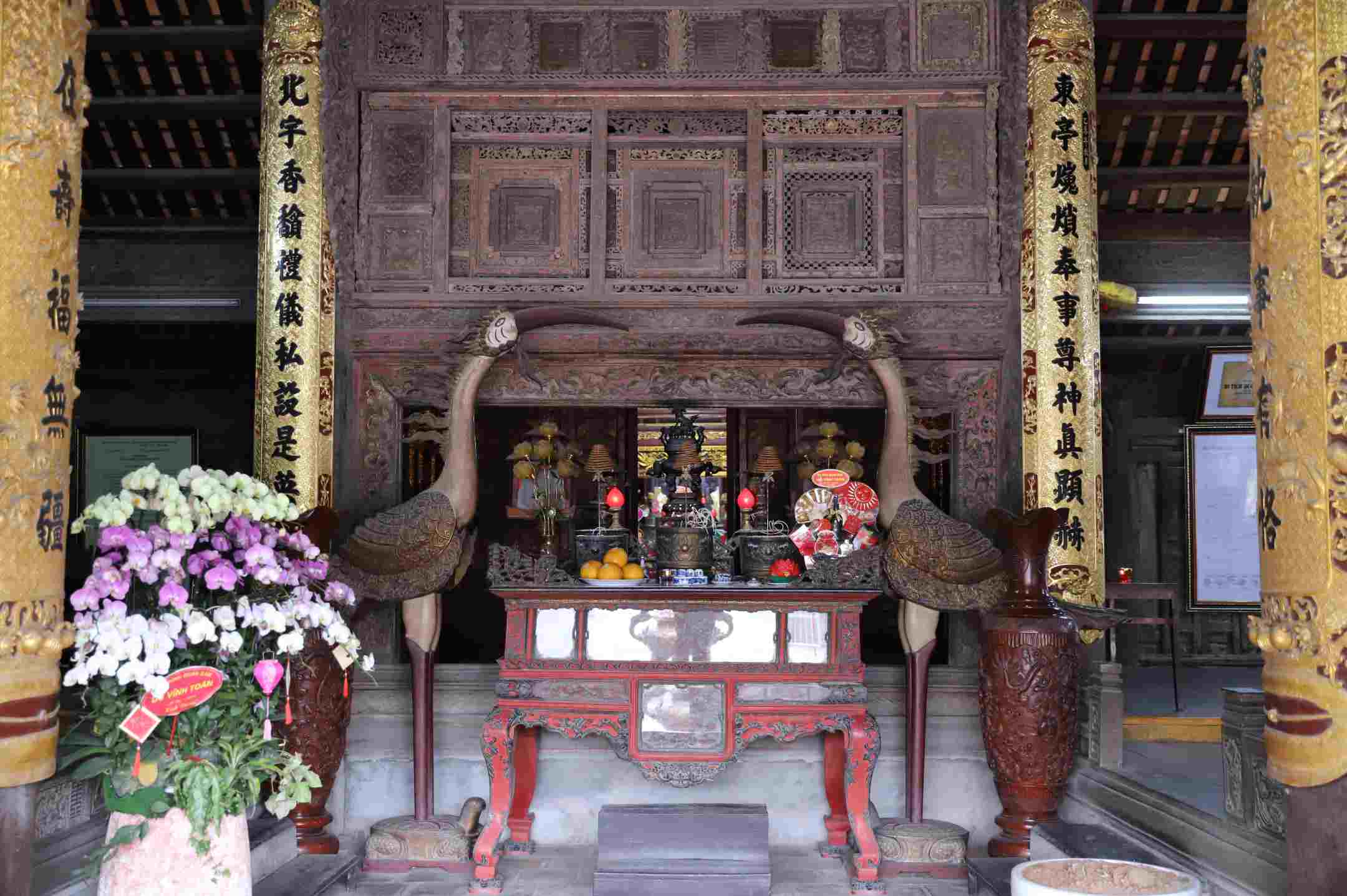
The communal house is mainly built of ironwood on a large scale, highlighted by the sophisticated carving art in the 17-18th century art style. A few dragon carvings in the 19th century art style. Dinh Bang communal house is one of the few communal houses that still retains the wooden floor system from Dai Bai to Ong muong and Hau cung to this day.
It can be said that the architectural highlight of Dinh Bang communal house lies in the design of 4 curved corners. Although the curved roof is originally the standard of ancient Vietnamese communal houses, this work still creates a unique mark. The eaves are gently curved, sharply curved at the end, bringing elegance and majesty to the overall relic.
Stepping into the inner space, the most prominent is the imposing shackle door 3.7m wide. The carved panels with the themes "four sacred animals", "four precious animals",... are vividly and exquisitely expressed to every detail.
Not only carrying artistic value, Dinh Bang communal house is also the community cultural activity center of the village, a place that maintains many traditional cultural customs. The traditional festival on February 15, Dinh Bang people again hold a festival to commemorate the gods. With special values in history, architecture and culture, since 1962, Dinh Bang communal house has been ranked as a National Relic in the first phase, Decision No. 313-VH/VP dated April 28, 1962.
Red address
Dinh Dinh Bang is not only valuable in terms of architecture and spirituality but also a "red address" of the Vietnamese revolution.
The special event took place in February 1946, President Ho Chi Minh personally returned to Dinh Bang communal house, at the ancient communal house. He wished Tet to his compatriots on the occasion of the traditional Tet of the nation and chose this place as the location for the first preparatory session of the 1st National Assembly of the Democratic Republic of Vietnam, now the Socialist Republic of Vietnam.
That historical event has added meaning so that an architectural and artistic work becomes a red address, associated with the first steps of our state at that time. It is the harmony between the unique artistic value of wood carving of the 18th century and this important historical mark that has affirmed the great position of Dinh Bang communal house.
Over time, the architectural values and historical imprints of the communal house have been preserved. Therefore, on November 26, 2024, Deputy Prime Minister Le Thanh Long signed Decision No. 1473/QD-TTg ranking Dinh Bang communal house architectural and artistic relic as a Special National Relic.
That title not only affirms the outstanding value of the communal house in the treasure of national cultural heritage, but also reminds of today's responsibility to continue, preserve, conserve and promote the historical and cultural values that have been nurtured over many centuries.


