
Entering the "hell on earth
Coming to the Special National Historical Relic Vietnamese Prisoner Prison - Phu Quoc (abbreviated as Phu Quoc Prison or Phu Quoc Prison) in the historic July days, I imagined the barbaric and cruel torture scene "nameless" that many revolutionary soldiers had to go through.
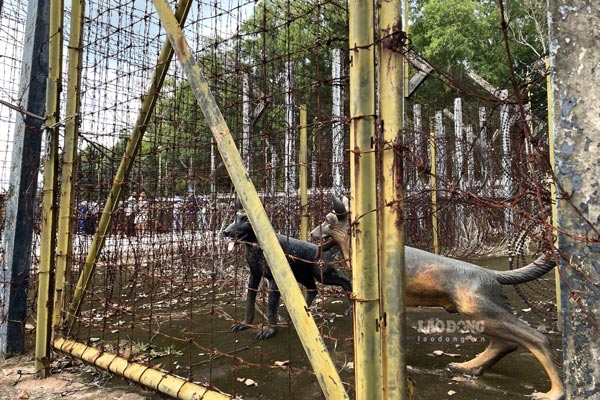
The road leading to prison cell No. 13 passes through many layers of barbed wire fences - a type of steel wire with blades as sharp as razor blades. This is also the biggest nightmare in each prison break of many prisoners.
Who would have thought that where I and the tourist group were standing, from 1967 - 1973, in the south of Phu Quoc island, in just 5km, 500 prisons were built.
The number of prisoners held at the peak time could be up to more than 40,000 people. In 6 years, more than 4,000 prisoners have remained in the heart of this island. Each prison house, colonialists, imperialists invaded and imprisoned from 100 - 150 prisoners. It's not like just opening the door, pushing 100 people or 150 people in and closing the door, revolutionary soldiers just need to step through this door to get a beating. Sticks, guns, three-pronged guns, they beat indiscriminately" - Ms. Tran Thi Ngoc Giau - interpreter shared.
According to the narrator, to this day, many remains of the soldiers are still lying somewhere in the heart of Phu Quoc land.
Every year, on War Invalids and Martyrs' Day (July 27), the Phu Quoc Prison Relic Management Board organizes a death anniversary ceremony and offers incense at the Fatherland's altar to commemorate the merits. This is also an occasion for many former Phu Quoc prisoners from all over the country to return to visit the place where they were imprisoned, and burn incense for fallen comrades.
There are times when we are very touched. We just arranged rice and soup, fruits on the altar, former prisoners returned. This day, the uncles only hope to light an incense stick to commemorate their comrades" - Ms. Giau said emotionally.
In a short few minutes, I was able to climb onto the roller coaster of emotions, from fear, obsession to heartache at the pain that revolutionary soldiers had to endure.
Two pieces of plank tightly clamp the chest, using screws and keys to tighten it until the heart breaks, dying on the spot. Or chiseling and breaking the living teeth of the prisoner.
Ms. Tran Thi Ngoc Giau recounted once being in Phu Xuyen, Hanoi, meeting, chatting and having a friendly meal with a revolutionary soldier who was once imprisoned.
I had the opportunity to go out with him 5 times. In the last time, he gave me a tooth that had been taken from Phu Quoc prison. When I brought it back and made a dossier for display, it was interpreters like me who were terrified: Taking a living tooth makes the root of the tooth very deep. But according to his story, this is common in prison" - Ms. Giau recounted.
Another form of torture is using stingray tails to hit the body. The upside-down spines on the fish tails tear apart the flesh.
Tunnel of will
However, despite being close to death, amidst 12 - 15 layers of barbed wire fences surrounding, there was still a successful prison break at house number 16.
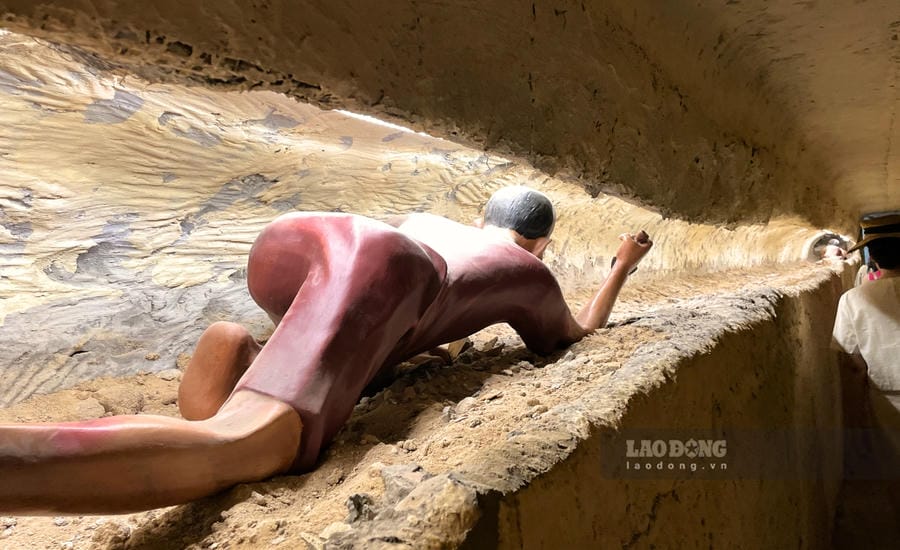
The tunnel escape was carried out by former prisoners from inside the prison to outside. What is special is that the prisoners did not have hoes or shovels. The only tools were stainless steel spoons, rice spoons or other rudimentary items. All were broken, hidden under the sleeping place by 21 prisoners, rolled in blankets and sheets and secretly used to dig tunnels.
The tunnel is 60-100m long, which means it is necessary to dig up a very large amount of soil. If you take the soil out, you will be detected and shot dead by guards, and if left in the tunnel, you cannot continue to dig. Therefore, hiding soil becomes the most difficult problem of the prison break.
Taking advantage of the rainy season weather conditions of Phu Quoc, there are rains that last from morning to afternoon, even for many consecutive days. This is the time when the enemy soldiers' guards are looser.
Even the houses chosen to dig tunnels were carefully calculated. According to the story, many prisoners of war suffering from tuberculosis and scabies were arranged in the same area, making guards hesitant to contact and limit inspection.
Another important factor is the characteristic of Phu Quoc's soil foundation. This is a loose clay type, with plasticity, which is soft and easy to dig when it rains. With only stainless steel spoons and rudimentary tools, soldiers dig tunnels wider than the necessary size and compress them tightly.
The secret lies in the method of "excavating big, compressing small". The soil after excavation is pressed tightly into the tunnel wall, both helping the tunnel not to collapse and "hiding" most of the soil volume right in the structure of the tunnel" - Ms. Giau led my group through a part of the tunnel.
Very little excess soil will be secretly carried in the pockets when going out to the toilet or taking advantage of heavy rains to spread small handfuls outside the window, mixed with the natural mud layer.
When the tunnel went out, the revolutionary soldiers did not run deep into the forest but followed the North direction of the island.
According to the stories of former prisoners, this area at that time had revolutionary bases and local government support. Despite hunger and thirst, illness, they still supported each other and returned to their bases safely to continue revolutionary activities until the country was unified" - Ms. Giau informed.
So that memories do not fall into oblivion
More than half a century has passed, the rows of prisons, barbed wire fences or restoration models are just traces of a time of war.
However, what remains most strongly with each tourist like me is not artifacts, but the stories of revolutionary soldiers who successfully escaped prison and of relatives of those who cannot return forever.
July comes, Phu Quoc Prison is not only a historical destination. It is also a place to remind everyone of the value of peace, of the noble sacrifice of thousands of revolutionary soldiers who have gone through it to maintain national independence.
Leaving the relic site, I and many others remained silent. After a light shower, the pearl island quickly turned sunny, the stories about the "hell on earth" of that year still resonate, so that every step through here becomes a word of gratitude to those who fell for the Fatherland.


