
Dubbed the culinary capital of Vietnam, Hue owns a treasure trove of nearly 1,700 dishes, accounting for more than half of the total of about 3,000 dishes nationwide recorded in the Nguyen Dynasty's Encyclopedia. Hue cuisine is rich, sophisticated and diverse, crystallized in three main streams: Imperial cuisine, folk cuisine and vegetarian cuisine. That foundation has created the Tet feast of Hue people with many unique dishes, containing the depth of culture and lifestyle of the ancient capital.
In the atmosphere of welcoming the new Spring, we had the opportunity to meet and chat with artisan Mai Thi Tra. At the age of over 90, she still dedicates her whole heart to Hue cuisine and is one of the few individuals who have just been awarded the title "National Artisan of Vietnamese Culinary Culture" by the Vietnam Culinary Culture Association. This is the most noble title to recognize the great contributions of artisans in the cause of preserving and promoting the quintessence of national cuisine.
Keeping old cakes and jams for today's Tet
According to Ms. Tra, for Hue people, eating is not just tasting with the mouth but feeling with the five senses. Dishes must be harmonious from color, flavor to taste, associated with the arrangement and slow enjoyment rhythm, so that each meal becomes a sophisticated and peaceful experience. Choosing ingredients, controlling spices and putting all feelings into each dish are the factors that make up the deliciousness, the goodness and the beauty of Hue cuisine.
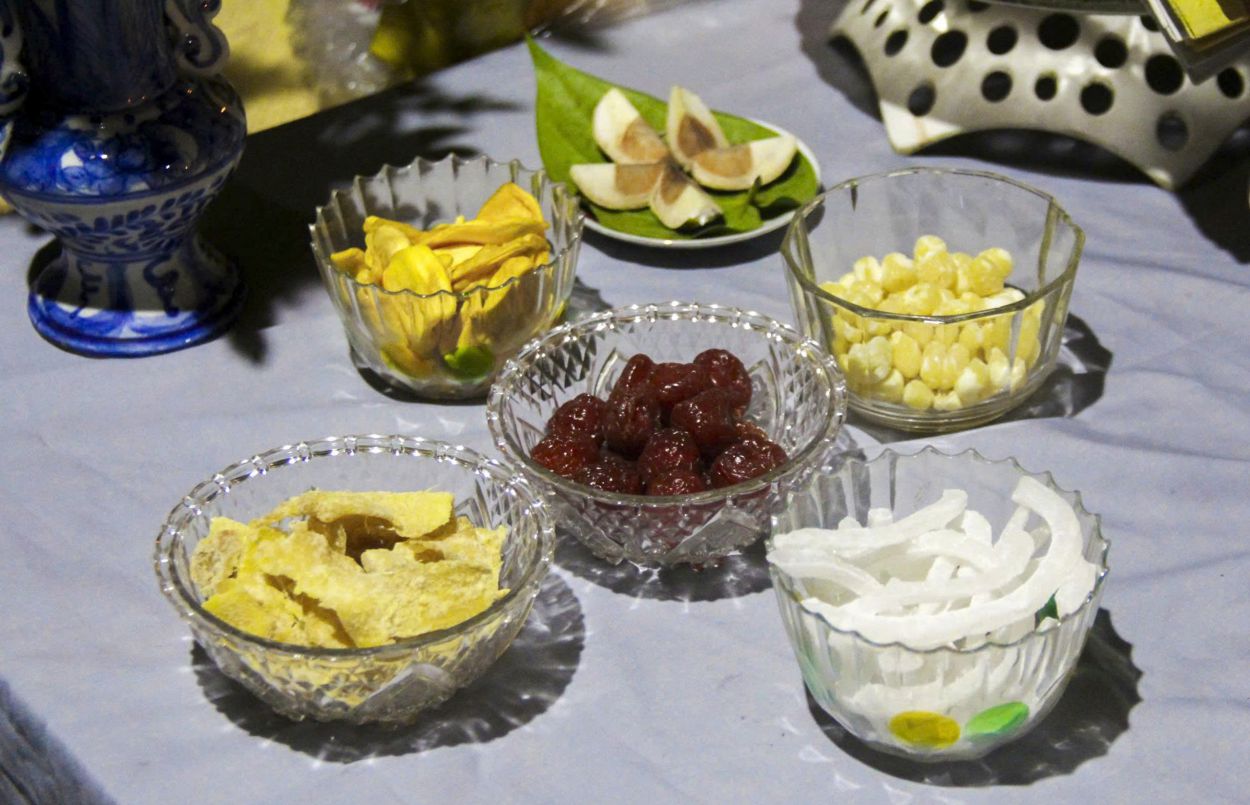
Speaking of Tet cuisine in Hue, it is impossible not to mention traditional cakes and jams. Ms. Tra recounted that her family used to live near Thuong Thien team serving food and drinks for the Nguyen Dynasty royal family, thanks to which her mother learned many precious cakes and jams. These cakes and jams were later made on every death anniversary and Tet to offer to ancestors, treat guests, and then pass on to her children and grandchildren. Some later opened a famous cake shop, supplying many hotels inside and outside the city.
Like many other Hue dishes, Tet cakes and jams are prepared according to the principle of "what season, what dish" to both ensure freshness and harmony with physical condition. On cold days, there is ginger jam with a slightly spicy taste that helps warm the stomach and supports digestion; kumquat jam and orange jam are both fragrant and have the effect of clearing the throat, reducing the feeling of bloating after a high-protein meal. When the weather turns warmer, jams from lotus seeds, coconuts, potatoes or jicama have a mild sweet taste, easy to eat, and do not cause greasiness. Most jam dishes can be served with tea. On Tet days, sipping a cup of hot tea with a few types of cakes and jams, the sweetness harmonizing with the gentle tea flavor makes the story of the beginning of the year even slower and warmer. Jams are not only for eating, but also as an excuse for people to get closer to each other during the spring reunion days.
However, over time, along with the diverse development of industrial-produced cakes, many traditional Hue cakes and jams gradually disappeared, even faded; the original names are no longer used correctly. With the desire to restore lost cakes and jams and restore accurate names to ancient cakes, artisan Mai Thi Tra has compiled the book "Old Hue Cake and Jam" as a way to pass on knowledge to the younger generation, contributing to preserving and promoting the Tet cake and jam customs of the homeland.
Hue sweet soup, sweetness of Spring
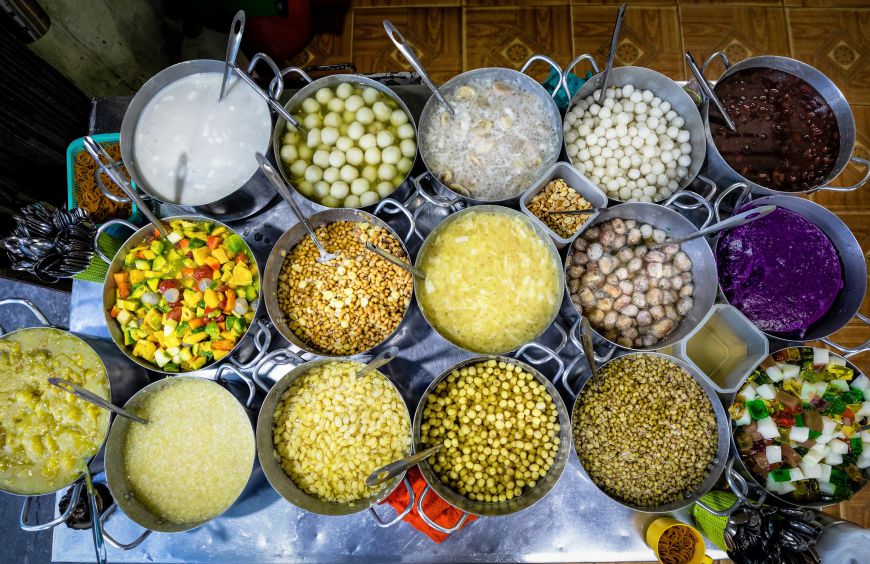
In the Tet feast of Hue people, sweet soup dishes are also indispensable, because sweet soup is not only a dish but also a offering with the meaning of respecting rituals, expressing gratitude to ancestors and praying for a peaceful new year. According to Ms. Tra, few places have as many sweet soups as in Hue, stemming from the dense worship custom with full 12 days of the full moon of the year and many other Tet holidays and death anniversaries, sweet soup and sticky rice are always present. Folk wisdom once said: "Walking and murmuring, today is full moon, tomorrow is full moon sweet soup sticky rice", referring to the fact that on the day of worship, there must be sweet soup and sticky rice.
Furthermore, due to the limited conditions of fruits in the past, only bananas, oranges, and grapefruits according to the season, the people of Hue have created many types of sweet soup to replace them. A rich sweet soup system is formed from tubers, fruits, nuts, flour to medicinal sweet soup. Spring has yam sweet soup, tofu sweet soup; summer has lotus seed sweet soup; autumn is tofu sweet soup; winter is periwinkle sweet soup, sweet potato, refined powder... Through the skillful hands of Hue women, familiar ingredients, including imported elements, are "molded" into sweet soup dishes with their own flavors and colors, sometimes rustic, elegant, sometimes luxurious, elegant. Both common in everyday life and solemn and delicate during Tet holidays. This makes sweet soup an indispensable part of Hue's culinary life. Every household must know how to cook at least a few sweet soup dishes for worship.
During Tet days, sweet soup is not only a dish but also carries the meaning of wishing for a new year. Enjoying sweet soup on Spring days is seen as sending wishes for a sweet, peaceful and lucky new year. Therefore, sweet soup is often present in the Tet feast, on the ancestral altar as a gentle, delicate wish, imbued with the lifestyle of Hue people.
Eating vegetarian to clear your mind and nourish your body
Besides savory dishes, in the Tet feast, Hue people often skillfully dip vegetarian dishes to create balance, helping the meal become lighter and less greasy. The presence of vegetarian dishes is therefore not simply a culinary choice, but also reflects the concept of harmonizing yin and yang, nurturing life and a moderate, elegant eating style of Hue people in the first days of the new year. Some families also choose vegetarian cuisine to make offerings to grandparents and ancestors.
Speaking of Hue vegetarian cuisine, according to Ms. Tra, it is necessary to trace the origin of formation. The roots of vegetarian cuisine here are associated with the role of the Buddhist center of the ancient capital and rituals under the Nguyen Dynasty. From the royal court to the gates of Zen Buddhism, vegetarian dishes are not only for eating but also elevated to harmonious dishes in both taste and color, contributing to nurturing the body and mind and preserving a pure lifestyle.
Hue style in cuisine emphasizes harmony, simultaneously affecting the sense of smell and vision, creating the comprehensiveness of the dish. Therefore, in Hue vegetarian cuisine, spices are always carefully selected and combined to create a delicious taste, light aroma and sensory appeal. Vegetarian dishes limit the use of MSG, prioritize natural spices, use broth from vegetables and fruits to create a sweet taste for soups, porridge, soups. With ingredients from vegetables, beans, mushrooms, Hue vegetarian dishes, although simple but sophisticated, not only soothe the taste after salty, fatty dishes but also help the body feel more comfortable during the long days of Tet.
When the universe, weather and living environment constantly change, conservatism will no longer be suitable for the present. In cuisine as well, it is necessary to preserve the value of the past as a foundation to continue to create for the future. Choosing ingredients, controlling spices and putting all feelings into each dish are the factors that make up the delicious, healthy and beautiful, but above all, it is necessary to preserve the quality and characteristic taste of Hue cuisine," artisan Mai Thi Tra shared in her early spring story.
Artisan Mai Thi Tra is the granddaughter of Mrs. Mai Thi Vang - King Duy Tan's wife; her father was once a district mandarin under the Nguyen Dynasty. She taught Literature for many years at Nguyen Tri Phuong School and Thanh Noi Hue Girls' School. From 1976, she taught Literature cum housework at Dong Khanh School (now Hai Ba Trung High School). In 1991, after retiring, artisan Mai Thi Tra spent most of her time teaching Hue cuisine at Saigon Tourism Secondary School, the Job Introduction and Vocational Training Center under the Thua Thien Hue Provincial Women's Union. She is a member of the Vietnam Cuisine Association, actively participating in activities to promote and introduce the culinary culture of the ancient capital, and is also a "teacher" of many famous culinary artisans.


