
Phoenix" flapping its wings
Located at the Sam Mountain intersection - Tay An Pagoda (An Giang province) has a rare landscape: Back leaning against the mountain, face facing the East, opening up a spacious plain space, where rivers and water harmonize. The road to the pagoda starts from simple stone steps, but each step seems to gradually separate from the city's noise. Through the three-entrance gate, the space seems to expand: Mountain wind is gentle, incense smoke is lingering, the sound of bells resonates, creating a quiet rhythm in the moving life.
Looking down from above, the pagoda appears as a vivid block - like a phoenix spreading its wings. This is something that the ancients felt very early. In the stele of Vinh Te Son (1828), Thoai Ngoc Hau once depicted this place like a watercolor painting with a graceful color scheme: Clearly white mountain foothills, sparse green bamboo tops... Admiring the blue water on the high bank, fields and gardens surrounding the mountain foothills... The pagoda at the top of the fragrance spread clouds, not inferior to the scenery of China.
In the context of the Southern region being still pristine in the early days, the presence of Tay An Pagoda is not only of religious significance, but also like a cultural milestone, marking a shift from reclamation to settlement, from temporary to sustainable.
Cultural intersection within an ancient temple
Tay An Pagoda was built in 1847 by Governor-General An - Ha (now An Giang province) Doan Uan, in the context of the border region needing an institution that both stabilizes spiritual life and contributes to strengthening people's hearts. The name "Tay An" as expected has the meaning of reassuring the western border. After nearly 2 centuries, the pagoda has been restored many times, notably the great restoration in 1958 chaired by Venerable Thich Buu Tho.
Since then, Tay An Pagoda has put on a different architectural coat. Outside, the high, curved dome system has the shape of Indian - Islamic architecture, which is rare in Vietnamese pagodas. Explaining this, it is impossible to separate the geo-cultural context of An Giang - the intersection of many Vietnamese, Khmer, Cham communities and further influences from India through ancient trade routes.
That transformation has created a "unique" but very Southern appearance: Open, flexible and harmonious. The central tower with a round dome reaching high symbolizes the Buddhist universe, below is a statue of Buddha Shakyamuni placed in an octagon, suggesting fulfillment. On both sides are bell towers and drum towers creating a balanced and harmonious position.
However, entering the inner sanctuary, the space returns to the familiar standards of Vietnamese pagodas: "tam" character structure, double-roof, sturdy căm xe wood columns, ancient tile floor. Nearly 200 statues of Buddhas, Gods, and Fairies - mostly made of wood - along with horizontal lacquered boards and parallel sentences have created persistent spiritual depth through many generations.
The contrast between "foreign" and "local", between breakthrough and standard, does not create contradictions but, on the contrary, creates identity. That is how Southern culture works: Accepting to get rich, but always maintaining its core.
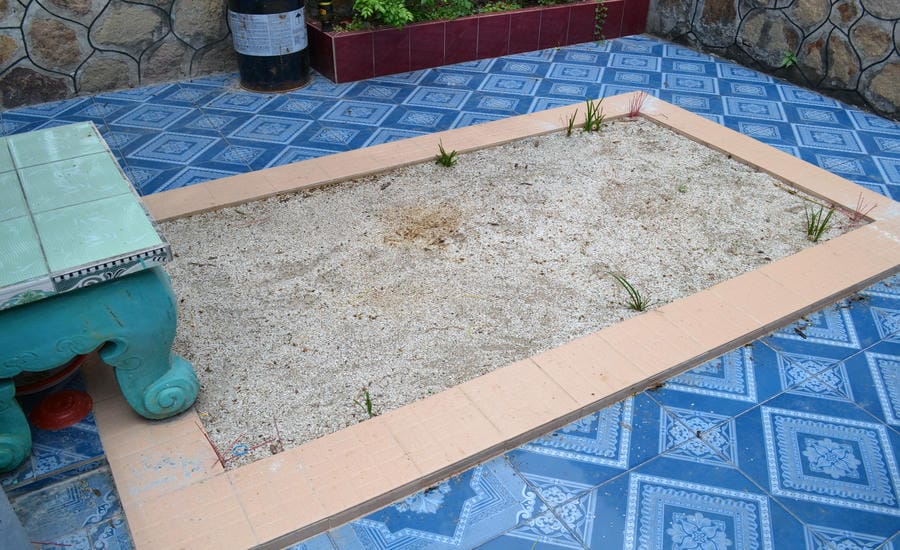
Tay An Buddha Master and the will "tomb without numbness
Behind the pagoda is a quiet space - the resting place of many high-ranking monks, including Doan Minh Huyen, who is respected by the people with the title Tay An Buddha Master. Born in 1807 in Tong Son village (Dong Thap province), he appeared in the context of the South having many epidemics and instability.
In 1849, he founded the internal religion: Buu Son Ky Huong, calling on people to live virtuously, do good deeds, and at the same time leading poor people to reclaim land and establish villages.
According to legend, he had the ability to treat warm diseases with plain water and guide people to a simple moral lifestyle with the motto "to study Buddhism - cultivate virtue"... Later, he was brought by the Nguyen Dynasty to practice at Tay An Pagoda, so he had the additional title of Tay An Buddha Master. In 1856, he passed away.
The special thing is that his tomb is not built high into a mushroom, according to his will. People call it "tomb without a nipple" - a symbol of the philosophy of living humbly, not seeking fame, and immersing oneself in dust.
In a land that has been turbulent, that choice is not only personal simplicity but also a cultural message: Human value lies in the way of life, not in form.
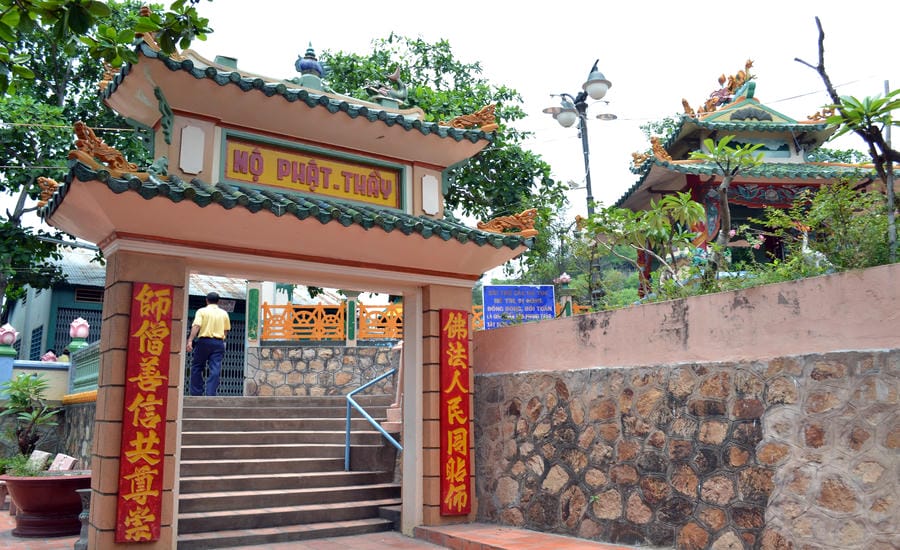
One journey - two lands, one cultural thread
In 1980, Tay An Pagoda was ranked as a National Relic. However, for the people of Southern Vietnam - especially An Giang and Dong Thap - the value of the pagoda is not only in its architecture or history, but also in the story of the Tay An Buddha Master as a connecting thread between culture and belief in the journey of reclaiming territory.
Today, tourists come to Sam Mountain not only to visit, but also to find a part of spiritual memories. There, the past and present intersect in each step, in the incense smoke and in each person's own feeling.
More than a century and a half has passed, Tay An Pagoda still stands there - the roof is as high as the bow of a boat facing the dawn. The pagoda is not only a pilgrimage site, but also a vivid proof of the endurance of Southern spiritual culture: Where differences are harmonized, where architecture tells historical stories and where sincerity is accumulated over time.
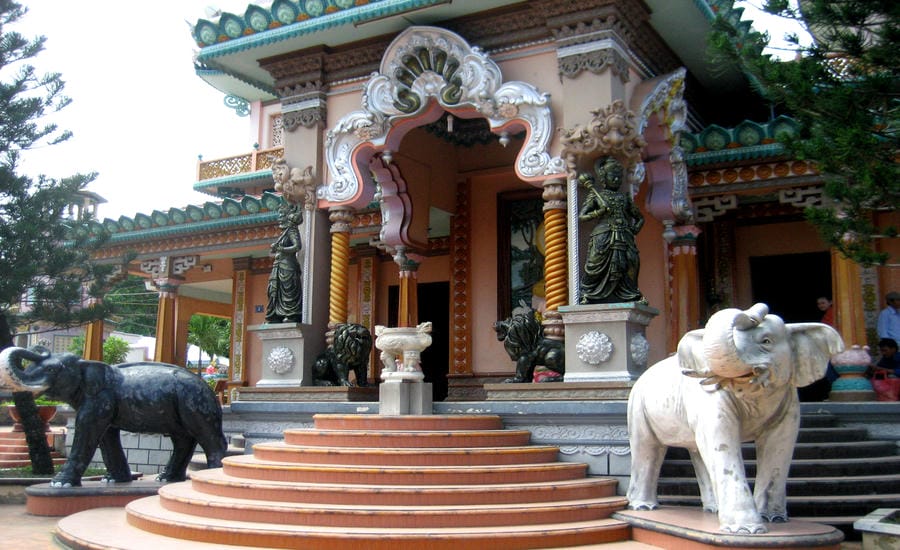
In the midst of modern life, the "fairy" on the slope of Sam Mountain is still whistling - not to fly away, but to remind of a land once built from faith, tolerance and people who know how to live for the community.


