Established on March 17, 2020 under Decision No. 239 of the Standing Committee of the Central Committee of the Vietnam Fatherland Front, the museum has the task of collecting, preserving, and promoting heritage values related to the history of the Vietnam National United Front. By 2023, the Vietnam Fatherland Front Museum will become a non-business unit directly under the Central Committee of the Vietnam Fatherland Front.
From the foundation of 698 artifacts inherited from the Traditional Room, the museum has now built a archive with thousands of artifacts, photos and historical documents.
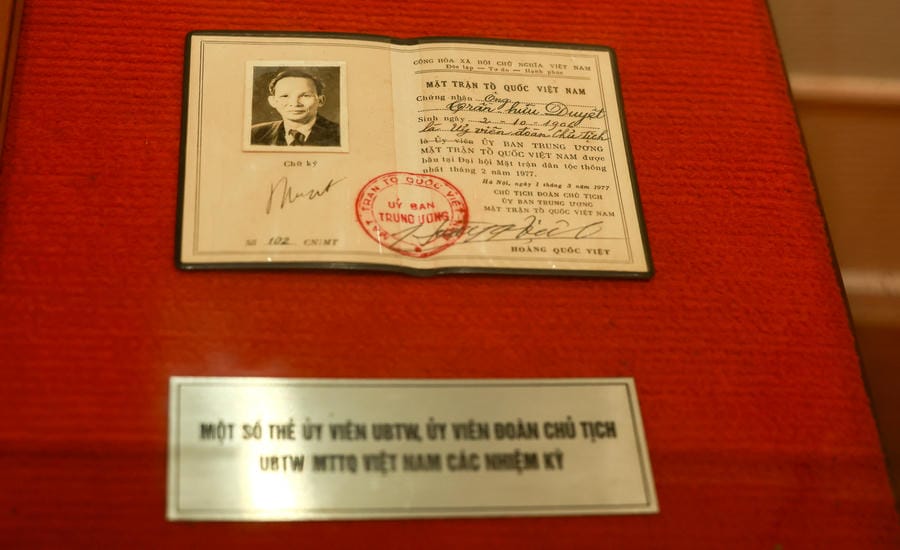
Many artifacts associated with the activities of the Front through various periods are being kept here. In the display space, there are membership cards, members of the Presidium of the Central Committee of the Vietnam Fatherland Front through many terms; desk clocks, radio stations and notebooks used by Chairman Huynh Tan Phat...
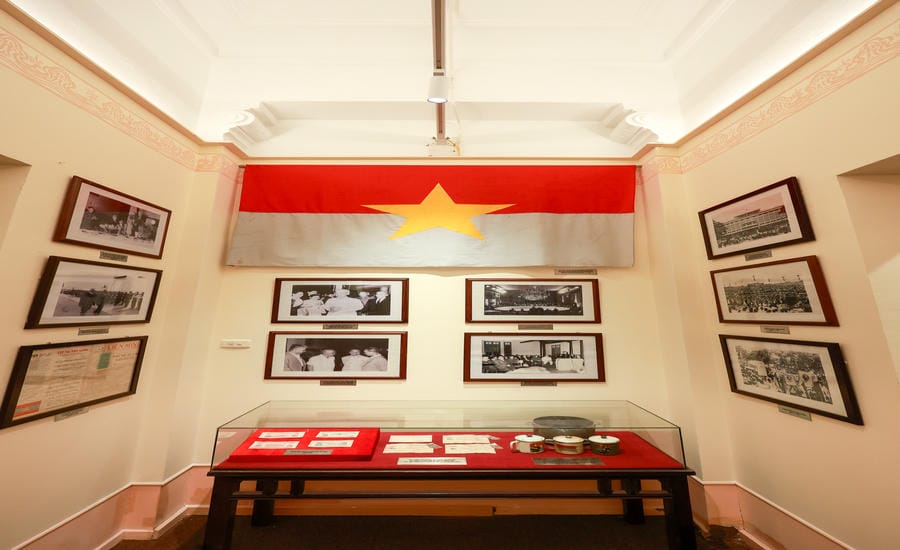
The museum also preserves many artifacts associated with the National Liberation Front of South Vietnam such as the seal of Chairman Nguyen Huu Tho, the Political Platform of the National Liberation Front of South Vietnam, Giai Phong Newspaper or the flag of the National Liberation Front of South Vietnam bearing the signatures of delegates attending the International Congress of Solidarity with the Vietnamese People in Hanoi on November 25, 1964.
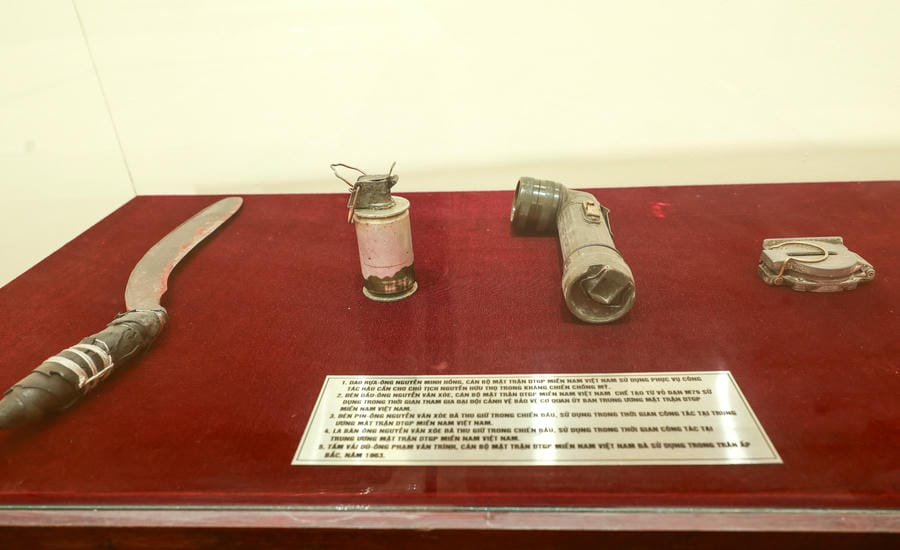
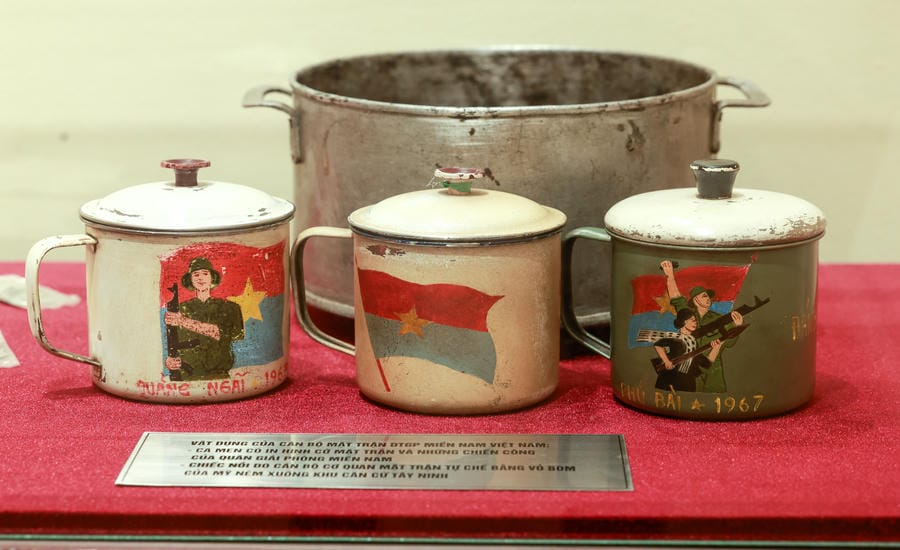
Many wartime artifacts are also displayed such as machetes, oil lamps made from M79 bullet casings, flashlights, compasses or cans printed with the flag of the National Liberation Front of South Vietnam... These simple artifacts contribute to recreating the life, work and fighting spirit of Front cadres during the resistance period.
In addition to historical artifacts, the museum also preserves many models of medals, badges, and insignia of the National Liberation Front of South Vietnam along with many publications, documents and images about the Front's activities through the periods.
Not only is it a place to preserve historical memories, the Vietnam Fatherland Front Museum also aims to play the role of a traditional education and historical research center. The exhibition spaces at No. 46 Trang Thi Street, Hanoi City are contributing to helping the public, especially the younger generation, better understand the history of the Front and the great national unity strength through each historical period of the country.