
A place name, many ways to understand
Since 1944, when French archaeologist - Louis Malleret, Director of the School of the Far East (EFEO) - used the local name Oc Eo to name the archaeological site associated with the Phu Nam Kingdom (around the 1st - 7th centuries), this name has stepped out of the village space, becoming a scientific concept. Since then, "Oc Eo Culture" is not only the name of a site, but also a symbol of an ancient urban system, canals, ports and a trade network that once connected the Mekong Delta with the Indian Ocean and the East Sea.
After more than 80 years of research, the archaeological community has reached a high consensus on the age, distribution scope and material characteristics of Oc Eo culture. However, the origin of this place name alone is still an open space in research without a unified solution. The story of the name Oc Eo is therefore still told in many different ways, sometimes in parallel, sometimes in dialogue, even debates in the style of "nine people, ten opinions" and seems to never have an end.
5 explanations, 5 approaches
These debated opinions can be arranged into 5 groups of content. The most common understanding is that Oc Eo is simply a local place name recorded during field surveys. According to this approach, Louis Malleret respected the folk name when naming the site, thereby forming the scientific term "Oc Eo Culture". The advantage of this understanding is simplicity, suitability for international practice and has been widely recognized in scientific and administrative documents. However, it still leaves open the question: What was the initial meaning of that name?
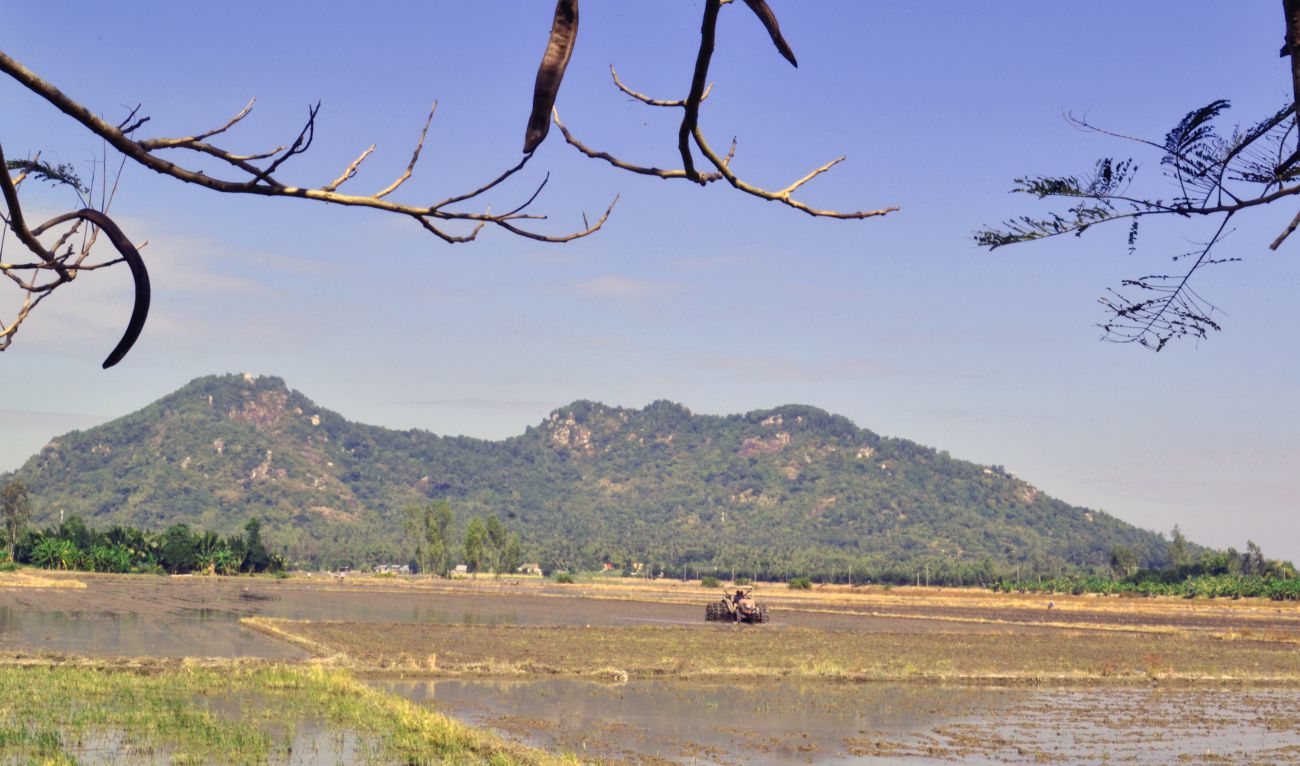
In another direction, folk people explain Oc Eo as "a stream of water with many snails" - a suggestive, scenery- evoking way of calling, reflecting the characteristics of swamps and rivers and canals of the lowland area along Ba The mountain. This understanding is close, easy to remember, and carries the breath of residents' life. However, due to the lack of linguistic basis, it mainly carries folk cultural values rather than a rigorous scientific explanation.
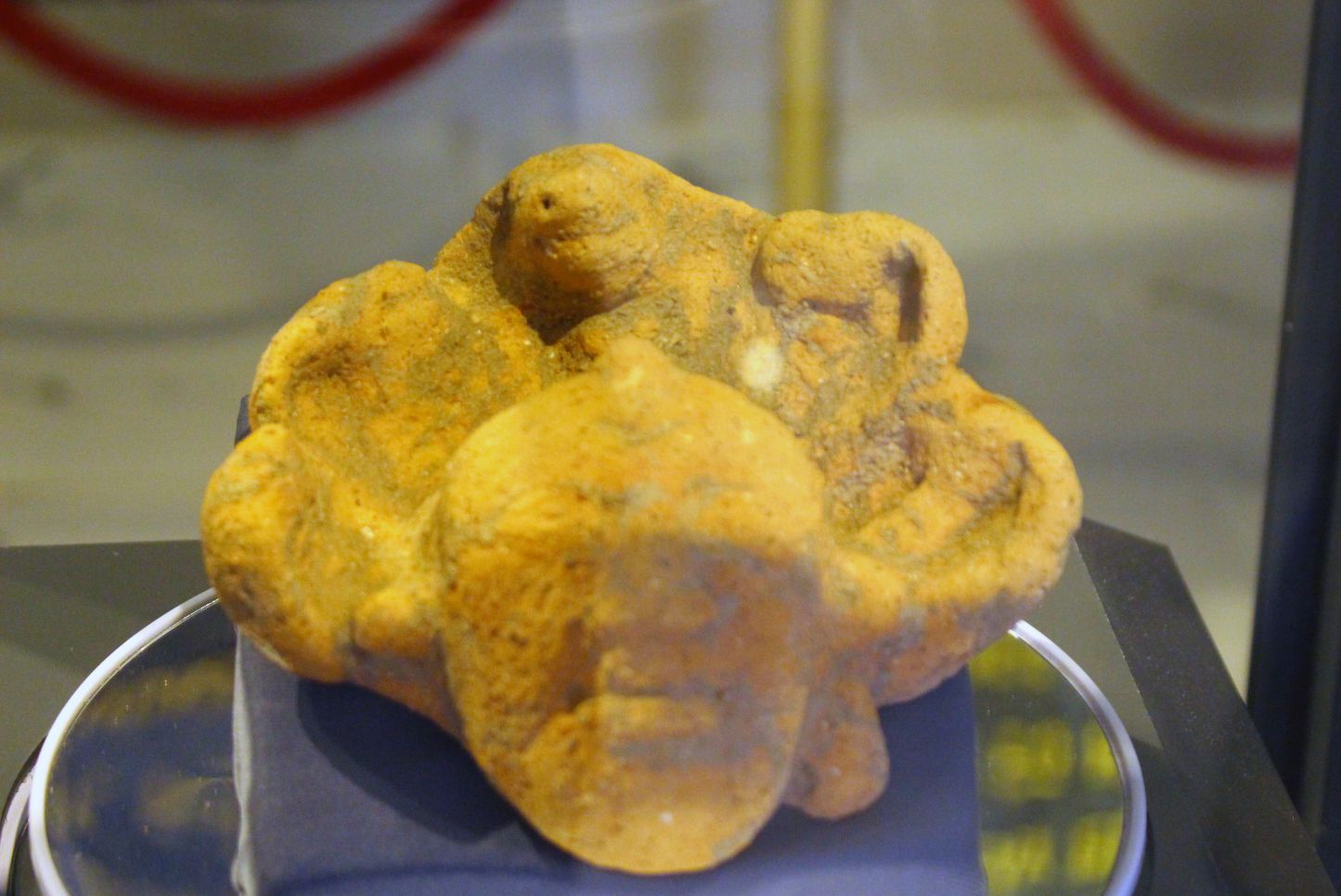
Some researchers approach it from a symbolic - religious perspective, arguing that Oc Eo may be related to the space of worshiping the goddess or the "valley of goddesses". This hypothesis partly corresponds to the dense density of temples, towers, statues and religious artifacts discovered at the relic site. However, like many other symbolic hypotheses, it lacks a specific etymological basis to be the final conclusion.
Meanwhile, the international academic community often uses Oc Eo as a scientific term that has been "identified", used to refer to an entire archaeological culture. This is a convenient and clear understanding, but in essence it is just a convention, not aimed at tracing the original origin of the place name.
More notably, the hypothesis that Oc Eo is the result of the Vietnamization of an ancient Khmer place name, often restored as O Keo, meaning "jade canal" or "glass". In the historical context of the Mekong Delta - where the Khmer are long-time indigenous residents - the fact that place names are transliterated through the cohabitation process is completely grounded. This explanation is harmonious between history, language and cultural space... However, to date, no stele or ancient documents have been found directly confirming the connection between O Keo and the Oc Eo - Ba The area, making this hypothesis still at a reliable level, and cannot be considered a final conclusion.
No end yet
Perhaps, it is the accumulation over time of many different layers of meaning that has made the name Oc Eo rich but also full of challenges. Each explanation carries a part of the truth, but no way is strong enough to close the story.
According to many linguistics experts, perhaps in the near future, the original meaning of the place name Oc Eo may not be fully deciphered. However, this does not mean having to rush to fill the void with mechanical interpretations.
Conversely, scientific prudence does not reduce the value of Oc Eo, but also contributes to affirming the historical depth and cultural complexity of an ancient civilized space that once played an important role in the regional and international exchange network.
In a broader sense, accepting the "moments of silence" of knowledge is also an expression of the scientific spirit. And in the journey to bring Oc Eo - Ba The out into the space of global cultural heritage, that cautious attitude, respecting historical truth, is perhaps also a civilized way of dealing with its own past.


