For me, the biggest tournament on the planet is not only a journey to witness firsthand the top matches, meet idols Ronaldo, Messi and immerse myself in the enthusiastic atmosphere in the American stands, but also a special "learning trip" about how people organize a football festival worthy of the world.
Having worked in professional football management for many years, currently the CEO of Thai Son Nam Club in Ho Chi Minh City, I went to the US not only to witness Cristiano Ronaldo and Lionel Messi playing on the biggest stage on the planet, but also to observe how FIFA organizes an event that any football person would want to experience. Therefore, this trip is both a journey for a fan and a "schooling trip" for a professional.
Right at Seattle airport, where I only stopped for a few hours, the World Cup was present with a small fan zone with a large screen, artificial turf, seats, vending machines and groups of passengers from many countries watching the match together. Cheers rang out in the terminal, shortening the waiting time for connecting flights.
Miami on the days of the tournament seems to be wearing the colors of football. On the streets, in the squares, on the beach or in the city center, everywhere you can see groups of fans wearing their favorite national team jerseys. Colombians cover a street corner in yellow. Portugueses wear familiar red. Families with young children, groups of young friends, elderly people... all meet in one common place: The joy of accompanying football.
The first match I watched was a showdown between Portugal and Colombia. As a Cristiano Ronaldo fan for many years, I understand that I am witnessing the final chapters of the World Cup journey of one of the greatest players in history. That feeling is hard to describe. There are moments when tens of thousands of spectators on the field not only follow the ball but also follow every step of a legend.
What caught my special attention was the flow of more than 60,000 spectators moving almost without bottlenecks. Each area has guides, clear signs, simple but effective control procedures. Even after the match ended, when tens of thousands of people left the stadium together, everything still went smoothly. Fans lined up waiting for taxis, chatting with people they had just met a few hours before about the match, about their favorite team and promising to meet again at some future stadium.
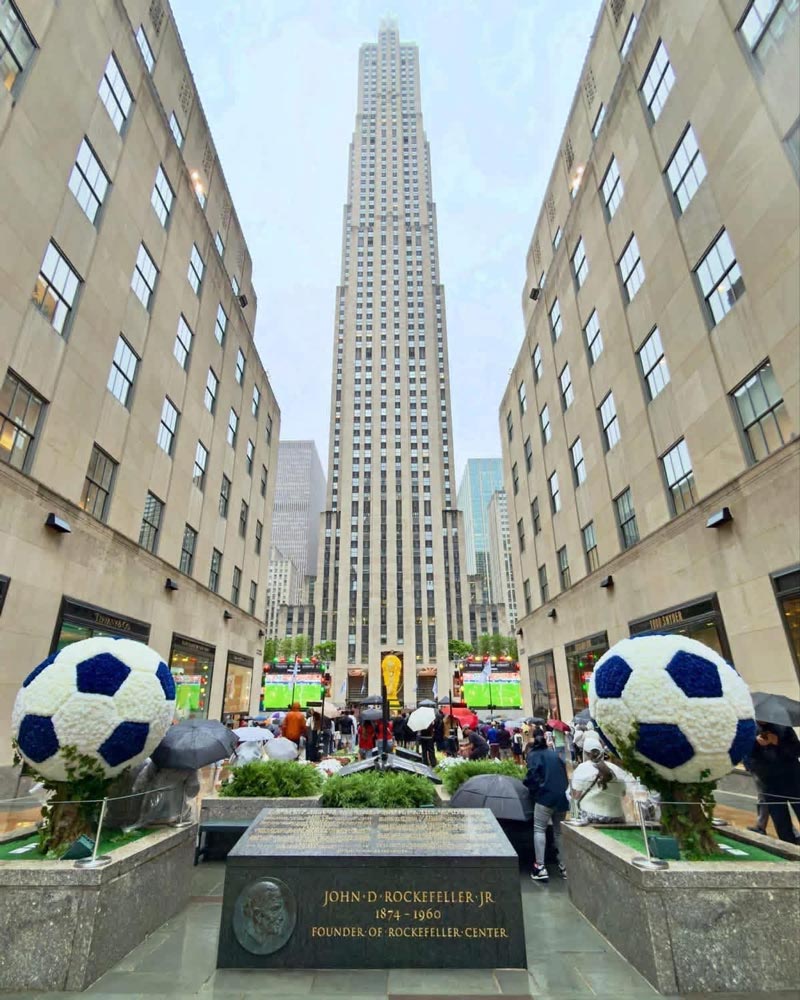
I took the opportunity to go to New York and then Washington D.C. Interestingly, in each city there are fan zones arranged in squares or parks for people to watch matches for free. The World Cup is not limited to stadiums worth billions of USD. It takes to the streets, becoming a true community festival.
Wherever I go, I ask myself: If a club or a tournament in Vietnam wants to create such an atmosphere, what is missing from us? Perhaps the answer lies not only in the scale of the stadium or the organizational cost, but also in how people put the audience's experience in the center.
The day I returned to Hard Rock to watch Argentina meet Cabo Verde brought me a completely different atmosphere.
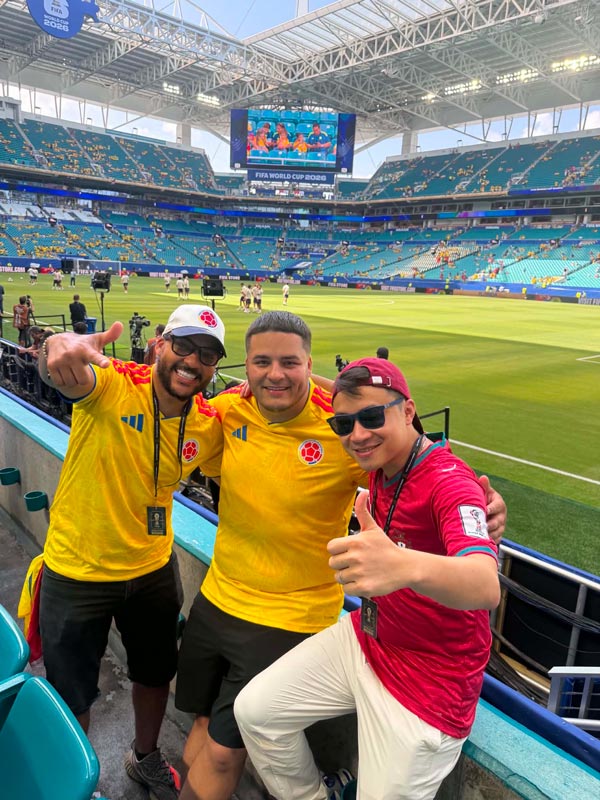
On the way to the stadium, I accidentally encountered a convoy carrying two teams escorted by police passing by in the cheers of fans. Inside the stadium, white and blue almost dominated. Messi at that time was not only the captain of Argentina but also the star of Inter Miami, so the stands seemed to become his home ground.
The opponent is only Cabo Verde, a team that is not highly rated, but the diễn biến on the field is completely different from predictions. Argentina faces many difficulties against the fast and determined playing style of the African representative. It is such matches that make the World Cup attractive, where the gap between football backgrounds is sometimes narrowed in just 90 minutes.
After the final whistle, I didn't rush to leave the stadium. I spent almost an hour more just standing and observing how tens of thousands of spectators left. There was no jostling, no loud car horns or the usual impatience after crowded events. Argentine fan groups still stood in circles singing loudly, groups of young people sitting on the football field for dinner, souvenir stalls and FIFA experience areas were still crowded as if the match had not ended.
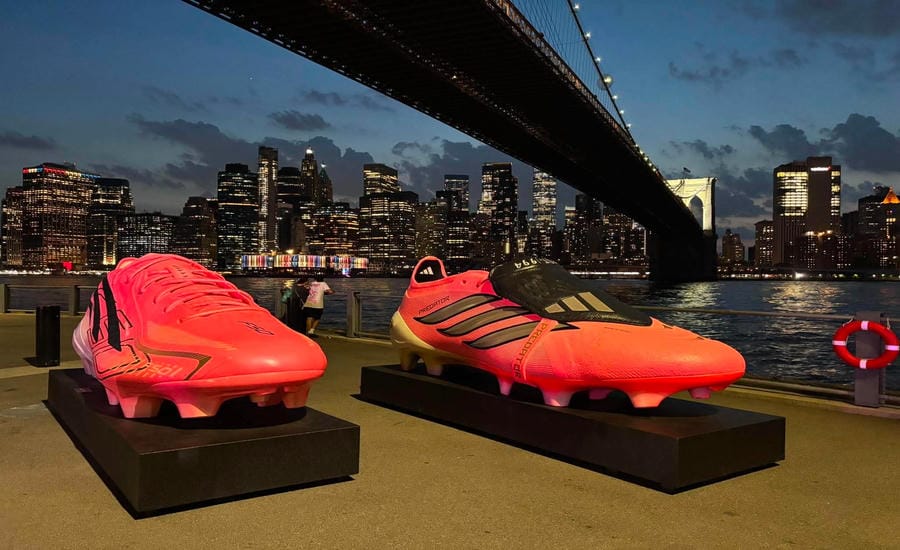
At that time I understood, with FIFA, the audience's experience does not start from the moment the ball rolls and does not end when the referee blows the final whistle. It is a whole ecosystem that is very carefully calculated, from traffic, security, commerce, media to entertainment activities. Each detail is aimed at a single goal: To make anyone who steps out of the field want to return. That is also what I brought back the most after the trip.
Of course, it is fortunate to witness Ronaldo in his own eyes at one of his last World Cups, or to immerse himself in the sea of people chanting Messi's name in the Hard Rock stands. But if you only stop at those emotions, the trip will not be complete.
Leaving the United States, I brought souvenir tickets, photos in the stands and memories of the 2 special matches of the 2026 World Cup. But the most precious thing is not in the suitcase. That is the belief that an exciting match is not only created by the stars on the pitch, but also by how people make each spectator feel like they are a part of the football festival.
For me, that is the biggest gift after the journey to the World Cup.