
Under the ruins of a castle
Amidst the ruins of a forgotten castle in southern Germany, archaeologists have recently found a special small treasure: a chess horse, a six-sided dice and 4 flower-shaped chess pieces lying under the collapsed brick and stone for nearly 1 thousand years.
Horses are carved with quite sophisticated eyes and horse flanks. Experts determined that the artifact dates back to the 11th - 12th centuries, when chess first appeared in Europe but quickly became a pastime loved by the aristocracy.
This discovery not only helps researchers understand more about medieval life. It also raises an interesting question: What makes a game born thousands of kilometers away can conquer Europe? The answer lies in the lives of the ruling class at that time.
Different from the image of knights always roaming the battlefield, from the 11th century onwards, many feudal lords began to have a more stable life in solid castles. Long nights, leisurely winter days or the time between hunting sessions made them need a fun enough to fill their time.
Chess appeared at the right time. Without physical strength, not dependent on luck like many other games, chess brings a feeling of conquest with intelligence. Each move requires calculation, anticipation and long-term vision. In a society that values rank and power, the chessboard is also like a miniature version of feudal life.
Jenny Adams - Professor of Medieval Literature at the University of Massachusetts Amherst, told History magazine: "Chess was also a way to reflect the social order of the time.
Many historians believe that this is one of the reasons why chess was strongly welcomed in the aristocracy.
Society-reflective chessboard
Few people know that chess was not born in Europe. The predecessor of this game was the chaturanga game, which appeared in India from the 6th century. The name means "four arms" meaning infantry, cavalry, elephant cavalry and horse-drawn cavalry. From India, the game followed trade routes on the Silk Road to Persia, then spread throughout the Islamic world under the name shatranj.
By the 10th - 11th centuries, through areas of contact with Muslims such as Spain, Sicily or the Crusader countries, chess set foot in Europe. Here, the game gradually took a new look.
The chess pieces that originally reflected the Eastern military structure were adjusted to suit European feudal society. The prime minister's army became the queen's army as the power and role of the queen grew higher and higher. The war elephant transformed into the statue army, suggesting the influence of the church. The chariot was replaced by the carriage army, symbolizing solid fortresses. Only the army and goods almost maintained their role. The chessboard therefore became a miniature image of medieval social order.
According to many medieval history researchers, learning to play chess was once considered part of the education process of young nobles. This was not simply an entertainment but also a way to train strategic thinking, decision-making ability and understanding of each person's position in the social system. But the attraction of chess does not stop behind the castle walls.
As medieval cities developed, merchants and craftsmen became increasingly numerous. They had more free time and began to seek new forms of entertainment. Chess then gradually spread down to the lower classes. Gatekeepers, servants, urbanites, merchants, wandering artists or Jewish communities all found joy on the chessboard. In particular, this was also one of the few games at that time that women participated in quite commonly. Many documents and illustrations also describe couples chatting, getting acquainted or flirting with each other around the chessboard. In a sense, chess created a rare space for intellectual equality, regardless of gender.
Then time continued to shift. From the 14th century, Western decks became increasingly popular in Europe. Simple, easy-to-reach and suitable for the new rhythm of life rules gradually made them dominant. Although chess rule reforms in the late 15th century helped chess revive strongly, this game no longer maintains its monopoly status as in the Middle Ages.
However, unlike many pleasures that have been forgotten by history, chess still exists.
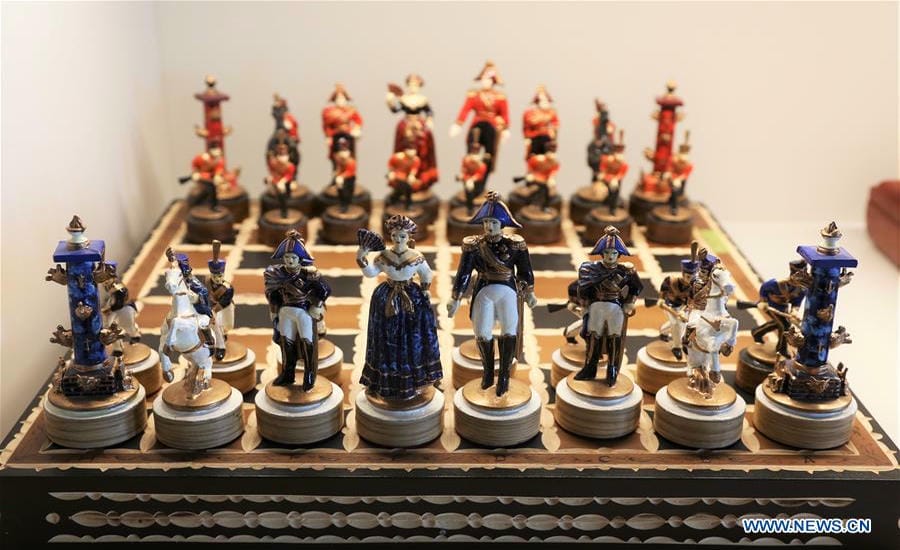
When the Queen becomes a powerful chess piece
In the first versions of chess in Europe, the queen replaced the vizier - the prime minister standing next to the king in the Eastern chess. According to many historians, the appearance of the queen reflected a more open view of the role of women in medieval European society.
By the 15th century, the queen was significantly strengthened, able to move freely on the entire chessboard. Also during that period, Queen Isabella I of Castile was in power in Spain, causing many people to associate the change of this queen with the image of increasingly influential female monarchs in European political life.
Acceleration
Medieval chess games took place quite slowly. Many chess pieces were limited in mobility, so attacking took a lot of time. To increase attractiveness, Europeans gradually adjusted the rules of the game: good pieces were allowed to go in two squares in the first country, shields were allowed to move diagonally without limits, the queen became extremely mobile and the city entry rule was added to protect the king. These changes helped the pace of the match be significantly faster and created the appearance of modern chess today.


