
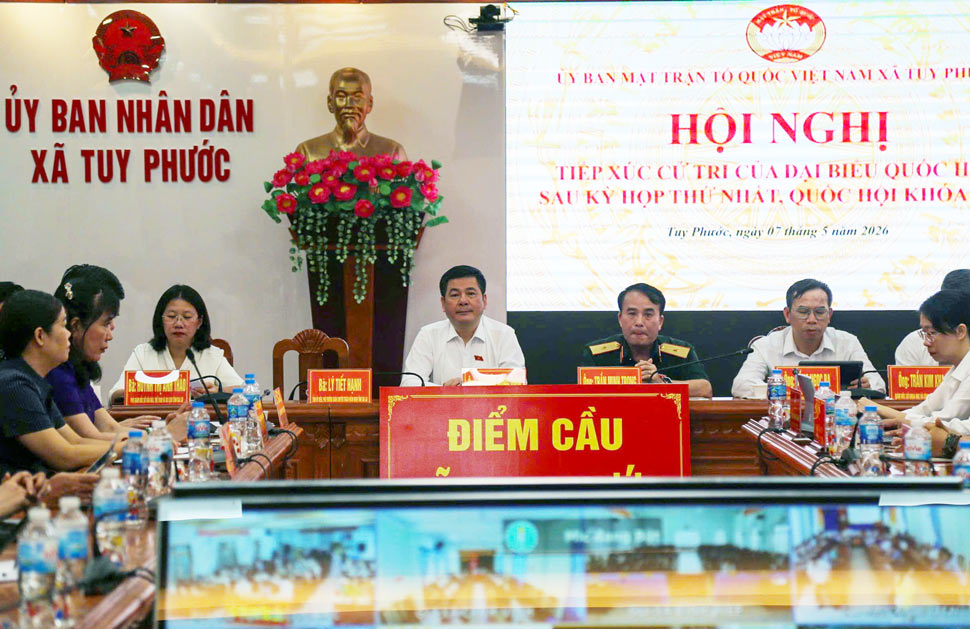
On May 7, in Tuy Phuoc commune (Gia Lai), the Delegation of National Assembly Deputies of the 16th term met with voters after the first session in direct and online form to some communes and wards (belonging to constituency No. 1) of the province. Attending were Member of the Party Central Committee, Standing Committee of the National Assembly Party Committee, Vice Chairman of the National Assembly Nguyen Hong Dien.
At the meeting, Ms. Nguyen Thi Thanh Thuy - Head of the Party Building Committee of Tuy Phuoc Bac commune - said that after implementing the 2-level local government model, the workload at the commune level has increased significantly.
According to Ms. Thuy, out of 99 tasks of the old district level, more than 90 tasks were transferred to the commune level. However, the current assigned staff is "very thin", for example, the Culture - Social Department and the Economic Department of Tuy Phuoc Bac commune.
Ms. Thuy proposed that the Government and the Central Organization Committee consider increasing staff compared to the previous regulations to ensure meeting the current workload.
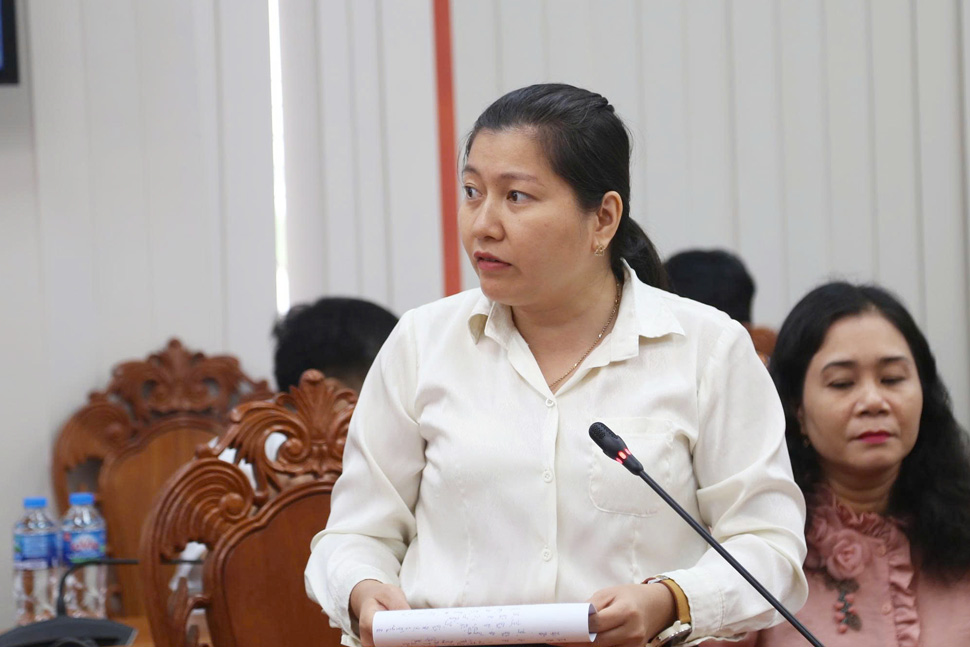
At the meeting, Ms. Nguyen Thi Thanh Truc - Head of the Culture - Society Department of Tuy Phuoc commune - also raised recommendations related to the fact that the team of non-specialized workers at the commune level will end their activities from May 31st.
Ms. Truc proposed that the Central Government and the province soon have specific guidance on arranging this team to villages and neighborhoods so that localities can review, disseminate and orient the arrangement of suitable positions.
Currently, this team is very actively supporting the locality. Therefore, it is proposed that National Assembly deputies propose to supplement policies and create job opportunities for non-specialized workers in the coming time," Ms. Truc proposed.
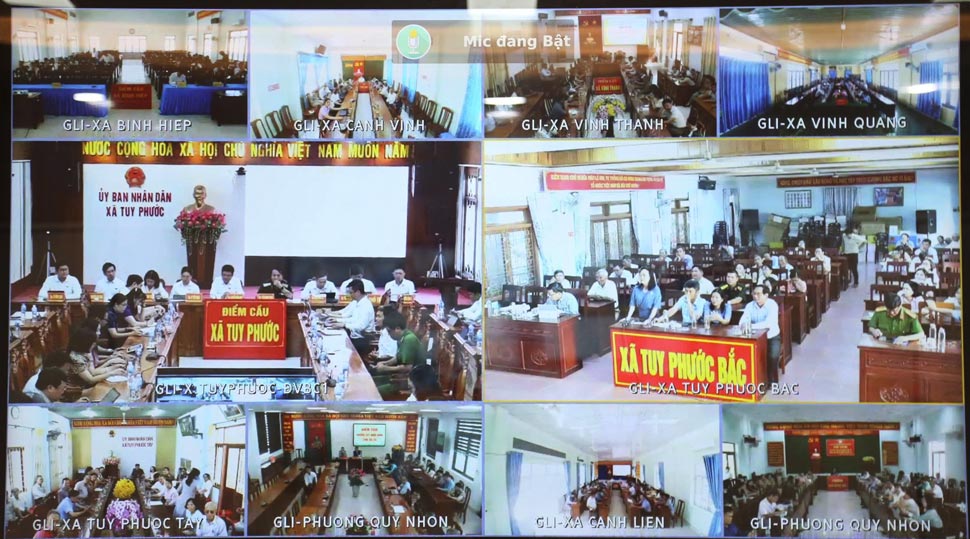
In addition, voters also proposed that the Central Government and localities invest in transportation infrastructure, irrigation, schools, and medical facilities; strengthen policies to support agricultural production and consumption of agricultural products...
Mr. Lam Hai Giang - Vice Chairman of Gia Lai Provincial People's Committee - said that the province is particularly concerned about the issue that voters are concerned about. He requested localities to review and continue to arrange commune-level civil servants for non-specialized personnel who have sufficient capacity and qualifications to meet job requirements, until the Ministry of Home Affairs has specific instructions. At the same time, he said that he will arrange and assign this team to villages and neighborhoods after completing the arrangement of village and neighborhood units.
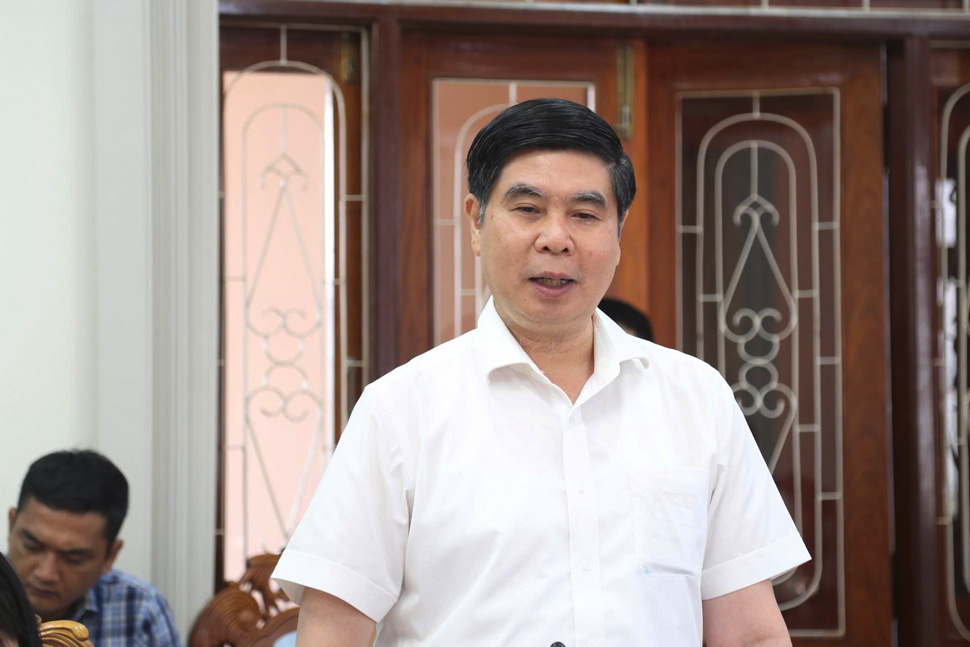
According to Mr. Lam Hai Giang, currently commune-level cadres and civil servants are very lacking, the province will build a "bank" of non-specialized commune-level cadres and civil servants to ensure full qualifications and meet standards.
In case non-specialized commune-level officials and civil servants agree to move between localities, they will continue to be assigned work, except for those who wish to retire according to the regime.
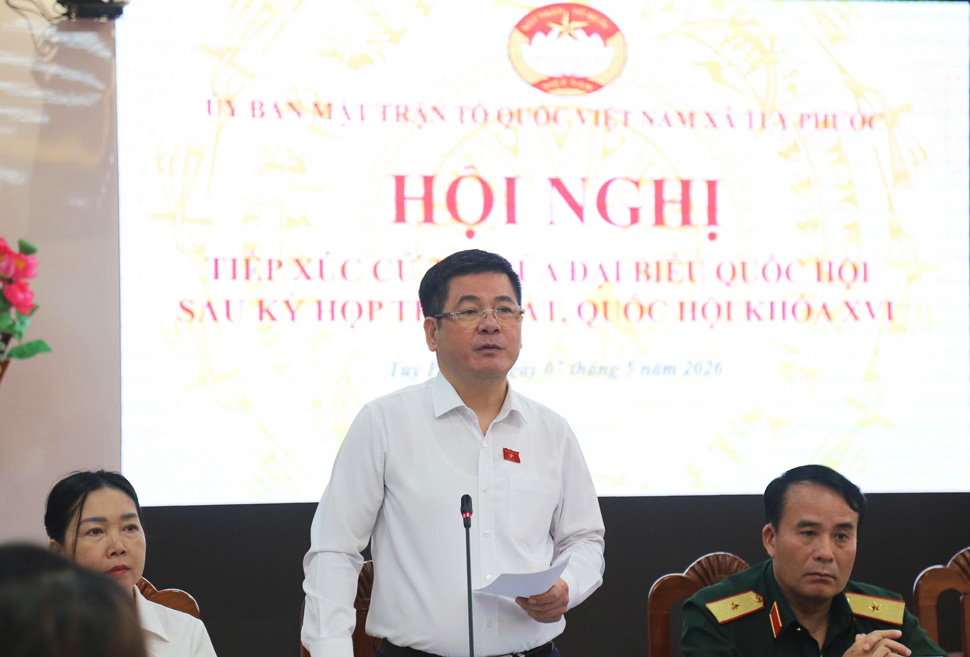
At the meeting, Vice Chairman of the National Assembly Nguyen Hong Dien said that most of the voters' petitions are under the jurisdiction of communes. The petitions were also informed and answered by Vice Chairman of Gia Lai Provincial People's Committee Lam Hai Giang at the conference.
According to the Vice Chairman of the National Assembly, after implementing the 2-level local government model, the authority of the commune level has been significantly strengthened. Therefore, localities need to be proactive and focus on promptly handling issues reflected by people.
Regarding contents under the authority of the provincial level, Mr. Nguyen Hong Dien proposed to review, fully synthesize, and specifically classify each group of issues to transfer to functional agencies for consideration and resolution. Proposals under the Central authority will be transferred to relevant ministries and sectors for handling in order to ensure the rights of voters.


