
20 million VND borrowed 10 years ago - a turning point in a lifetime
At three in the morning, the yellow lights shine down on the road surface still covered in mist. In the small kitchen of Ms. Do Thi Thuy (G Thai Thinh collective, residential group 40A), the broth pot is simmering, the smell of ginger and cinnamon is warm. The 39-year-old woman quickly prepares for the early morning vermicelli selling session - a job that has been associated with her for nearly a decade.
Few people know that behind that simple noodle soup shop is a lifetime of heavy worries. There were years when the family fell into a deadlock, the economy was exhausted, children were lacking, and parents were old. It was in that most difficult period that Ms. Thuy was able to access loans through the Ward Women's Union - a small door but opening up a long way.
Those days were really too hard. But thanks to the concern of the residential group, the Women's Union, and the local police, my family received a lot of support. The aunts created conditions for me to trade, have more income, to overcome the most difficult days" - Ms. Thuy recalled.
Ms. Thuy said that it was from neighborhood meetings, mobilization sessions, and times when Women's Union officials knocked on doors simply but persistently that everything gradually changed. People in the area not only gave her a place to sell goods, they gave her a chance to stand up. That help was not petty compassion, but a humane system from counseling, mediation support, coordination in detoxification, to creating conditions for loans so that she could have capital to trade. Those hands took her, helping her family stand up step by step.
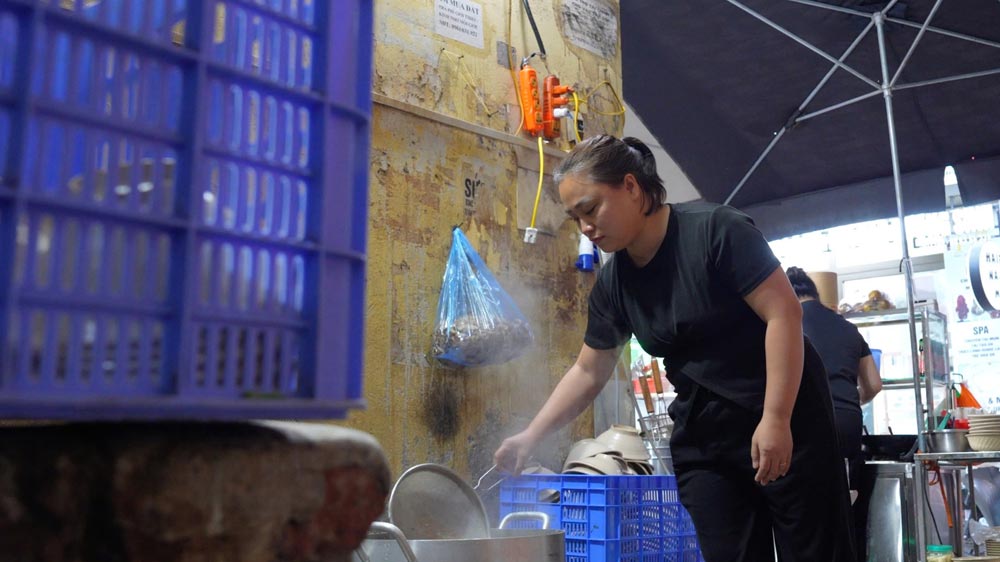
The turning point came in 2016, when Ms. Thuy was able to borrow 20 million VND - not a large amount of money, but for her it was all hope.
“In those days, 20 million VND was like a miracle for me. I bought more stoves, refrigerators, and expanded the stall. Three years later, I paid off all the debt and no longer had to borrow anymore,” she recounted.
From that capital, the small noodle soup shop gradually stabilized, enough to raise her children to study, enough for her to believe that kind labor will be rewarded. Ms. Thuy's family's life has now changed, become more prosperous and well-off, and her children are fully educated thanks to knowing how to save every loan to turn small dreams into livelihoods. In her story, she talked a lot about her belief that kind labor will be rewarded.
The story of this woman reflects a major reality, social security is not just a one-time allowance, but a chain of policy links, organizations, and communities joining hands. When social security policies are in the right place, they will become a lever that changes many lives.
The persistent journey of those who "carry the burden" at the grassroots level
The change of families like Ms. Thuy does not come from coincidence. It is nurtured by the persistence and dedication of grassroots officials - people who people in neighborhood 40A jokingly call "body-carrying" people. Typical among them is Ms. Bui Thi Nhan, Head of Residential Group 40A - who has dedicated more than 25 years of her life to social work. She is both the Head of the Women's Union Branch, and the Deputy Secretary of the Party cell, and the Deputy Head of the Fatherland Front Work Committee - "roles" overlapping each other to realize policies to every roof.
Ms. Nhan is known as "Ms. Nhan knows everything" because she knows every house number by heart, understands each circumstance. For her, social work is not a dry responsibility, but a sharing between relatives in a large family.
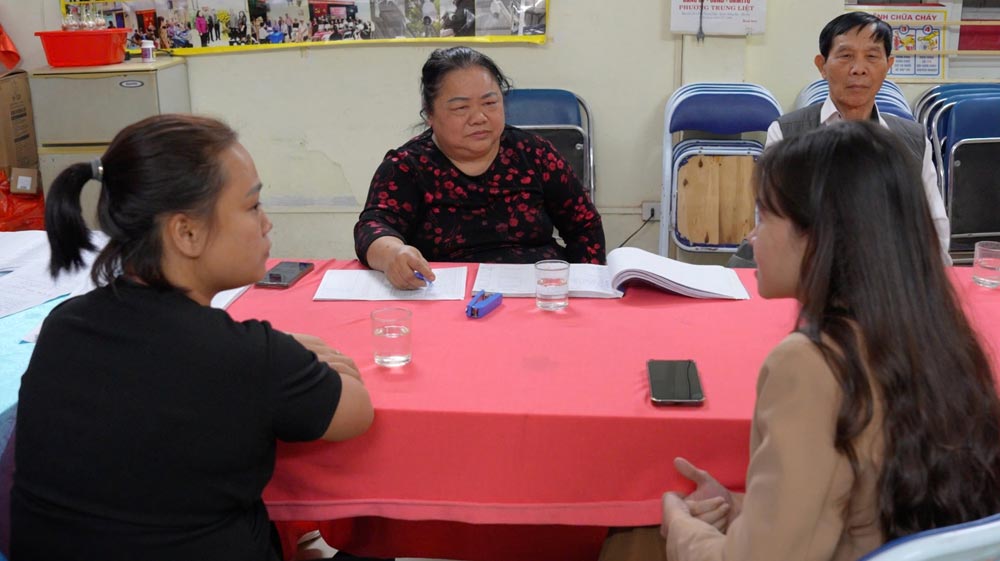
Looking back at the journey of Ms. Thuy's family's rise, Ms. Nhan could not hide her happiness: "Every time I see my people prospering and their children being obedient, I feel happy for myself. For about 10 years now, thanks to the close attention of the Party and the State, people's lives here have turned a new page. From more than ten poor households, by 2024 we no longer have any poor households.
For many years guiding people to borrow capital and use capital effectively, she quietly monitored each household's debt repayment, because for her, capital is not just money, but trust. That persistence is also very consistent with the spirit of Hanoi that put the criterion of "happy people" into the document of the 18th City Party Congress, considering it as a goal for programs and policies to aim for. The document mentions the goal of building the Capital "happy people" as a guiding principle for all efforts at the grassroots level.
The cycle of compassion
Returning to the story of people in the neighborhood in Dong Da ward, warm in the fact that they share and accompany each other like a large family - they are not happy alone, they help each other to be happy.
Ms. Do Thi Thuy - the owner of a vermicelli soup shop in the collective area - became the master of her life with kind labor thanks to loans. The warmth in her heart is that she hires people in the same area to help - people in difficult circumstances, with weak health to create jobs and pay salaries to help them support their families.
I think love does not stop at what we receive, but at what we give to rise together. I am grateful that I am helped and therefore I also have to help others" - Ms. Thuy said and this is the cycle of community security.
All those people have created a safe living environment, where compassion and responsibility are valued and gradually help the entire residential group change their face.
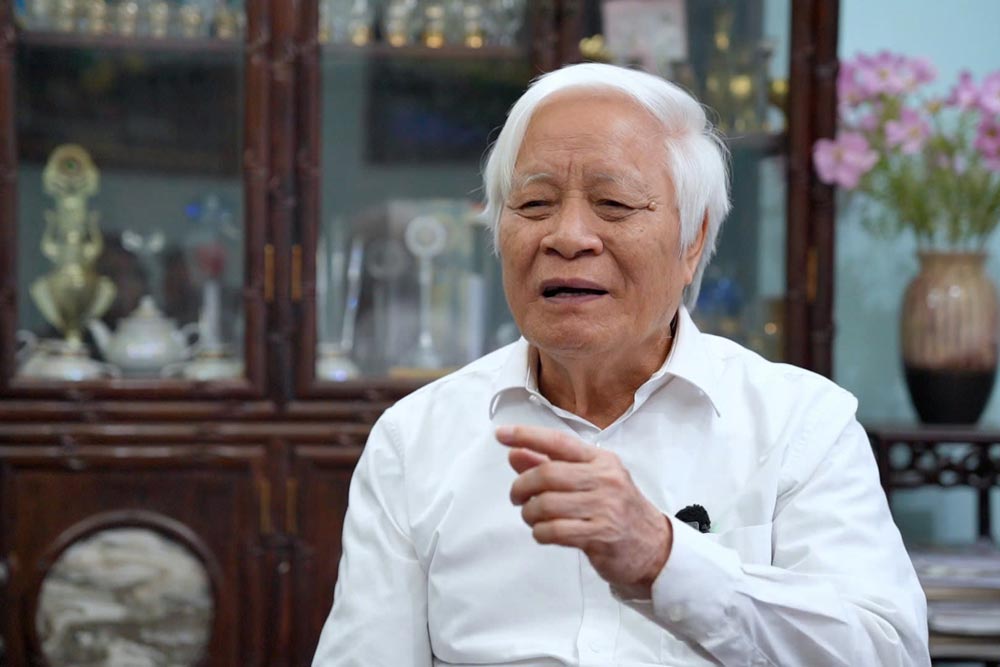
From that very ordinary sharing story, leading to a more generalized assessment of social security and happiness, Dr. Nguyen Viet Chuc, former Deputy Chairman of the National Assembly's Committee for Culture, Education, Youth, Adolescents and Children (now the Committee for Culture and Society) said: "Happiness is the satisfaction with one's own life, but at the same time it is also the satisfaction of those around us. There can be no happiness just for oneself. Those who only take care of themselves, that happiness is very small. True happiness is the common joy of the whole community.
That assessment is like a firm reflection on what is happening in this small residential group. Happiness is not formed from individual successes, but is cultivated from the spirit of community, from the arms that support each other to overcome difficulties.


