
Bridge connecting military-civilian ties
From early morning, the construction site of Kinh 6 bridge (Tu Bi bridge No. 70) in Hoa Loi hamlet, Thanh Loc commune (An Giang) was bustling. Tortoise trucks carrying sand and rocks lined up to roll; bags of cement were passed by hand, batches of concrete were continuously poured onto the bridge deck.
Sweat soaks through the faces of the special construction workers. They are officers and soldiers of the Military Command of Thanh Loc commune, along with union members, youth and local people. Calling each other, words of encouragement mixed with laughter make the working atmosphere in the July sunshine cooler. Each person contributes a part of their effort, creating community strength for the project to be completed soon.
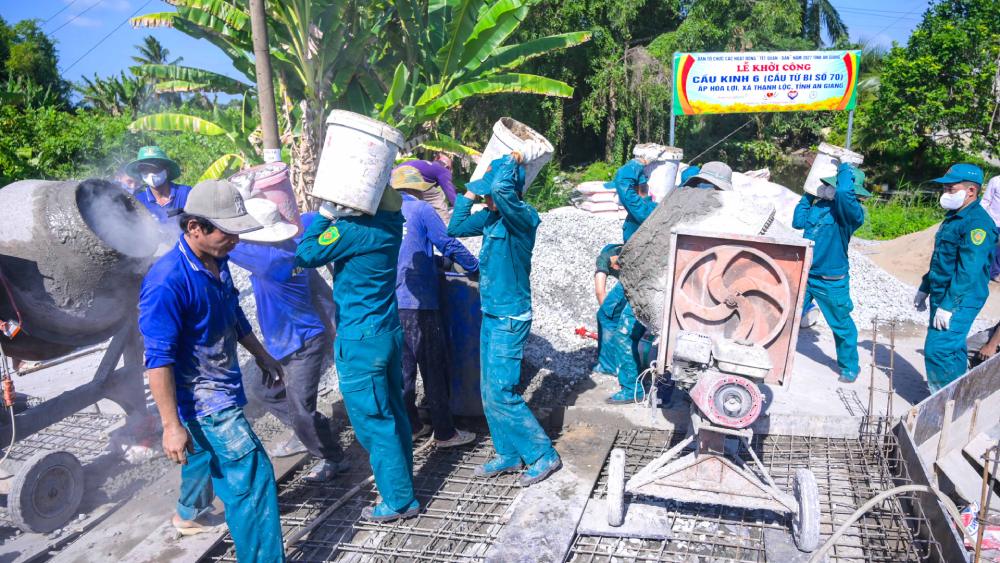
For the people of Hoa Loi hamlet, the new bridge has been a long-awaited desire for many years. The new bridge project is 39m long and 3.5m wide, with a total construction cost of more than 630 million VND from the funds for the 2027 Military-Civilian Tet.
Ms. Nguyen Thi Ngoc Ha, a resident of Thanh Loc commune, shared: "People here have been waiting for a new bridge for a long time. The old bridge is narrow and degraded, making it difficult to travel, transport agricultural products or pick up and drop off students, especially in the rainy season.
In the middle of the construction site, some carrying iron, some mixing concrete, some carefully adjusting each plank. The hands that were familiar with the task of training and combat readiness are now skillfully building a civil work, contributing to beautifying the image of soldiers in the hearts of the people.
Not only directly participating in labor, the Military Command of Thanh Loc commune also proactively coordinates with local Party committees and authorities to assign forces, organize scientific construction, ensure quality and progress of projects. This is also a specific activity to promote the role of the armed forces in building new rural areas, consolidating the people's hearts and minds to become increasingly solid.
Soon, when the bridge is completed and put into use, trucks carrying agricultural products will be more convenient, children will be safer on their way to school and people will no longer worry every rainy and flood season.
Building and repairing houses of gratitude
On rural roads, in school grounds or in households still facing many difficulties in Kien Luong commune, the image of officers and soldiers of Regiment 893 enthusiastically working has left many good feelings in the hearts of the people. The hands that are familiar with training grounds and training grounds are now diligently clearing bushes, planting trees, repairing houses, joining forces with the locality to implement practical civil works. That is not only a task in the field training march but also an opportunity for soldiers to concretize the teaching "Army with people is like fish with water" with meaningful actions.
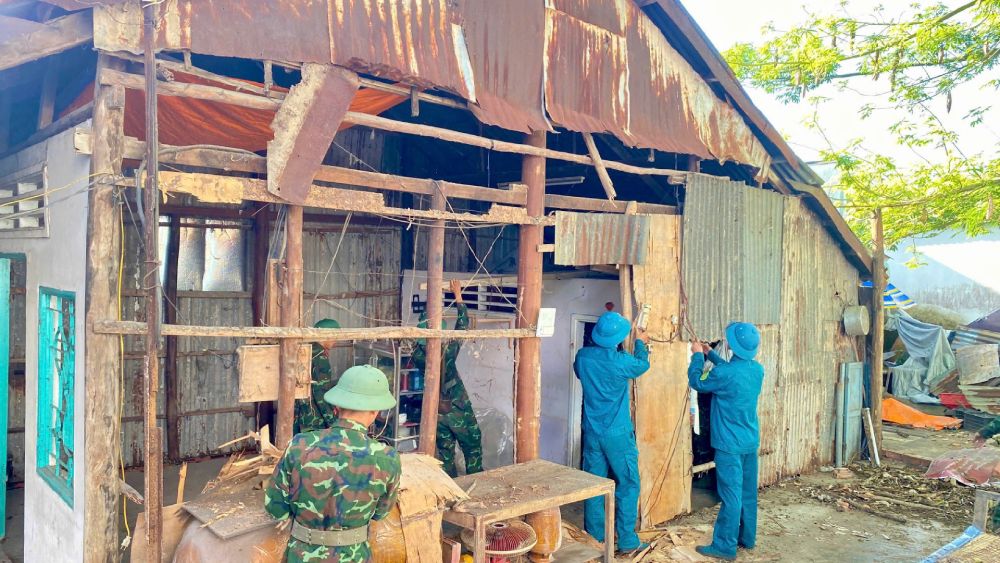
More than 110 officers and soldiers, along with youth union members and local organizations, participated in clearing trees and grass, environmental sanitation, planting trees and flowers on roads, renovating schools; and repairing two houses for households in difficult circumstances and supporting the construction of one house for party members in difficult housing circumstances.
Houses with degraded leaves, tilted walls, and leaky roofs are gradually revived by the hands of officers, soldiers and local people over time. For families with many difficulties, repairing their homes not only helps improve living conditions but also adds faith to rise up in life.
For young soldiers, the days of eating, living, and working with the people are valuable practical lessons. Through each specific task, they understand more about the lives of the people, know how to share through actions and become more mature in their awareness of the responsibility of a soldier.
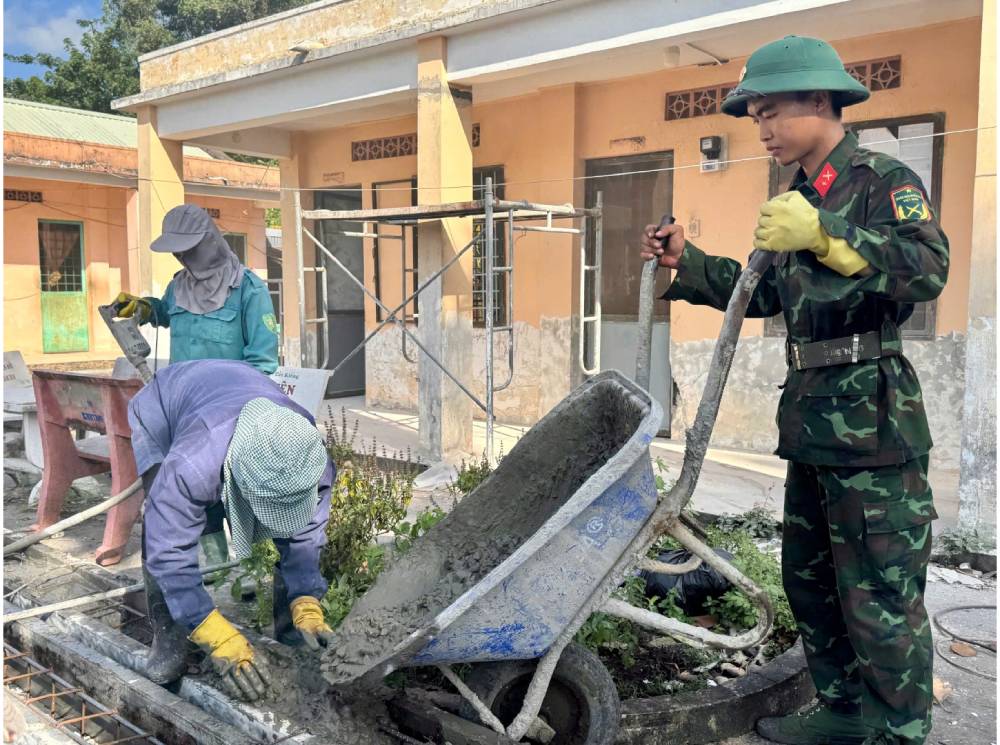
Sergeant Phan Van Hieu, Squad Leader of Squad 1, Platoon 7, Company 3, Battalion 207 shared: "Being able to directly participate in repairing houses, environmental sanitation, and planting trees to help people is an honor for me and my comrades. Seeing people happy when the projects are gradually completed, we are even more aware of our responsibility in preserving and promoting the image of Uncle Ho's soldiers.
These special construction workers not only build a bridge or a house, but they are also working together to foster military-civilian solidarity with practical actions to connect the canal banks and extend military-civilian relations.


