
The forest still has trees but has been deserted of animals
Many forests in Vietnam today are still covered in green on satellite maps. Forest cover has increased, and the area of natural forests is kept better than decades ago.
But behind that green color is a worrying reality: forests are gradually becoming "empty forests", "silent forests" – where trees still stand there but wildlife almost disappears due to hunting, especially wire traps.
According to a report by the Wildlife Conservation Center in Vietnam (SVW), in Pu Mat National Park alone, from May 2018 to March 2026, conservation forces dismantled up to 17,114 traps and 196 guns and hunting tools.
At Cat Tien National Park, the number is 12,452 traps and 40 hunting rifles. Dong Nai Nature - Culture Reserve alone recorded more than 10,000 traps removed in less than 3 years.
Those numbers show that rope traps are covering many Vietnamese forests like a "silent battle" with nature.
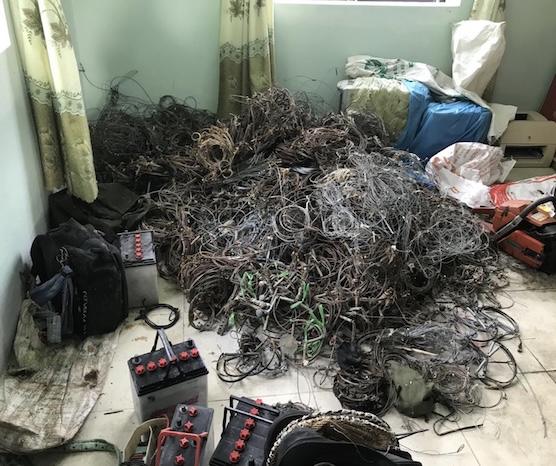
The most frightening thing about rope traps is their destructive nature - killing any species that passes through. From herbivores, predators, rare birds to reptiles, all can become victims.
A trap only costs about 1.13 USD to place, but it costs 20.5 USD to remove. This huge difference keeps conservation work in a state of "chasing" hunters.
As a result, many wildlife species have disappeared from the wild in Vietnam in recent decades. The SVW report said that up to 29 species are believed to have or may be extinct in Vietnam due to hunting and habitat degradation.
That list includes names that were once symbols of the Indochinese forest such as Indochinese tigers in Pu Mat National Park, Javan rhinos in Cat Tien National Park, leopards in Pu Luong Nature Reserve or leopards in Dak Lak. In particular, many large carnivores have almost disappeared from natural ecosystems.
When predators disappear, the ecological structure of the forest is also broken. Important links in the food chain are no longer present, leading to a comprehensive imbalance of the ecosystem. A forest without birdsong, without animal footprints, no longer has animals spreading seeds or controlling other populations, is essentially just a "forest shell".
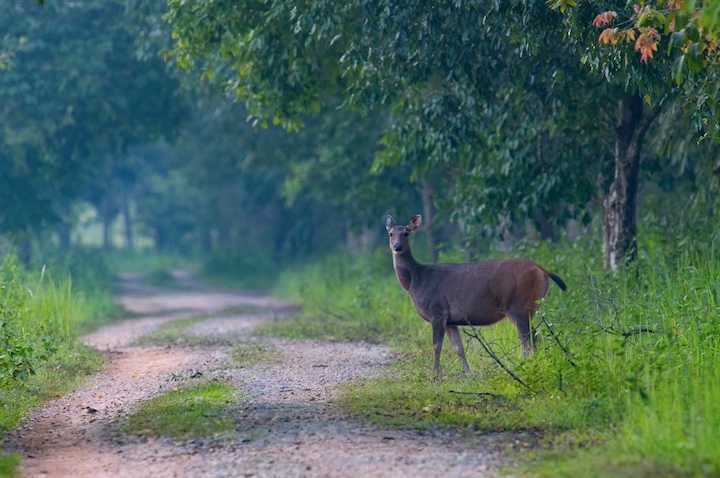
The biggest challenge now is keeping life in the forest
Mr. Nguyen Van Thai - Director of SVW - said that Vietnam has gone through many different stages of forest management. If the period 1943-1995 was a period of strong natural forest decline and wildlife conservation was almost not focused on, then from 1995-2015, although afforestation and forest protection were promoted, the trade and use of wildlife increased, causing many species to decline seriously or become locally extinct.
In recent years, forest area protection has achieved many positive results. However, the biggest challenge today is no longer just keeping the forest, but keeping life in the forest.
Green forest is not necessarily healthy forest," a conservation expert said. A forest only truly revives when animal populations return and ecological processes operate naturally.
That is also the reason why the concept of "rewild" is being mentioned more and more in nature conservation in Vietnam. According to SVW, rewild is not simply releasing a few animal individuals back to nature, but restoring the entire ecological function of the ecosystem.
Vietnam has had some positive signs. At Cat Tien National Park, Siamese crocodiles that went extinct in Bau Sau before 1980 have been restored with about 60 individuals re-released from the period 2001-2004.
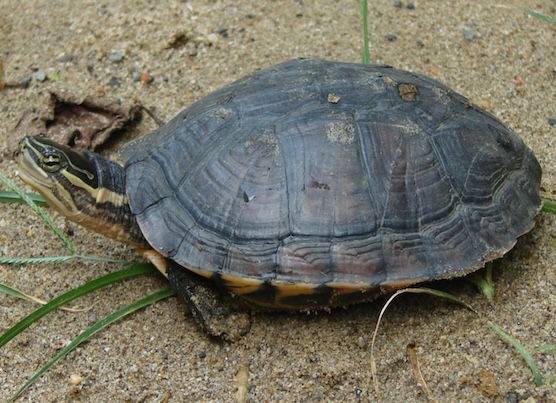
Or like the Central region turtle species that almost disappeared into nature due to illegal hunting in the late 1980s. After many years of nurturing and conservation, nearly 600 individuals have been successfully raised, of which 80 individuals have been re-released to the Ea So Nature Reserve.
Most recently, the event of 20 white-crowned pheasant individuals returning from Germany to Vietnam is opening up many expectations for the conservation of one of Vietnam's rare bird species.
However, experts believe that re-release efforts will not be of much significance if rope traps continue to exist in the forest. An animal rescued and released back into nature today could completely die in a trap just a few days later.
The battle with "empty forest - calm forest" is therefore not only the responsibility of the forest rangers or conservation organizations. It is also the story of law enforcement, livelihoods for people in buffer zones, controlling wildlife consumption and changing social perceptions.
Because if rope traps continue to be set up in the forest, Vietnam can keep the green color of trees and leaves, but will lose the soul of the forest – which is the cry of animals and wildlife that has existed for thousands of years.


