
On the afternoon of July 16, at the question-and-answer session of the 4th session of the Quang Tri Provincial People's Council, delegates spent a lot of time mentioning the environmental pollution caused by limestone mining activities in 3 communes of Tuyen Binh, Tuyen Phu and Tuyen Hoa.
According to reports, there are currently 15 licensed stone mines operating along the Gianh River. The terrain of the basin, surrounded by high mountains, makes dust generated from stone mining and processing activities easily spread, affecting residential areas. Tuyen Binh commune alone has 2 enterprises mining and processing stone.
Delegate Pham Thai Quy - Deputy Head of the Legal Affairs Committee of the Provincial People's Council - recalled the incident of dust emission from blasting activities at a quarry in April 2026, affecting people in Phuc Tung village, Tuyen Hoa commune. The delegate said that it is necessary to clarify the responsibilities of state management agencies and businesses in inspection, supervision, and handling of violations; and at the same time assess the impact of concentrating many quarries in the same area on the environment and landscape.
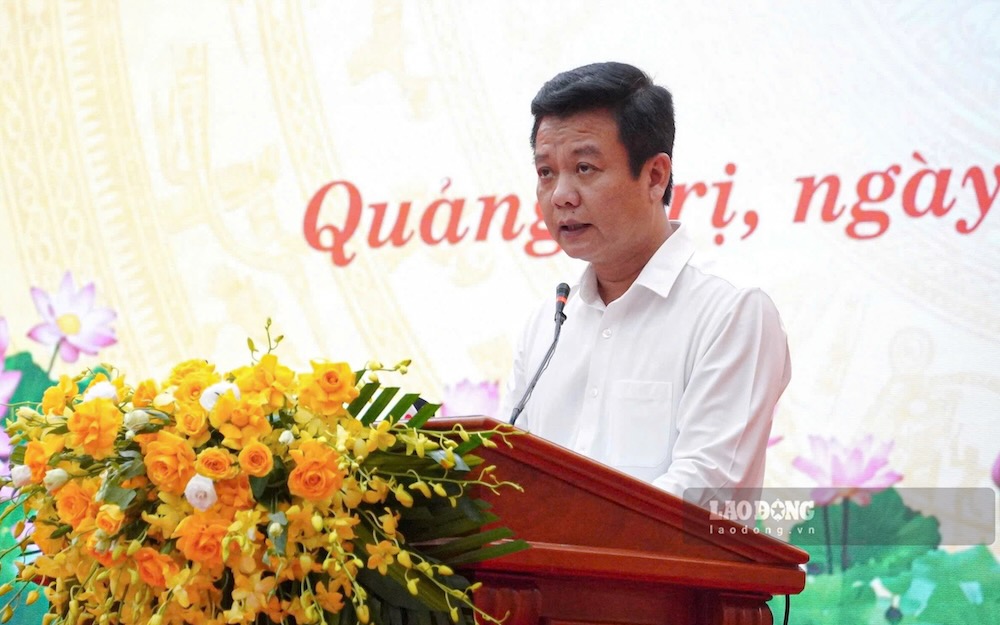
Answering questions, Mr. Tran Quoc Tuan - Director of the Department of Agriculture and Environment of Quang Tri province admitted that the cause of pollution is not only due to weather conditions but also from the fact that businesses have not fully implemented the requirements in the environmental impact assessment report that has been approved.
After the incident, the Provincial People's Committee established an inter-sectoral inspection team to comprehensively review stone mining activities; assigned localities to strengthen environmental protection supervision, the Provincial Police to control the load of transport vehicles, and the Department of Industry and Trade to supervise the use of explosives and guide businesses to adjust blasting plans to reduce dust, vibration and noise.
For businesses, the province requires strict implementation of the contents in the environmental impact assessment report; strengthening dew spraying to suppress dust in the stone crushing area and transport routes, arranging appropriate blasting times, not allowing overloaded vehicles and requiring tarpaulin covering when transporting materials.
Regarding long-term solutions, Mr. Tran Quoc Tuan said: "In the near future, the Department is implementing the installation of 6 automatic environmental monitoring machines in 3 communes to report data directly to the Department of Natural Resources and Environment for 24/7 monitoring. At the same time, although the province is lacking materials for public investment in the new phase and is preparing to bid for 11 more mines, but specifically at the locations of these 3 communes, the Department decided not to focus on exploiting new mines anymore but only to strictly manage the current mines, ensuring the maintenance of landscape and environmental sanitation.
Previously, Lao Dong Newspaper had many articles reflecting the environmental pollution caused by stone mining activities in many communes in the north of Quang Tri province, recording the situation of dust spreading affecting people's lives and the landscape along the Gianh River.


