
On March 18, the Agriculture and Environment Newspaper coordinated with the Department of Meteorology and Hydrology and the Community Fund for Disaster Prevention to organize the Workshop "New technologies in disaster forecasting and early warning". The workshop took place in a series of activities in response to World Water Day and World Meteorological Day.
Speaking at the opening, Deputy Minister of Agriculture and Environment Le Cong Thanh emphasized that natural disasters in the world as well as in Vietnam are tending to increase in both frequency, intensity and extreme level under the increasingly clear impact of climate change.
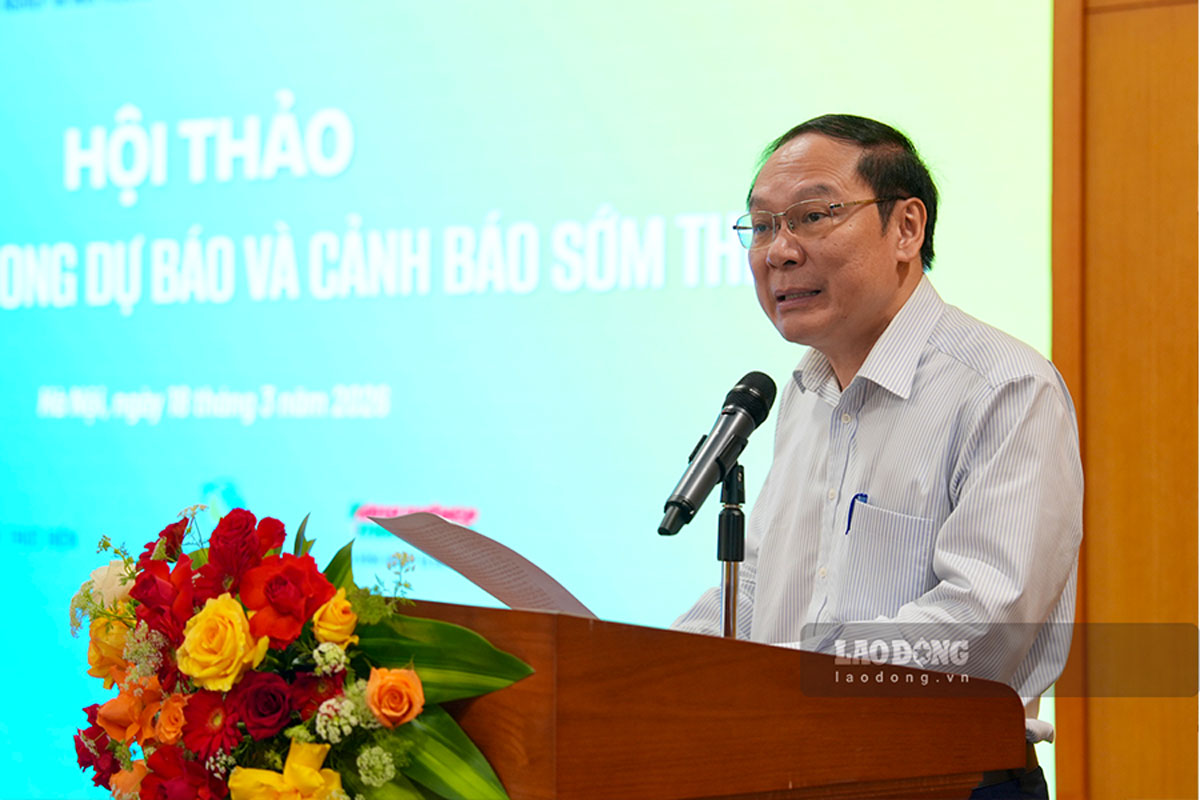
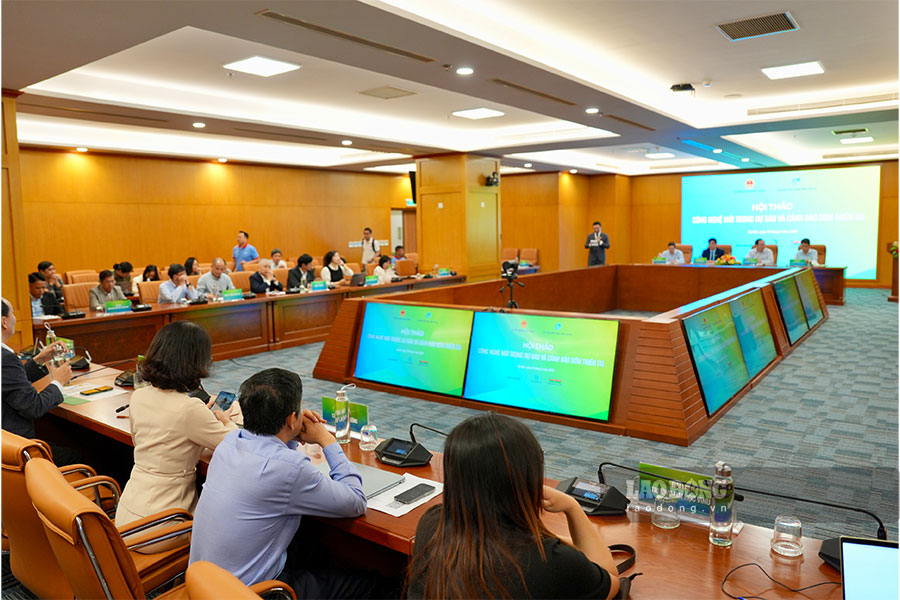
The more accurate the forecast and the earlier the warning, the higher the proactive response capacity of the government and people. Practice over the years shows that many disaster damages can be significantly reduced if warning information is provided promptly, accurately and reaches the necessary targets," Deputy Minister Le Cong Thanh emphasized.
In the past time, with the attention of the Party, State and the coordination of ministries, branches, and localities, Vietnam's meteorological and hydrological system and disaster prevention and control have made many important steps forward. The meteorological and hydrological observation network has been gradually upgraded; forecasting capacity has been increasingly improved; many types of forecasting have been extended in duration and improved in accuracy.
However, in the face of increasingly complex developments of natural disasters in the context of climate change, traditional forecasting methods are facing many challenges. Many extreme weather phenomena are small in scale but large in intensity, diễn biến nhanh, requiring forecasting systems to be faster, more accurate and smarter.
At the workshop, presentations focused on many technology approaches in disaster forecasting and warning, from key issues of the hydrometeorological sector in the context of climate change to specific application solutions.
Sharing at the workshop, Dr. Nguyen Xuan Hien - Deputy Director of the National Center for Hydro-Meteorological Forecasting, Department of Hydro-Meteorological Forecasting - said that Vietnam's hydro-meteorological forecasting system has made significant progress. Numerical forecasting models operating on supercomputers allow providing detailed data to 3x3 km nets; storm forecasting is implemented by combining many global and regional models, combined with data assimilation technology.
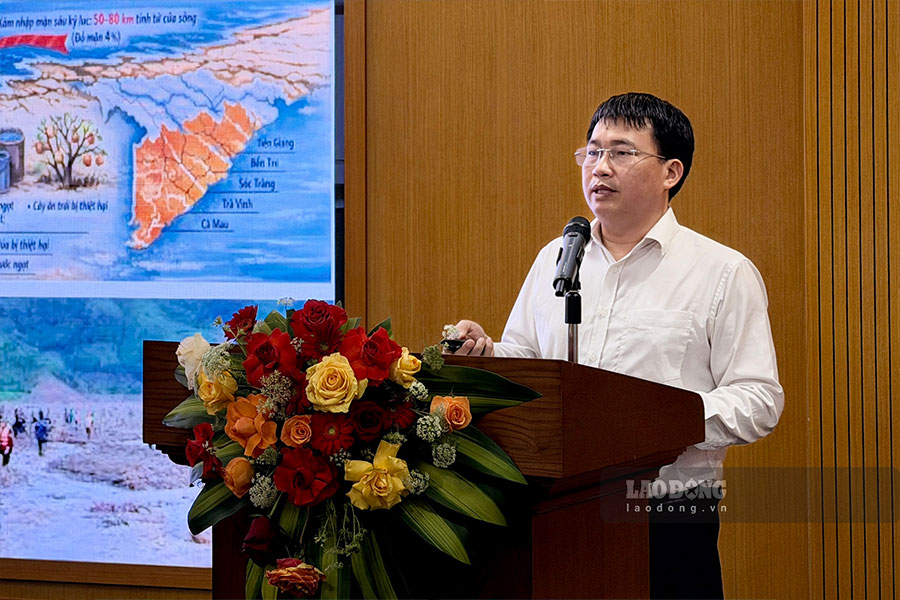
Notably, AI is being widely applied in disaster forecasting. Machine learning models help improve storm intensity forecasting from 10-20% in the short term; automatic storm identification systems from satellite data reach accuracy over 90%.
The transmission of forecasting and warning information to people is identified as a particularly important stage for technological advances to be effective in practice. Solutions applying digital platforms, mobile devices and multi-channel communication systems help information be transferred quickly, easily accessible and suitable for many target groups, especially in vulnerable areas. At the same time, building specific response plans contributes to improving the ability to protect lives and property when natural disasters occur.


