
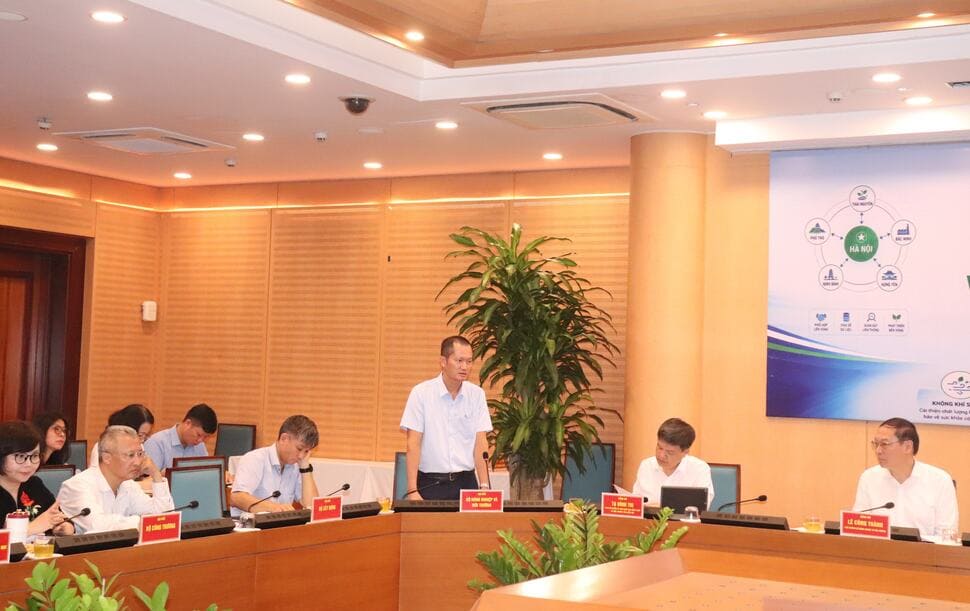
At the inter-regional conference on the coordination mechanism of the Capital Region in environmental management on the morning of June 4, Deputy Director of the Department of Environment, Ministry of Agriculture and Environment Le Hoai Nam reported on the current situation of the inter-regional environment and key environmental issues that need to strengthen coordination.
Worrying figures
According to Mr. Le Hoai Nam, the Ministry of Agriculture and Environment has deployed inventory and assessment of emissions and air quality in Hanoi and neighboring provinces in the period 2023 - 2025. Research results show that the source of PM2.5 fine dust in the city comes from many different fields.
In which, transportation activities contribute about 23%; construction and road dust account for about 20%; industry about 10%; open burning, including burning garbage and agricultural by-products, about 12%; secondary dust formed from polluting gases accounts for about 27%; other sources about 8%.
Besides emissions, climate and weather factors also significantly affect air quality.
Regarding the water environment, many inter-provincial rivers flowing through Hanoi are being polluted, including the Nhue River, Day River, Cau River, Ca Lo River, Ngu Huyen Khe River and Bac Hung Hai River.
Proactively promote regional linkages in pollution control
Faced with the increasing environmental pollution situation, Mr. Le Hoai Nam said that the Ministry of Agriculture and Environment has proactively developed and implemented many policies to control pollution and improve environmental quality nationwide, focusing on urgent issues.
At the same time, continue to expand the environmental monitoring network, strengthen data sharing, improve forecasting and warning capacity, and closely coordinate with Hanoi and localities to develop effective implementation guidelines for environmental policies and regulations.
Regarding air quality management, the Ministry of Agriculture and Environment proposed that the Hanoi People's Committee and localities in the Capital Region strengthen emission control and effectively implement low-emission zones.
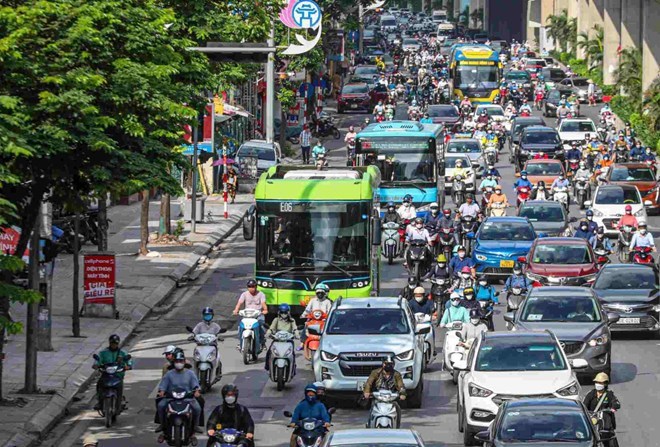
To prepare for the emission testing of motorbikes and mopeds from July 1, 2027, the Ministry of Agriculture and Environment proposed that Hanoi urgently build a network of 400 - 500 emission testing facilities throughout the city.
According to the proposal, the city needs to mobilize a network of 186 motor vehicle registration centers and genuine motorcycle warranty and maintenance facilities of associations such as: Vietnam Automobile, Motorcycle and Bicycle Association (VAMOBA), Vietnam Association of Motorcycle Manufacturers (VAMM) and motorcycle repair and maintenance businesses to participate in providing emission testing services.
In the immediate future, some inspection facilities need to be put into operation right before the peak pollution season of 2026. Along with that is propaganda and mobilization of people to proactively inspect emissions before the mandatory time to raise awareness and contribute to reducing emissions from motorbikes.
The Ministry also proposed that Hanoi allocate funds to support people to have their emissions tested for the first time; financial support to convert from old gasoline motorbikes to electric motorbikes.
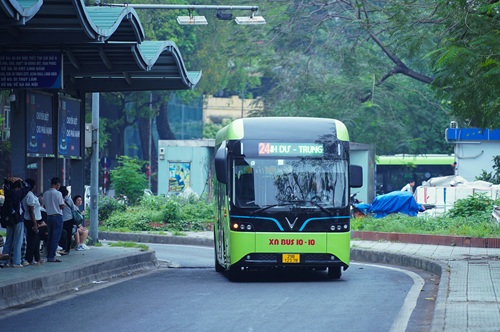
In addition, the city is proposed to develop a plan to convert vehicles to electric vehicles; ensure fuel supply meeting standards; control smoke and dust emissions from construction, open burning, and industrial activities; organize public area sanitation activities.
Regarding water quality management, the Ministry of Agriculture and Environment proposed that Hanoi accelerate the restoration of the quality of the Kim Nguu, Lu, Set rivers; invest in synchronous wastewater treatment systems, ensuring 100% of domestic wastewater is treated before being discharged into the environment.
Regarding solid waste, the Ministry proposed to complete waste treatment planning, maintain collection and treatment, promote waste sorting at source, apply modern technology and strictly handle violations that cause pollution.


