
The National Center for Hydro-Meteorological Forecasting has updated the actual temperature measured this morning, January 13, in some provinces and cities.
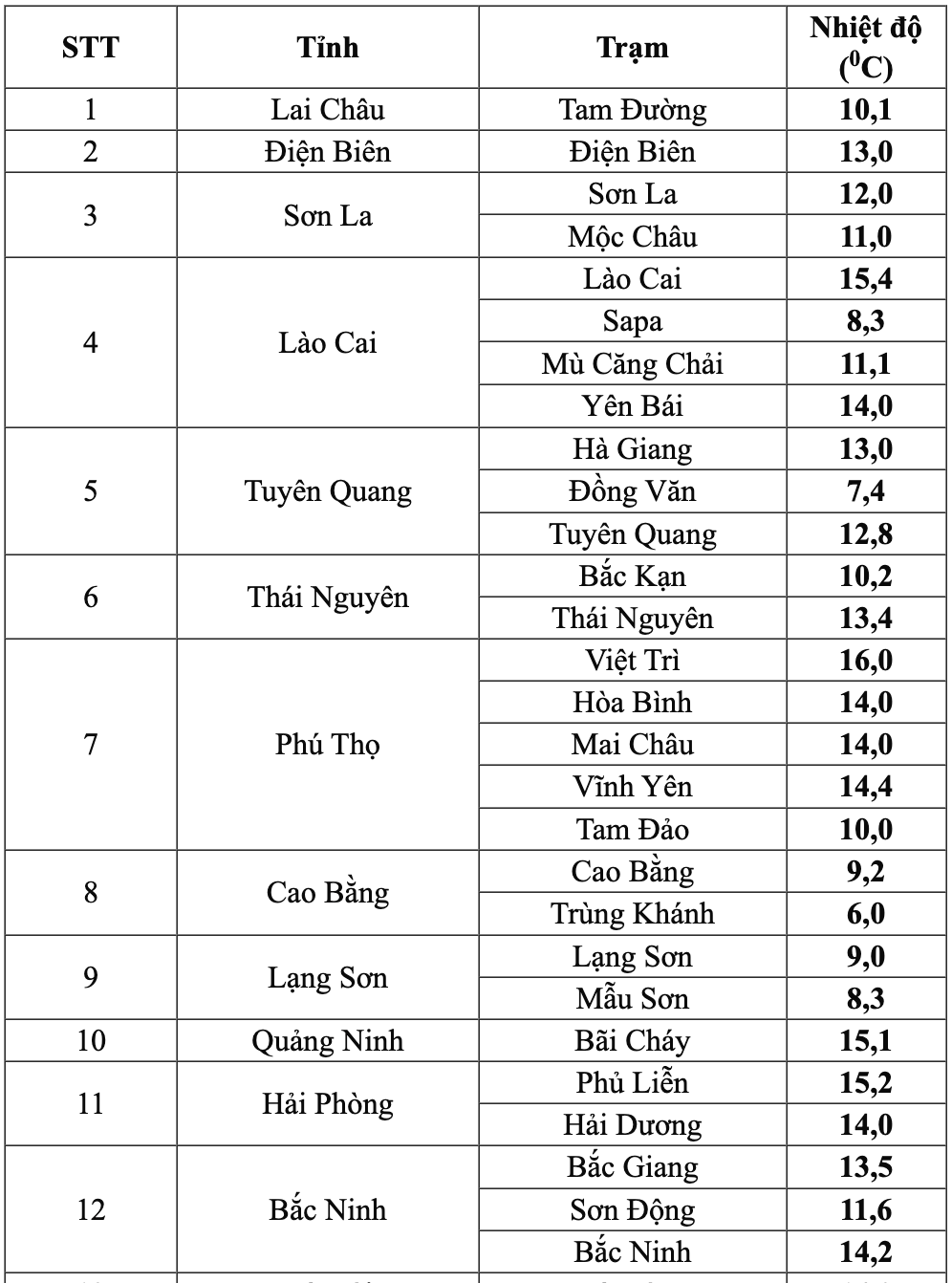
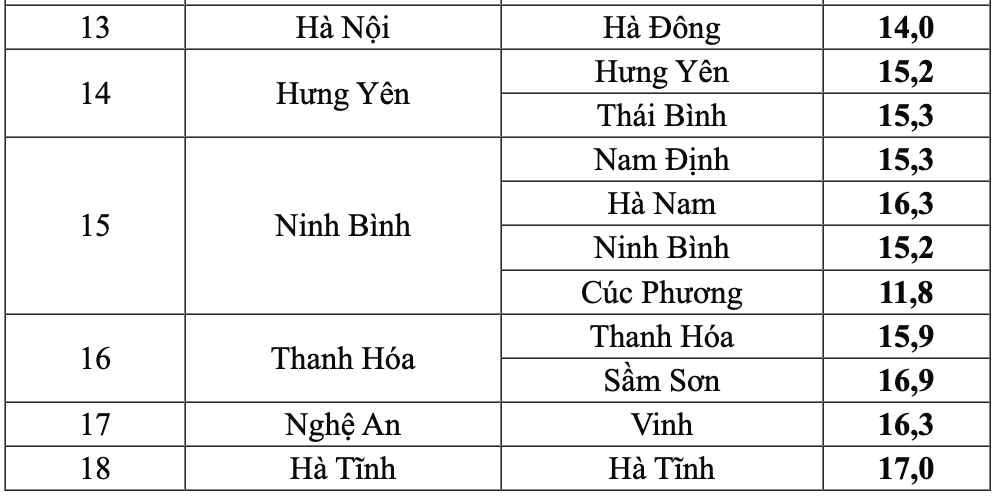
Today's temperature monitoring data shows that the weather in the early morning is generally cold. Temperatures are differentiated by region and terrain throughout the North and North Central regions.
In the high mountainous and midland mountainous areas of the North, the general temperature is still low. High mountainous points continue to record the lowest temperatures in the region, notably such as Trung Khanh (Cao Bang) 6 degrees C, Dong Van (Tuyen Quang) 7.4 degrees C, Sa Pa (Lao Cai) 8.3 degrees C, Mau Son (Lang Son) 8.3 degrees C, Cao Bang 9.2 degrees C, Tam Dao (Phu Tho) 10 degrees C.
In the midland and delta regions of the North, the common temperature is in the range of 13 - 16 degrees Celsius. Viet Tri (Phu Tho) 16 degrees Celsius, Ha Nam (Ninh Binh) 16.3 degrees Celsius, Ha Dong (Hanoi) 14 degrees Celsius,..
In the coastal and North Central regions, the temperature tends to be higher than in the North.
Regarding the upcoming weather dien bien, according to the meteorological agency, from January 13 - 20, the Northern and North Central regions will maintain weather with light rain in some places, early morning fog and light fog scattered, sunny in the afternoon. Night and morning weather will be cold, mountainous areas will have places with severe cold.
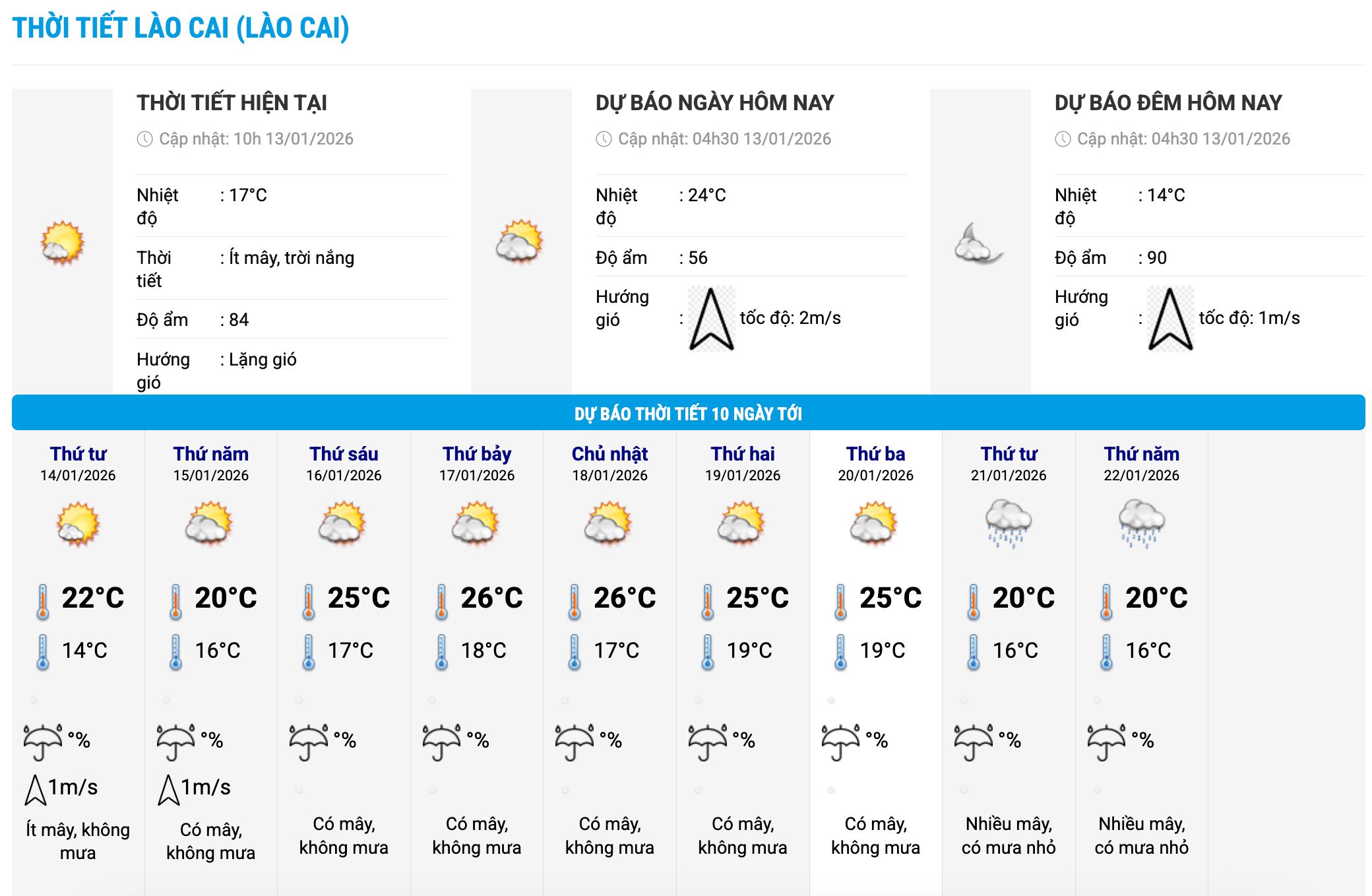
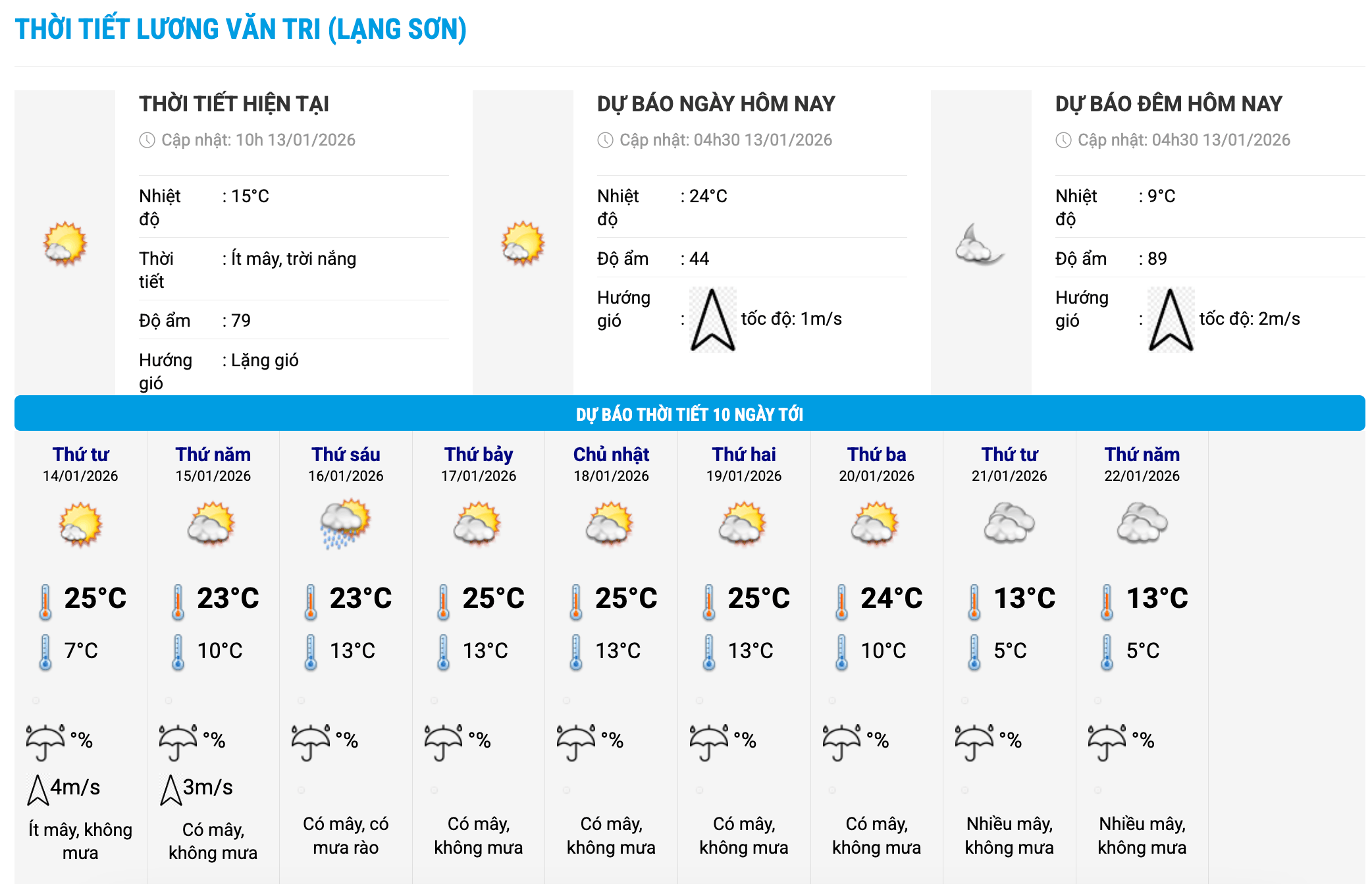
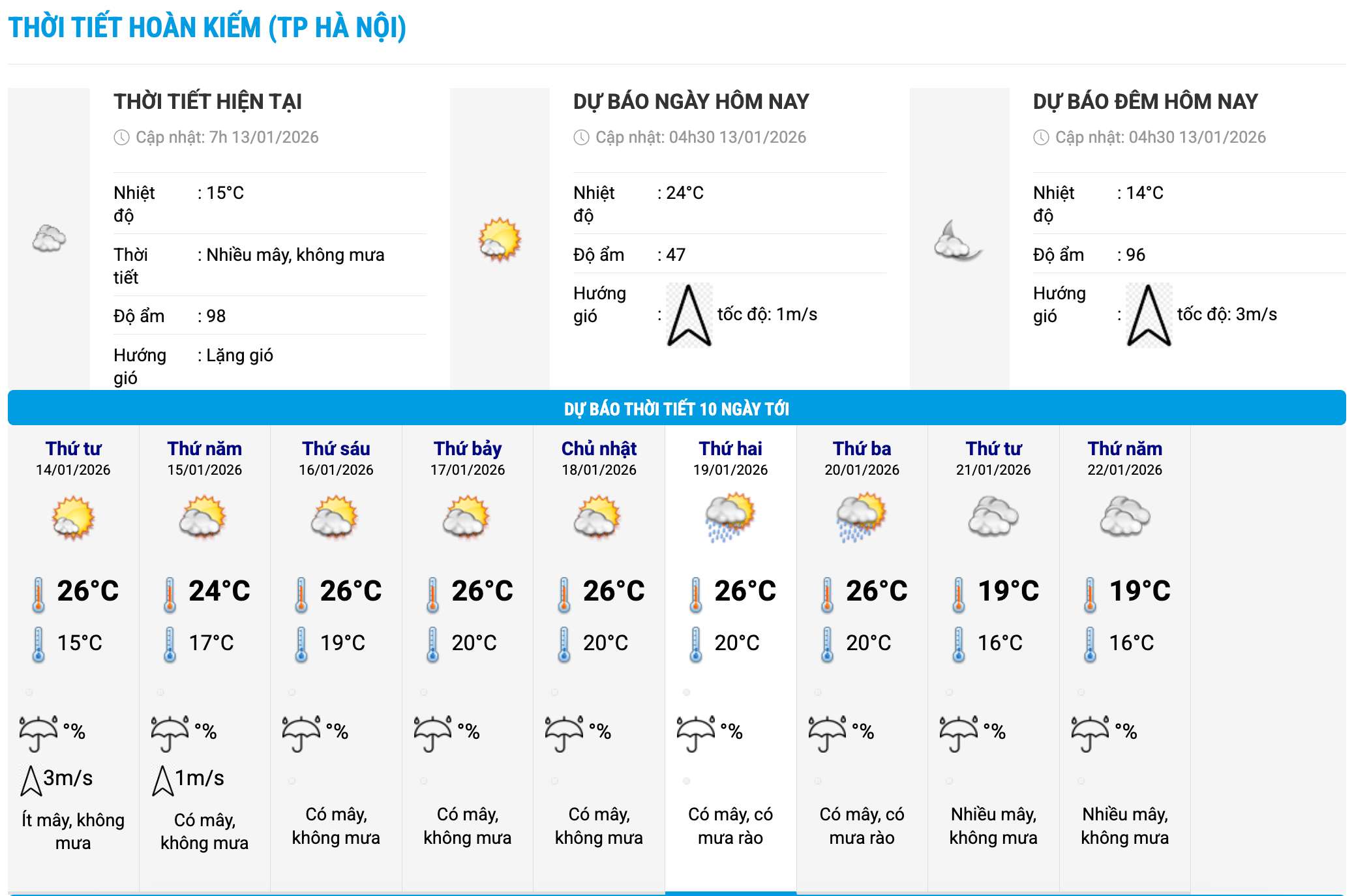
Around January 21, it is likely that the North will begin to be affected by a new cold air wave, causing the weather to turn cold, and mountainous areas in some places will be severely cold and harmful.
Assessing the winter weather this year, Mr. Nguyen Van Huong - Head of the Weather Forecast Department, National Center for Hydro-Meteorological Forecasting, said that the winter of 2025 - 2026 tends to be warmer than the multi-year average. The temperature throughout the winter is generally 0.5 - 1 degree Celsius higher than the multi-year average. The number of days of severe cold and harmful cold in winter is also forecast to be less than the average.

In the remaining winter, we believe that the cold trend in the Northern provinces will continue to be maintained in January. The number of days of severe cold and frost in January is likely to be less than the average of many years. After the first severe cold spell, it is forecast that there may still be severe cold spells, but for a short time in the Northern region, the intensity is likely not too strong. The most noteworthy thing in the coming time is the risk of frost and frost in mountainous areas" - Head of the Weather Forecast Department also advised.


