
Currently, cold air has affected most provinces and cities in the North and Central regions.
The National Center for Hydro-Meteorological Forecasting has also updated the actual temperature measured at 5:30 am on January 8 in some provinces and cities.
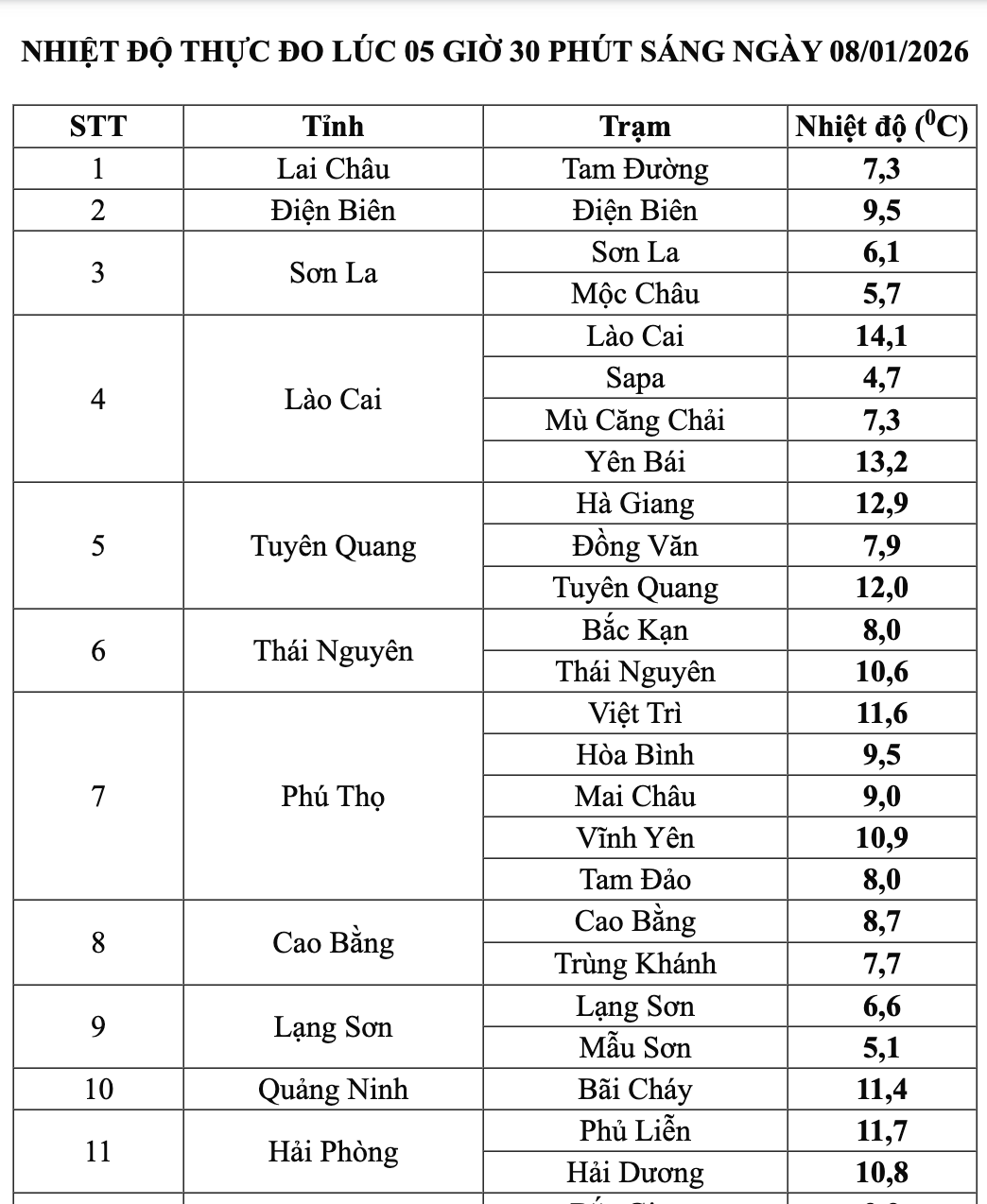
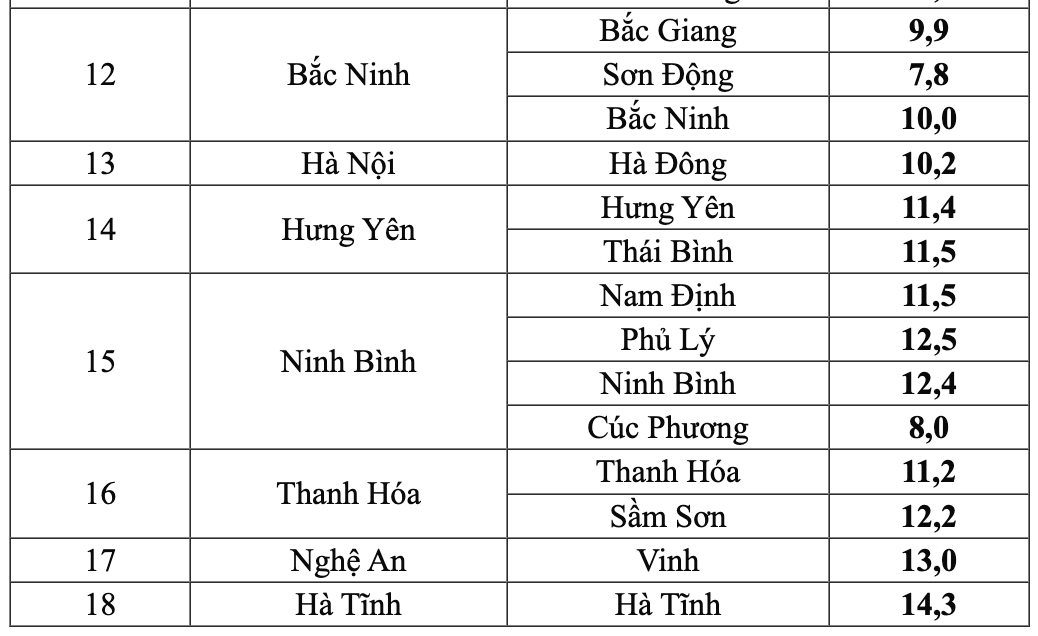
Real temperature data shows that cold continues to cover the Northern and North Central regions, with clear differentiation according to the terrain. High mountainous points still record low temperatures, including Sa Pa (Lao Cai) 4.7 degrees C, Mau Son (Lang Son) 5.1 degrees C, Moc Chau (Son La) 5.7 degrees C; many other places in mountainous areas commonly 6 - 8 degrees C.
Central Highlands and the Northern Delta, the main temperature fluctuates from 9 - 12 degrees C, Ha Dong (Hanoi) 10.2 degrees C, Bac Ninh 10 degrees C, Hai Duong (Hai Phong) 10.8 degrees C, Viet Tri (Phu Tho) 11.6 degrees C. The North Central region has a higher temperature than the North.
The Northern region and Thanh Hoa in the next 2 days, it is forecast to be very cold, mountainous areas in some places are severely cold; the area from Nghe An to Da Nang city is cold, in some places very cold. Northern mountainous areas should be wary of frost and frost.
From now until January 9th, the mountainous and midland regions of the Northern region will have the lowest temperature from 6 - 9 degrees Celsius, high mountainous areas in some places below 3 degrees Celsius; average temperature from 12 - 14 degrees Celsius.
The Northern Delta and Thanh Hoa have the lowest temperature from 8 - 11 degrees Celsius, the average temperature from 13 - 15 degrees Celsius.
Nghe An and Ha Tinh have the lowest temperature from 11 - 13 degrees C, the average temperature from 14 - 16 degrees C.
The area from Quang Tri to Da Nang city has the lowest temperature from 14 - 17 degrees C, the average temperature from 17 - 19 degrees C.
The Hanoi area is very cold, the lowest temperature in this cold air wave is commonly from 8 - 11 degrees Celsius.
From January 10, the widespread severe cold situation in the North will end. The Northern and North Central regions will have no rain at night, fog and light fog scattered in the early morning, sunny during the day. It will be cold, with severe cold in some places; especially the mountainous and midland areas of the Northern region will have severe cold, with severe cold in some places.
Severe cold and frost have the potential to affect community health. Severe cold, frost and frost reduce resistance, increase the risk of disease outbreaks, causing damage to livestock and poultry. In agricultural production, severe cold, frost and frost can cause leaf burns, slowing down the growth and development of crops.


