
The rivers used to be the source of life, the cultural memories and livelihoods of millions of Vietnamese people. However, in the rapid urbanization and industrialization cycle, many rivers are "struggling" to suffer from increasingly serious pollution.
Black, foul river water, and an almost wiped ecosystem are no longer rare in many localities. This situation is ringing the alarm about a risky environmental future if humans continue to be slow in action.
From the story of reviving To Lich River, a project that was once considered "impossible" in the heart of Hanoi that the city is striving to implement, many core issues of river environmental protection have been raised.
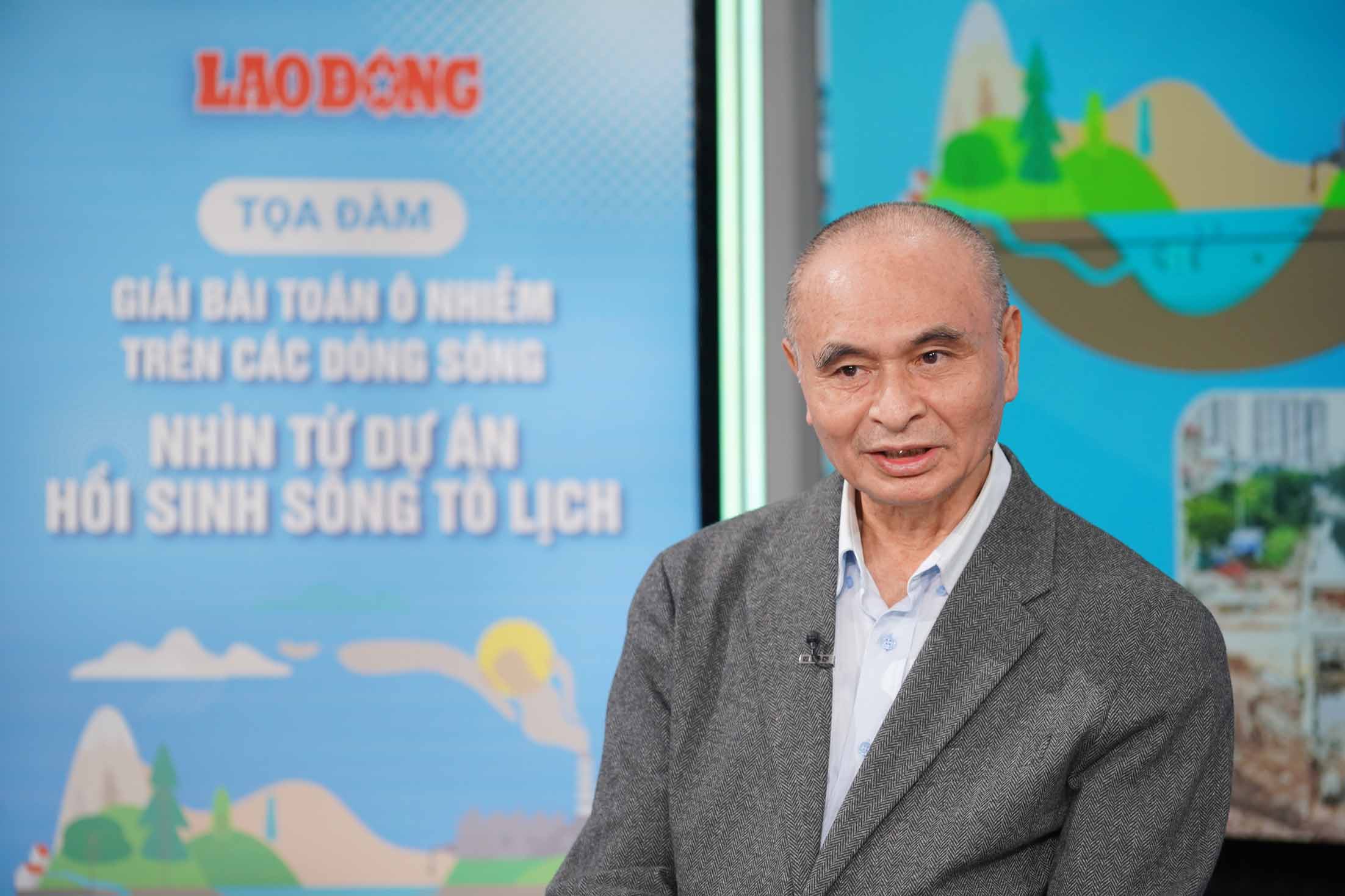
At the seminar "Solving the problem of pollution on rivers from the To Lich River revival project" organized by Lao Dong Newspaper on December 23, environmental experts frankly pointed out the causes, consequences and important lessons for the process of saving polluted rivers.
Almost no river is really clean
According to Associate Professor, Dr. Vu Thanh Ca (Hanoi University of Natural Resources and Environment), currently, almost all rivers in Vietnam, including small streams at the headwaters, are polluted at different levels.
For streams, the main source of pollution comes from domestic wastewater from people living along both banks and a large amount of fertilizer and agricultural chemicals flowing through rainwater and irrigation water from the fields.
For large rivers, especially rivers flowing through urban areas, the source of discharge becomes much more complicated. In addition to industrial wastewater, in which many cases have not been treated according to standards, especially in craft villages, there is also a huge amount of domestic wastewater from residential areas, urban areas and agricultural production activities.
In agriculture, the widespread use of chemical fertilizers also contributes significantly to pollution. According to Associate Professor, Dr. Vu Thanh Ca, usually only about 80% of the fertilizer absorbed by crops and soil, the remaining 20% is washed away into the water environment, becoming a source of serious pollution for rivers and streams.
The most worrying thing is the pollution in urban rivers. The To Lich River system, Lu River, Set River and especially Nhue River in Hanoi are typical examples.
In particular, the Nhue River section from Ha Dong downstream, in the dry season, often has patches of acacia floating on the water surface, dong in "cakes". In those conditions, almost no creature could survive.
When the river is beyond its capacity
Analyzing the nature of river pollution, Mr. Nguyen Khac Kinh - former Director of the Department of Environmental Impact Assessment and Assessment, Ministry of Natural Resources and Environment, now the Ministry of Agriculture and Environment - said that pollution occurs when strange substances, mainly waste, are put into the water environment beyond the river's self-cleaning capacity.

Historically, humans have still discharged waste into rivers and streams, but many rivers are not seriously polluted because the amount of waste is still within the limits that the ecosystem can balance itself. Only when the discharge exceeds this load-bearing threshold will pollution appear and become serious.
According to Mr. Kinh, river pollution comes not only from domestic and industrial wastewater but also from incidents in transportation and production such as oil spills, chemical spills, leakage of fertilizers or food. When these substances are dumped into the river in large quantities, the river will quickly " performance".
A river is considered polluted when the water quality no longer meets national technical standards for use purposes. At that time, the river will no longer be able to serve economic development, aquaculture or provide domestic water.
Although Vietnam's environmental protection legal system has made much progress compared to before, the actual effectiveness has not yet reached expectations. According to Mr. Nguyen Khac Kinh, the deepest cause still lies in human awareness, from people, businesses to management agencies.
A major limitation at present is that pollution prevention has not been rooted. The strategic environmental assessment of development policies and plans has not been fully implemented. Meanwhile, a wrong decision at the strategic level can leave environmental consequences lasting for decades, even not being able to completely overcome them.
Environmental impact assessment is essentially a scientific forecasting activity. However, in reality, environmental forecasting in Vietnam lacks depth and is not methodical, leading to low input information quality. Supplementary tools such as environmental auditing and independent monitoring after assessment have not been effectively implemented, causing many potential environmental risks to not be identified in time.
Emphasizing the aspect of public health, Associate Professor, Dr. Vu Thanh Ca said that the existence of heavily polluted rivers in a large city like Hanoi is unacceptable.
Because river pollution not only reduces the attractiveness of the city but also directly affects people's health and many other socio-economic fields.
According to him, Hanoi needs to urgently invest in fundamental solutions to clean up urban rivers. One of the reasons why treatment costs are huge today is that for a long time, the city has not separated the wastewater and rainwater drainage systems. As the city expanded rapidly, not doing things right from the start has caused the price to be paid to increase.
"Even if it is late, even very late, we are still forced to do it. Along with upgrading infrastructure according to a suitable roadmap, communication needs to be carried out continuously to change public awareness", Associate Professor, Dr. Vu Thanh Ca emphasized.
From the efforts to revive To Lich River, experts say that the biggest lesson is to act early, do it correctly from the planning stage, and consider river protection as an inseparable part of sustainable development. If it continues to be delayed, the rivers will not only "dead" in the environment but also have serious consequences for the health and future of Vietnamese cities.


