
The Ministry of Agriculture and Environment has just sent a document to the People's Committees of provinces and cities on ensuring dam safety and downstream areas of irrigation reservoirs.
According to forecasts from the National Center for Hydro-Meteorological Forecasting, the El Nino phenomenon is affecting our country and tends to gradually increase in intensity in the next 3 months. From October to December 2026, El Nino is forecast to continue to be maintained with strong intensity.
El Nino is one of the causes of rainfall shortages but poses a risk of extreme floods with very high intensity, concentrated in a short period of time.
At that time, the flow to the reservoir may increase sharply, causing the water level at the reservoirs to rise rapidly. In particular, medium and small reservoirs are likely to be full of water after just one rain, having to switch from a state of water shortage to flood regulation in a short time, causing difficulties for operation and ensuring project safety.
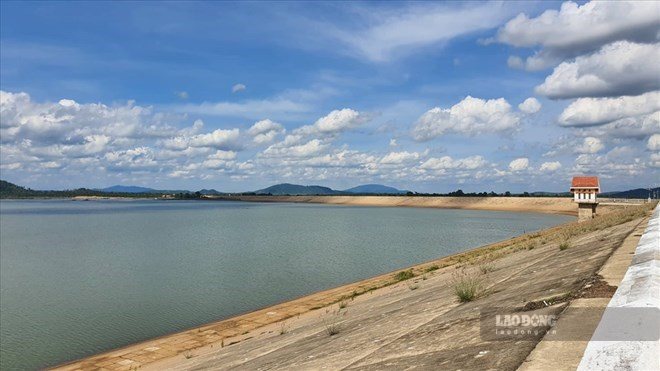
Faced with the above risk, the Ministry of Agriculture and Environment requests localities to strictly implement regulations on dam and reservoir safety management.
Provinces and cities must organize inspections, assessments and meetings of the Advisory Council for assessing dam and reservoir safety at the provincial level according to regulations. The Department of Agriculture and Environment, reservoir management units, commune-level People's Committees and relevant agencies must fully and promptly implement the assigned tasks.
For damaged or under construction reservoirs, the Ministry of Agriculture and Environment requests management and exploitation units and investors to regularly inspect and assess the status of works; develop solutions to ensure safety for reservoirs and downstream areas.
Reservoirs that do not ensure safety must be restricted from storing water to reduce the risk of incidents during heavy rain.
For reservoirs with regulating valve gates, localities must review and adjust operating procedures; comprehensively inspect the safety status of the works and operational capacity in all situations.
The main power supply system, backup power, opening and closing machines, valve door lift and lowering equipment, operating monitoring system and related equipment must always be in a state of operational readiness. Management units must also organize trial operation of valve doors and control equipment according to regulations.
In addition, reservoirs must maintain the stable operation of specialized meteorological and hydrological monitoring systems; develop flexible operating scenarios corresponding to situations of heavy rain and exceptionally heavy rain.
Meteorological and hydrological forecast bulletins need to be updated regularly to adjust operating plans, both ensuring project safety and contributing to flood reduction for downstream areas.
The Ministry of Agriculture and Environment requests units to organize serious duty shifts, regularly inspect works, prepare response plans and handle incidents right from the first hour according to the "4 on-site" motto; and promptly notify authorities and people in downstream areas.
Information on water level, reservoir capacity and discharge flow must be fully, accurately, and on time updated to the national irrigation information system.
29 provinces and cities are on the list to receive direction, including Hanoi, Phu Tho, Quang Ninh, Ninh Binh, Hai Phong, Cao Bang, Tuyen Quang, Lao Cai, Dien Bien, Lai Chau, Son La, Thai Nguyen, Lang Son, Bac Ninh, Thanh Hoa, Nghe An, Ha Tinh, Quang Tri, Hue City, Da Nang, Quang Ngai, Gia Lai, Dak Lak, Khanh Hoa, Lam Dong, Ho Chi Minh City, Tay Ninh, Dong Nai and An Giang.


