
Pioneers in protecting forests, daring to take long roads
At the end of the year, following the group of cadres of Hai Van ward, along with leaders of departments, branches and sectors of Da Nang city, crossing the steep, winding dirt road between the mountainsides, we arrived at sub-zone 22. In the immediate future, there are nearly 120 hectares of large timber forest covering the hillsides, where flower slices, incense sticks, red thunderstorms, green monk fruit, green lim... are intertwined, creating a rare peaceful space in the midst of urban development.
In the middle of that forest is a large timber forest of Mr. Nguyen Huu Hoang - who is considered the owner of the largest planted forest in Da Nang City today. Recalling his journey with the forest trees, Mr. Hoang could not hide his concern.
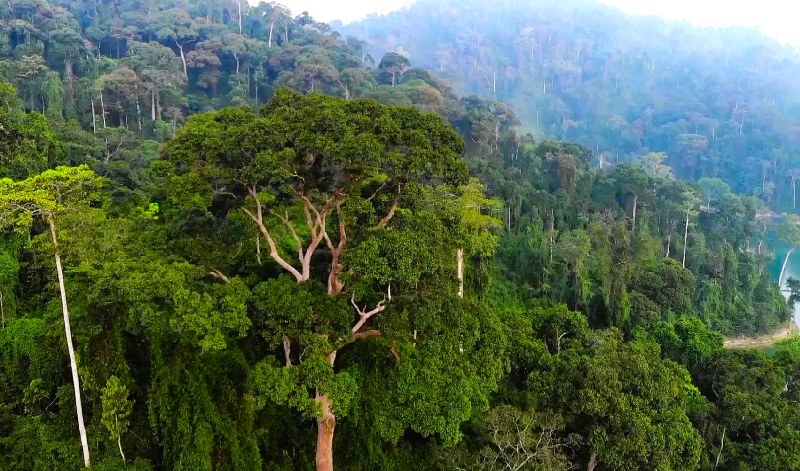
For more than 6 years, I have accumulated all my capital, even mortgaged my house, to plant large timber forests. This is a high-risk profession with large investment capital, a long recovery cycle, and is always worried about forest fires. Just a small spark in the dry season is considered a total loss, Mr. Hoang shared.
From the early days of the province, planting each seedling, his family's forest now has more than 250,000 precious timber trees, gradually forming an ecological area with high environmental and economic value. It is worth mentioning that Mr. Hoang did not choose the early exploitation route to recover capital, but persistently followed the direction of planting large timber forests, extending the growth cycle to increase value.
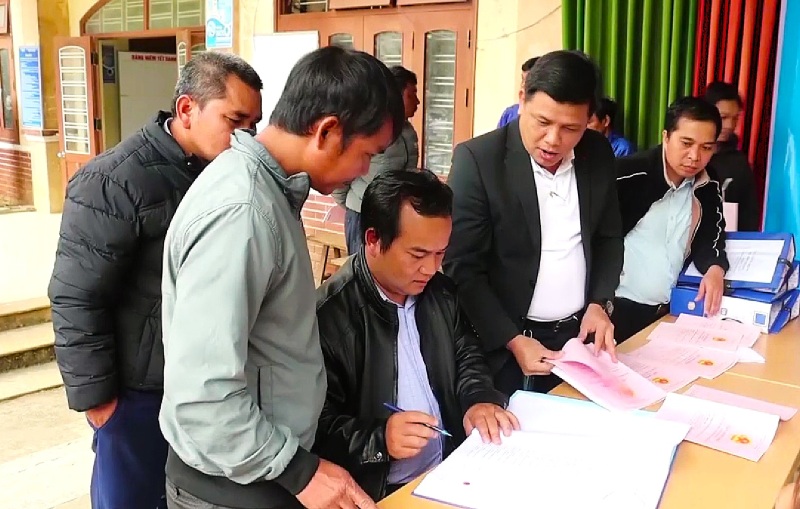
Along with forest care, Mr. Hoang proactively completed legal documents and applied for a land use right certificate. Up to now, 30 hectares of forest have had a "red book" - a key factor to help forest owners feel secure in long-term investment.
"With a certificate, I am not only assured of spending capital but also see more clearly my responsibility in forest protection. Forests are not only the property of the family but also the green color of this whole land," said Mr. Hoang.
From that thinking, his family hired a consulting unit to develop a sustainable forest management plan associated with developing eco-tourism under the forest canopy, with the expectation of both preserving the ecosystem and creating stable livelihoods for local people.
Cadres accompany the people, remove every "bottleneck" for forest owners
In the survey in sub-zone 22, it is easy to see the direct participation and responsibility of the government and departments and branches. Not only listening to the report, the working group went with the forest owners to the field, analyzing each location planned to develop tourism under the forest canopy.
Right in the middle of the forest cover, Mr. Ha Phuoc Phu - representative of the Department of Agriculture and Environment of Da Nang spread a forest map, opened a computer, carefully pointed out each boundary, each forest moment, instructed on how to count, store data and complete documents.
"People are not used to paperwork, if they are not properly instructed, it is easy to do things wrong, make mistakes and become discouraged. The task of the staff is to help people understand and do the right thing from the beginning so that they can feel secure in sticking with the forest for a long time," said Mr. Phu.
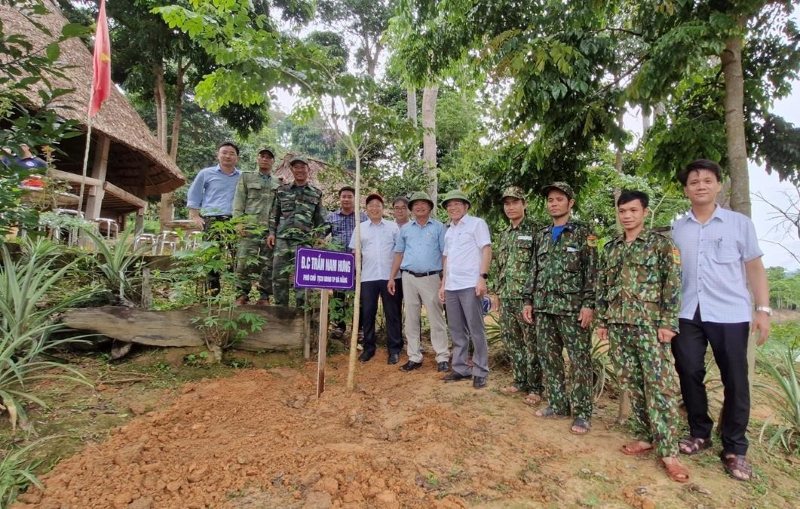
According to Mr. Tran Quang Vu, Head of the Economic - Infrastructure and Urban Affairs Department of Hai Van Ward, in order for planted forests to promote sustainable values, forest owners must have a management plan in accordance with regulations. When recognized as a large timber forest, people not only enjoy support policies but also have a legal basis to develop eco-tourism.
"Ward officials will specify each step, from surveying the tour routes, designing experience products, arranging stops, to connecting with travel agencies. The instructions must be close to reality so that people can clearly see the feasibility, thereby boldly investing," said Mr. Vu.
That dedication has created a clear change in the thinking of forest owners. Instead of relying only on revenue from timber exploitation, Mr. Hoang's family is keeping the forest area to develop a homestay along the forest, combining traditional cuisine, building check-in points, and camping to serve tourists.
"The companionship of the staff helps us gain more confidence. If we can do tourism under the forest canopy, we can both preserve the forest and create sustainable livelihoods for our children and grandchildren in the future, Mr. Hoang expressed.
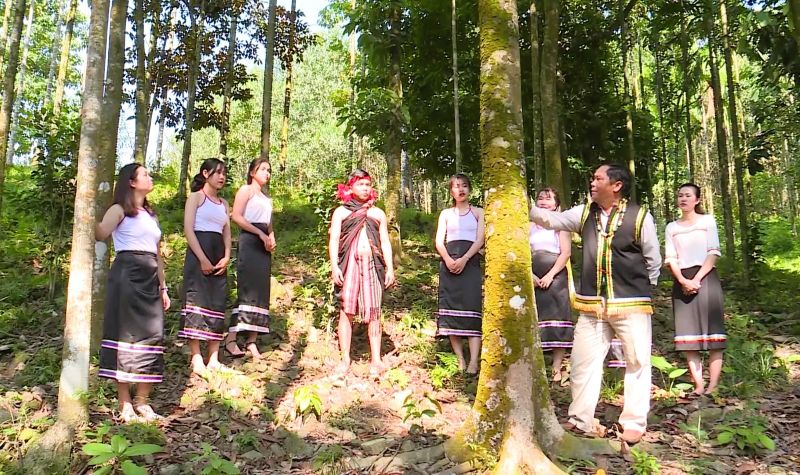
Mr. Nguyen Thuc Dung, Chairman of Hai Van Ward People's Committee, affirmed: "The local government is committed to accompanying the people from the project preparation stage to implementation. Households with a need for eco-tourism will be supported to develop plans in accordance with the planning, ensure the environment and preserve local identity".
Large timber forests reserved for the future
Not only in Hai Van, in many mountainous localities of Da Nang, the model of planting large timber forests has been and is being considered by people, especially the Co Tu people, as a long-term direction.
In Song Kon commune, for nearly 30 years, Mr. Bria Dam has quietly planted and cared for more than 1,000 Kien Kien trees on an area of 3.6 hectares behind his house. The current Kien Kien trees are tens of meters high, 2030cm in diameter, giving off a cool green shade at the foot of the mountain.
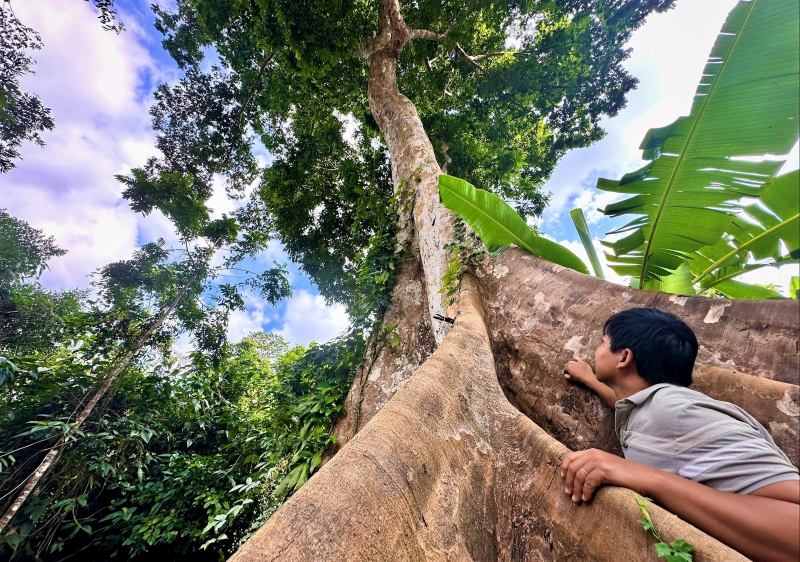
At that time, many households chose cinnamon because of their quick income, but I believed that large trees would give long-term value. Some people asked to buy this forest but I did not sell it. I keep it for my children and grandchildren, so that the forest does not continue to "bleed" like before," Mr. Dam shared.
At first, due to lack of experience, many trees died. Thanks to the guidance of forestry staff, he has gradually mastered the technique, maintained and expanded the area. In recent years, his Kien Kien forest has also become an discovered destination for locals and tourists.
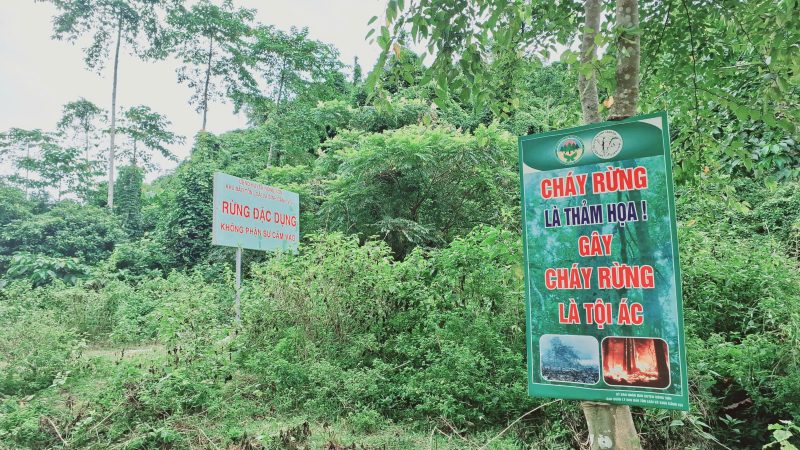
In Ben Giang commune, Mr. Kaphu Ben also boldly converted nearly 7 hectares of ineffective production land to grow large timber forests from 2021. With support for tree varieties and technical processes, the area of the family's glow and glue grow well.
Propagating forests helps prevent erosion and landslides, creating a clean environment. In the coming time, I will grow more medicinal herbs under the forest canopy to increase my income," said Mr. Ben.
According to the Da Nang City Forest Protection Department, the whole city currently has nearly 700,000 hectares of forest, of which planted forests have become forests of more than 184,000 hectares; the annual output of exploited wood reaches about 1.9 million m3. The forest area granted a sustainable management certificate (FSC) reached more than 27,000 hectares.
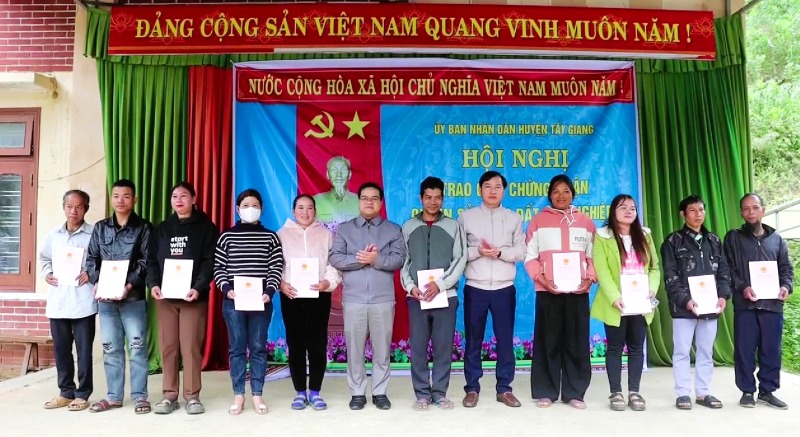
In the sustainable forestry development strategy, the city aims to limit the exploitation of young, low-value forests; instead, develop large timber forests that meet FSC/VFCS standards, associated with deep processing and eco-tourism. Land allocation, land lease, and issuance of forestry land use right certificates are identified as an important foundation for people to feel secure in investing.
Late afternoon, the late afternoon sunlight shining on the Hai Van forest canopy. Mr. Nguyen Huu Hoang stood still and watched his family's large timber forest - the result of many years of investing and investing. There are still many challenges ahead, but behind it is the companionship of the government and grassroots cadres.
From those forests, a direction is gradually becoming clear: keeping forests to get rich, get rich but not exchanging the environment. When people dare to think far and the government persistently goes with, forests will no longer be a burden but become a livelihood, a sustainable future for lands that are changing towards green.


