
From the small boat of the kind mother
The story of affection began in the 1980s, when Mr. Le Van Duyen's mother (62 years old, Dong Thanh hamlet, Dong Thuan commune, Can Tho city) Mrs. Thai Thi Sang still rows a boat every day to earn a living on her hometown canal. At that time, there was only one elementary school across the river, many disadvantaged children had no means of crossing the river to go to class. Seeing the children sitting on the bank watching their friends cross the river with sad eyes, Mrs. Sang decided to row a boat to take the children to school without taking money.
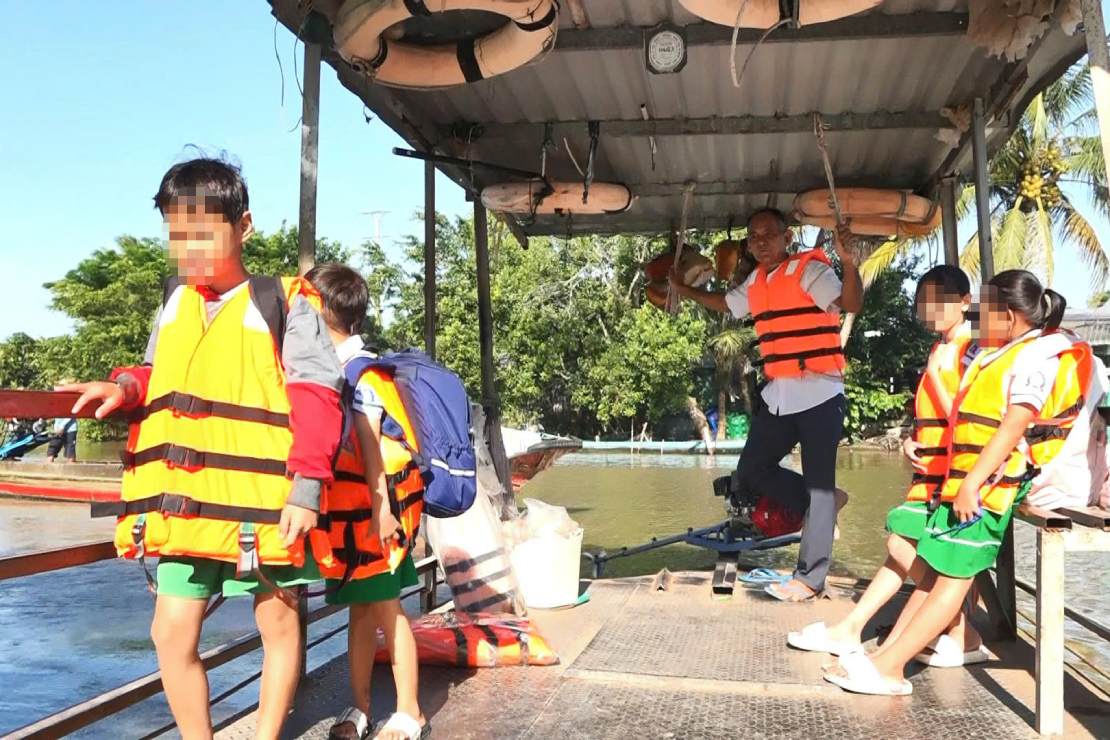
Gradually, the small ferry wharf became a familiar river crossing point for students in the area. Mr. Sang built a small hut by the canal, both doing small business and ferrying. Although life is still difficult, every early morning, the sound of rowing boats stirring water and the laughter of young children still echoes on the peaceful canal.
In the past, the canal was not very wide, but in the high season, it flowed very fast, and it was quite dangerous for young children to pass by. My mother always prepared plastic cans and floats in case of incidents," Mr. Duyen recalled.
In 1986, when Mr. Sang was old and weak, Mr. Duyen took over the job of ferrying from his mother. Since then, whether it's rainy or sunny, he still regularly takes students across the river to school twice a day.
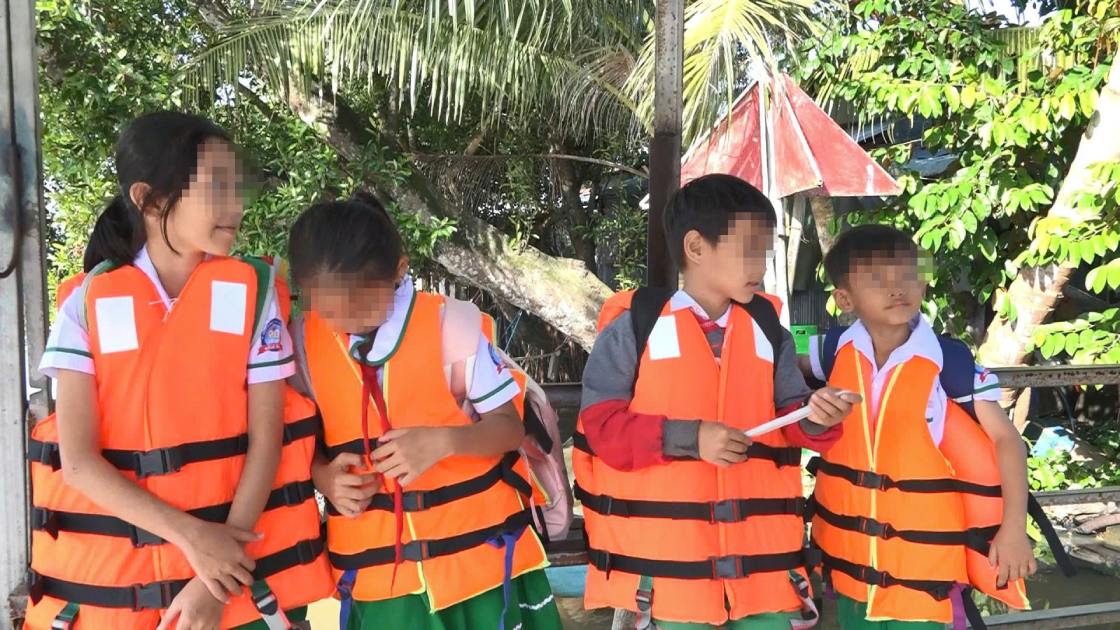
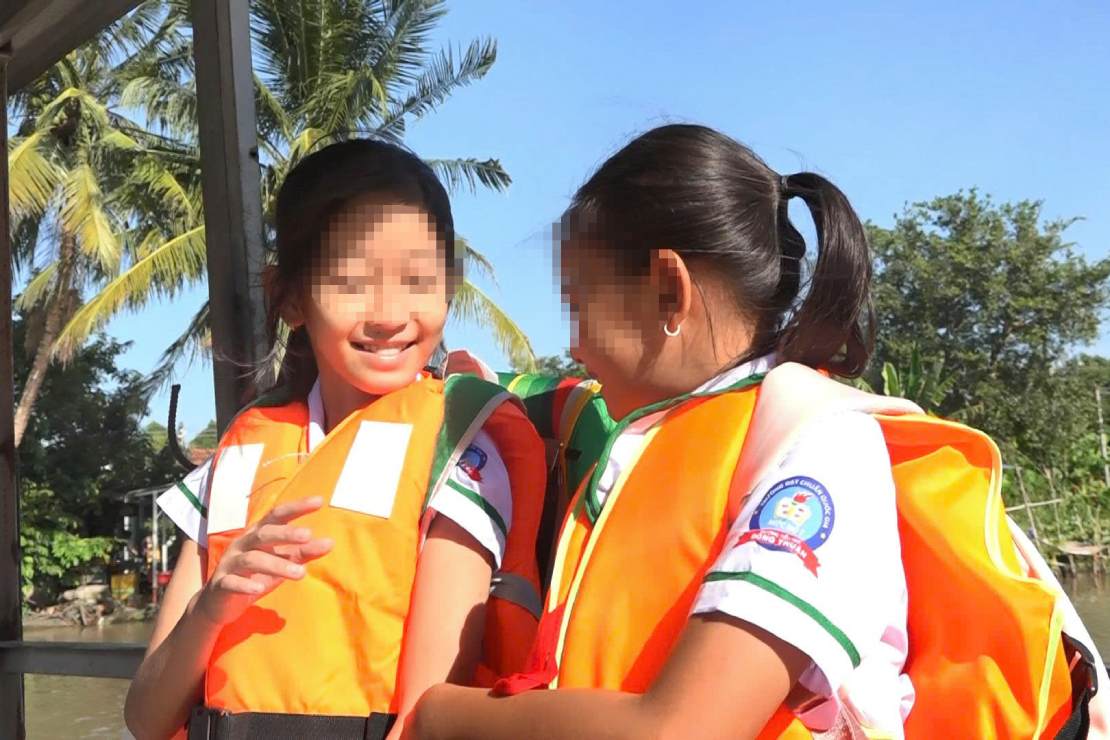
According to Mr. Pham Tan Dat - Secretary of the Party Cell cum Head of Dong Thanh hamlet, this area has three school points located along the Xang Thi Doi canal, with a fairly large number of students. Every day, Mr. Duyen's ferry terminal takes on the task of picking up and dropping off many students across the river.
“Previously, the ferry transportation work was undertaken by Mr. Duyen's mother. When she got older, he continued to maintain it until now. Currently, his children also take turns supporting the ferry wharf operation. This is a work that clearly shows the spirit of charity and the heart for the community of his family,” Mr. Dat shared.
Quietly carrying the boats of knowledge
From early morning, around 6 am, Mr. Duyen was present at the wharf to prepare the boat, check the engine, life jackets and safety equipment before starting the first ferry trip. Near noon, he returned to the wharf to pick up students after school.
In the past, I didn't get a proper education, so I just hoped that the children would go to school fully. Seeing the children cross the river safely and come to class diligently, I am happy," Mr. Duyen shared.
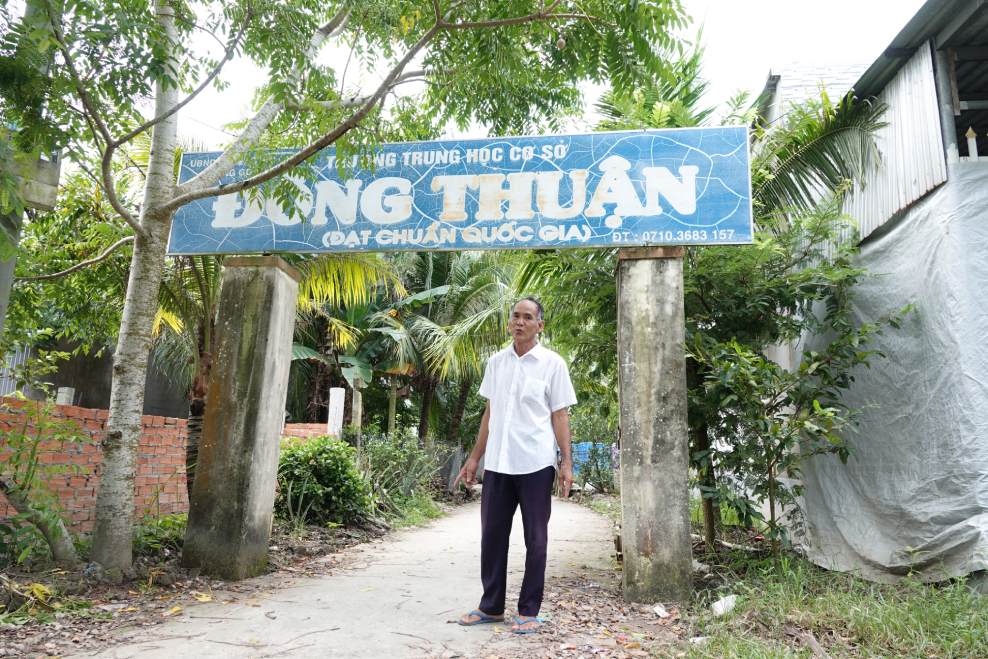
Over time, the number of students crossing the river has increased. The old boat given as gifts has gradually deteriorated and is no longer safe. Mr. Duyen decided to borrow 70 million VND from the bank to buy a larger boat, and at the same time spend more money to equip it with an engine.
Not only that, he also proactively equipped himself with life jackets, lifebuoys, fire extinguishers and participated in waterway traffic safety training classes organized by the locality. In front of the house, he also built a small waiting house for students to have shelter from rain and sun when waiting for ferries.
Notably, to make it more convenient for students to travel, Mr. Duyen donated about 800 m2 of his family's land to expand the path to the station. The initial narrow road was filled with soil and gradually expanded year by year, currently about 4 meters wide, enough for bicycles and motorbikes to travel easily.
Mr. Nguyen Van Hien, a local resident, said that for many years his family and households in the area have been very reassured when their children cross the river to go to school thanks to Mr. Duyen's ferry.
Thanks to Uncle Duyen's ferry, our children and grandchildren cross the river safely, and parents are assured to work. Even in heavy rain and wind, Uncle still wears raincoats to welcome students. For the people here, this ferry wharf is like a bridge of gratitude for the whole village," Mr. Hien said.
For more than 40 years, the ferry has regularly flowed back and forth on the hometown canal, quietly carrying the small dreams of students to the shore of knowledge. For local people, it is not only a means of crossing the river, but also a beautiful symbol of human love in the riverine countryside.


