
Closer to important exams, many students are prone to stress and sleep disorders. According to recommendations from the National Sleep Foundation, adolescents under 18 years old need to maintain a sleep time of about 8-10 hours per day. Ensuring a good night's sleep can support brain recovery, contributing to reducing anxiety and optimizing memory.
Comparison table: 3 food groups to help students sleep well and enhance memory during exam season
| Health target group | Food t | Nutrients | Medical support mechanism |
|---|---|---|---|
| Ripe bananas, warm milk, lotus hearts, lotus seeds. | Tryptophan, Melatonin, Calcium. | Provide some nutrients related to relaxation and regulating sleep. | |
| Dark green vegetables, chamomile tea, peppermint tea. | Magnesium, B vitamins, antioxidants. | Can contribute to supporting relaxation, supplementing essential micronutrients for the nervous system | |
| Fatty fish (salmon, mackerel), eggs, nuts (cranes, almonds). | Omega-3, Choline, Vitamin E. | Providing nutrients necessary for brain activity can support concentration in a balanced diet. |
Food groups that support good and deep sleep
Deep sleep is the golden time for the brain to rearrange knowledge. Healthline health website recommends supplementing foods rich in tryptophan - a precursor to the sleep-regulating hormone (melatonin):
Lotus seeds and lotus hearts: Lotus seeds and lotus hearts are often used in folk medicine; however, students should not use too much, especially if they have underlying diseases or are taking medicine. A small amount of warm lotus heart tea can help some people relax and sleep better, but should not be seen as a way to treat insomnia.
ripe bananas: provide potassium, magnesium and a certain amount of tryptophan, which can contribute to relaxation.
Warm milk: Warm milk can create a comfortable feeling, but caution is needed in case of milk allergy or lactose intolerance.

Food groups that help reduce stress
When the brain absorbs a large amount of knowledge, nerve cells are easily under pressure. Supplementing with foods rich in antioxidants is one of the reasonable ways to support nutrition:
Dark green vegetables: Broccoli and water spinach are rich in magnesium and B vitamins, which can help soothe nerve irritation and reduce the risk of headaches.
Chamomile or mint tea: Instead of abusing coffee causing arrhythmia, experts from WebMD recommend herbal tea to help relieve psychological pressure. Some herbal teas that do not contain caffeine can help relax, but a moderate amount is needed.
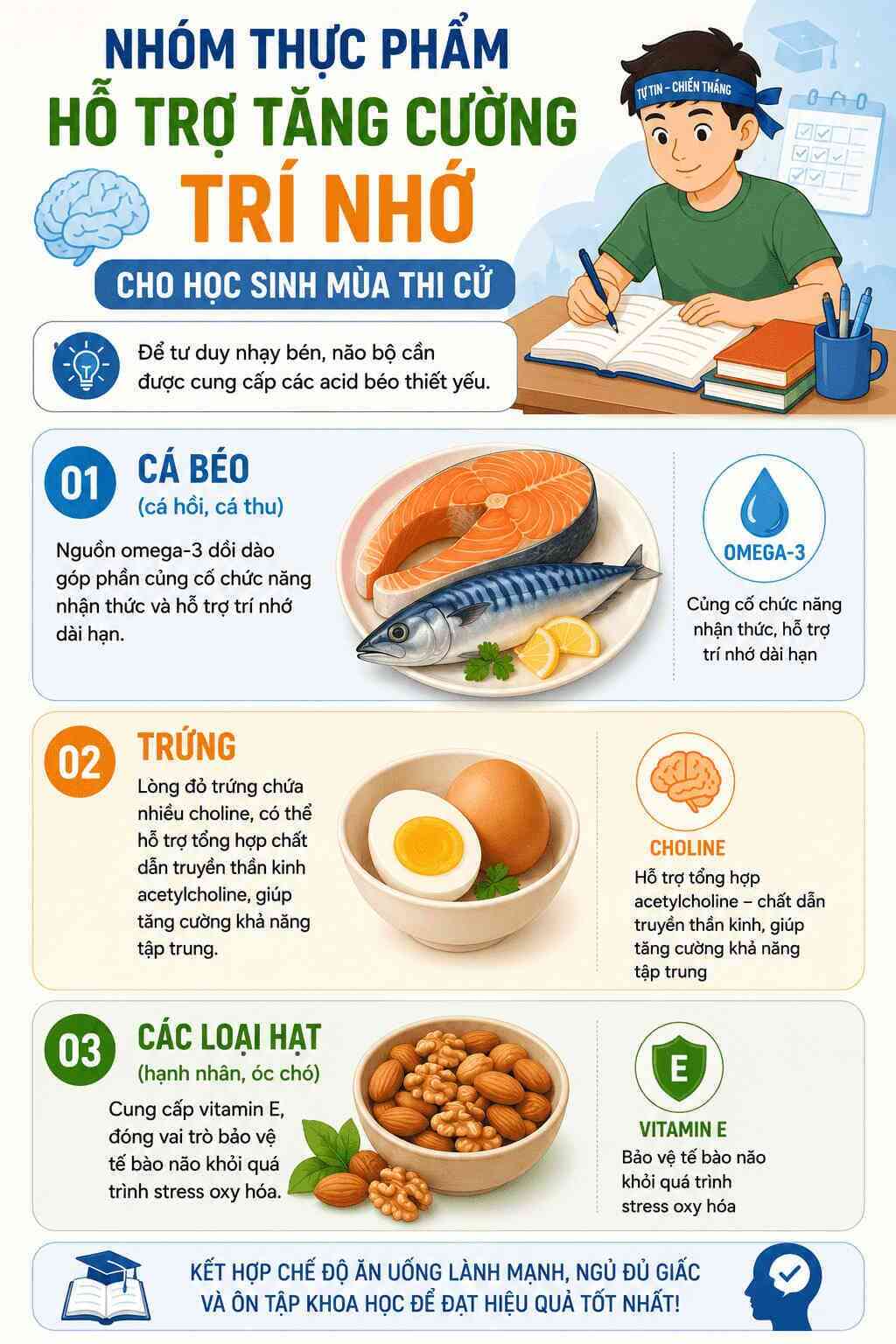
Food groups that help enhance memory
For sharp thinking, the brain needs to be supplied with essential fatty acids:
Fatty fish (salmon, mackerel): Rich sources of omega-3 contribute to strengthening cognitive function and supporting long-term memory.
Egg yolks contain a lot of choline, which can support the synthesis of the neurotransmitter acetylcholine. Eggs provide choline, a nutrient involved in the functioning of the nervous system and the memory process.
Almonds, walnuts provide vitamin E, which plays a role in protecting brain cells from oxidative stress.
Notes on safe nutrition during exam season
To have a good night's sleep, nutrition experts recommend that students limit caffeinated drinks (energetic drinks, strong tea) to avoid disrupting the natural sleep cycle.
Before the exam or bedtime, you should only prioritize light, easy-to-digest snacks such as oats and sweet potatoes to provide energy without causing weight loss. In particular, maintaining the habit of drinking enough water every day is a key factor to help the body maintain alertness and endurance.
The information in the article is for reference only, not for medical diagnosis or treatment. You should talk directly to your doctor for accurate and appropriate advice to your health condition.
Quick quiz on food to help improve sleep for students
Is eating eggs every day to improve memory afraid that students will have excess cholesterol?
For the majority of healthy people, 1 egg/day can usually be in a balanced diet. However, adjustments are needed if there is egg allergy, dyslipidemia or special medical conditions. Experts from WebMD affirm that healthy young people can completely eat 1 egg per day. Egg yolks provide Choline, an essential nutrient that helps protect the brain and promote memory.


